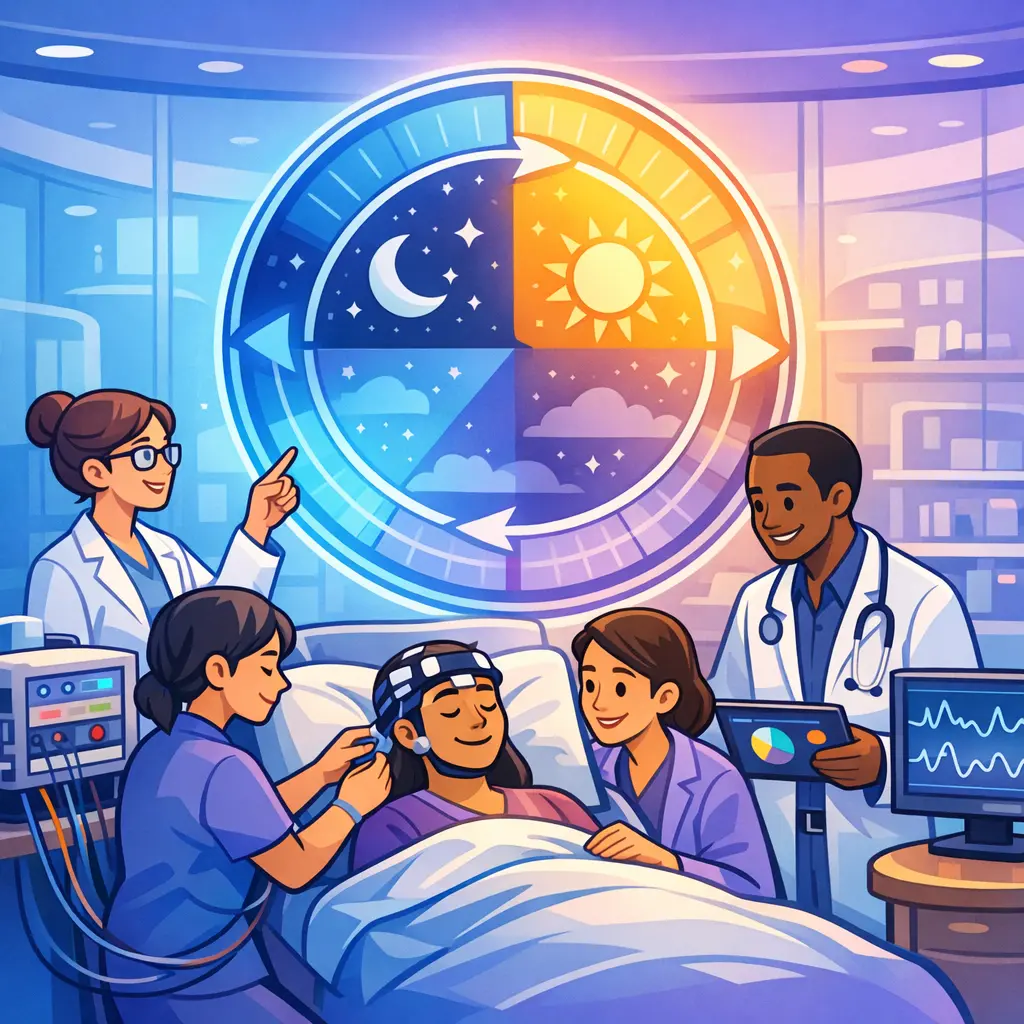
Sleep Medicine & Chronobiology Careers focus on diagnosing, treating, and researching sleep disorders and biological rhythms. Professionals in this field, such as sleep physicians, technologists, and researchers, work to improve sleep health, manage conditions like insomnia and sleep apnea, and study how circadian rhythms affect overall well-being. These careers are vital in healthcare, combining patient care, advanced technology, and scientific research to enhance quality of life and address sleep-related health issues.
Sleep Medicine & Chronobiology Careers
Sleep Medicine & Chronobiology Careers focus on diagnosing, treating, and researching sleep disorders and biological rhythms. Professionals in this field, such as sleep physicians, technologists, and researchers, work to improve sleep health, manage conditions like insomnia and sleep apnea, and study how circadian rhythms affect overall well-being. These careers are vital in healthcare, combining patient care, advanced technology, and scientific research to enhance quality of life and address sleep-related health issues.
💡 Key Takeaways
- Identify common career paths in sleep medicine and chronobiology, including clinical practice, research, and technology roles.
- Understand how circadian rhythms influence diagnosis, treatment planning, and patient care for sleep disorders.
- Learn the typical training paths, certifications, and skills needed to pursue these careers (e.g., residencies, fellowships, and research training).
- Familiarize yourself with key tools and research areas, such as polysomnography, actigraphy, chronotherapy, and light-based interventions.
❓ Frequently Asked Questions
What is sleep medicine as a career?
Sleep medicine is a medical specialty focused on diagnosing and treating sleep disorders such as sleep apnea, insomnia, narcolepsy, and restless legs syndrome. It typically requires a medical degree plus a sleep medicine fellowship, and professionals work in clinics, hospitals, or dedicated sleep labs.
What is chronobiology and what careers involve it?
Chronobiology studies biological rhythms, including circadian clocks. Careers include academic researcher, lab scientist, data analyst in circadian biology, and roles in pharma/biotech; most paths require advanced degrees (PhD or equivalent) in biology, neuroscience, or related fields.
What education paths lead to sleep medicine careers?
Physicians pursue MD/DO, followed by residency in internal medicine, neurology, psychiatry, or pediatrics, and then a sleep medicine fellowship. Sleep technologists typically pursue allied health degrees and obtain credentials like the Registered Polysomnographic Technologist (RPSGT). Researchers typically hold a PhD in biology, neuroscience, or chronobiology.
What certifications are common in sleep medicine?
Physicians can pursue board certification in Sleep Medicine. Sleep technologists can earn the RPSGT credential (and may pursue additional lab-management credentials as needed).
Where do sleep medicine and chronobiology professionals work?
Clinics, hospital sleep centers, and general hospitals; academic and research institutions; biotech/pharma labs; and roles in data science or wearable tech companies.