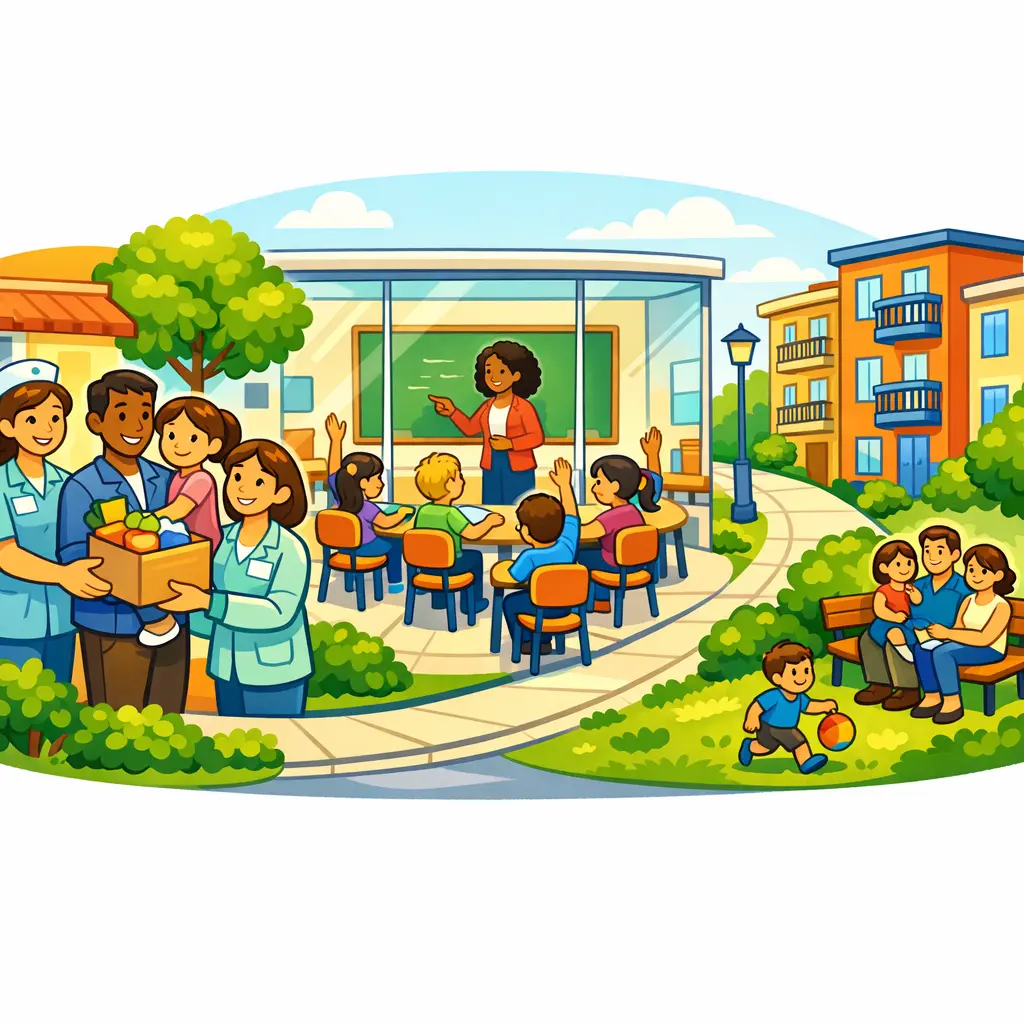
Social Policy: Welfare, Education & Housing (Law, Government & Public Service) refers to government actions and legal frameworks designed to improve citizens’ well-being. It encompasses welfare programs supporting vulnerable populations, educational policies ensuring access and quality, and housing initiatives addressing affordability and living conditions. These policies are shaped by laws and public service institutions, aiming to promote social justice, reduce inequality, and enhance the quality of life within society.
Social Policy: Welfare, Education & Housing
Social Policy: Welfare, Education & Housing (Law, Government & Public Service) refers to government actions and legal frameworks designed to improve citizens’ well-being. It encompasses welfare programs supporting vulnerable populations, educational policies ensuring access and quality, and housing initiatives addressing affordability and living conditions. These policies are shaped by laws and public service institutions, aiming to promote social justice, reduce inequality, and enhance the quality of life within society.
💡 Key Takeaways
- Understand the core aims of welfare policy and how it supports vulnerable populations
- Explain how education policy affects access, quality, and outcomes for learners
- Describe housing policy tools and their impact on affordability and stability
- Identify key policy debates and stakeholders in welfare, education, and housing
- Recognize common metrics used to evaluate social policy effectiveness (poverty, literacy, housing stability)
❓ Frequently Asked Questions
What does welfare mean in a social policy context?
Welfare refers to government programs that provide financial help or services to people in need, such as cash transfers, unemployment benefits, healthcare, food assistance, and social services, aimed at reducing poverty and promoting security.
What is the difference between means-tested and universal welfare programs?
Means-tested programs provide benefits only to people who meet income or asset thresholds, while universal programs give benefits to all eligible residents regardless of income.
How does education policy relate to equity and access?
Education policy sets funding and standards to ensure all students have access to quality education, working to reduce achievement gaps and support learners from disadvantaged backgrounds.
What are common tools in housing policy to improve affordability?
Common tools include affordable/public housing, housing vouchers or subsidies, rent controls, and zoning reforms to increase housing supply and reduce cost burdens.