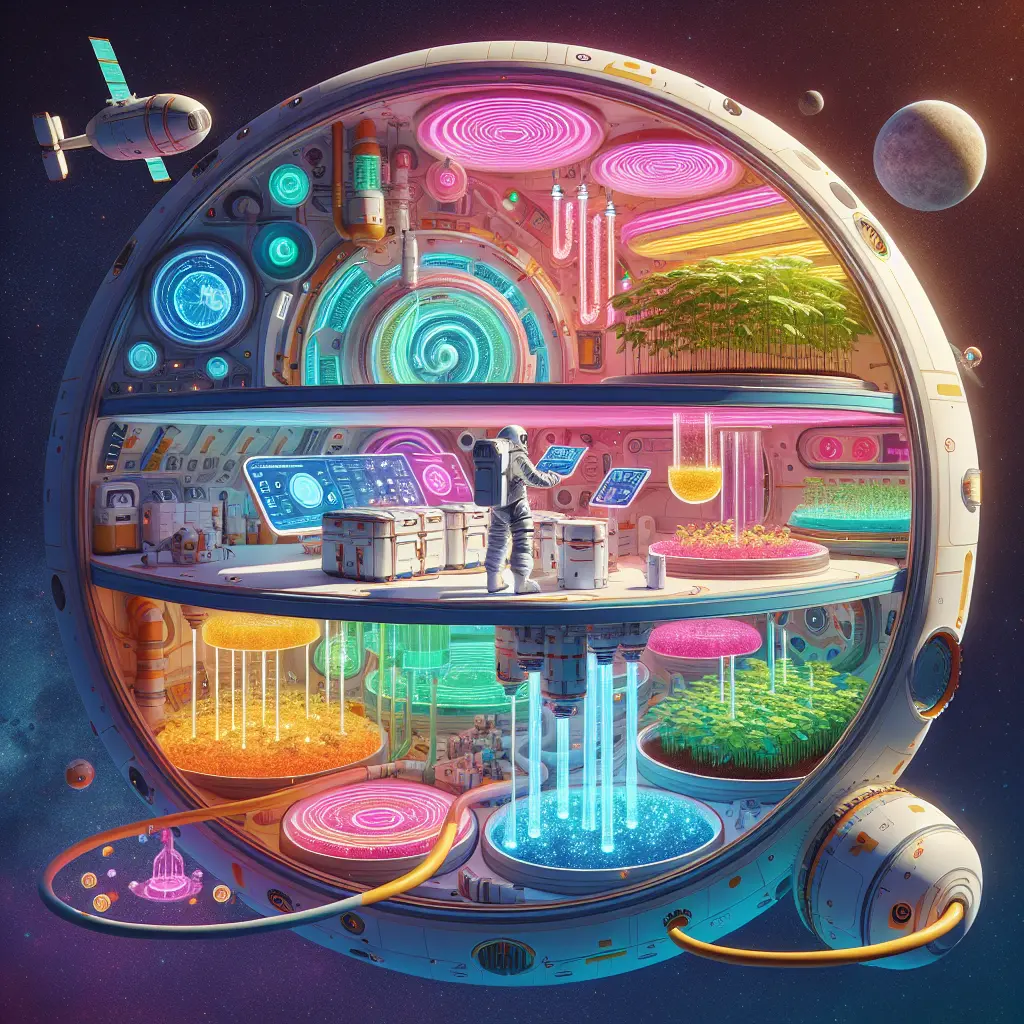
Space habitats rely on advanced life support and closed-loop systems to sustain human life in space. These systems recycle air, water, and waste, minimizing resupply needs from Earth. They maintain stable environments by controlling temperature, humidity, and atmospheric composition. Closed-loop technologies use biological and mechanical processes to purify resources, enabling long-duration missions. Effective life support ensures crew health, safety, and comfort, making sustainable space habitation possible for future exploration and colonization.
Space Habitats: Life Support and Closed-Loop Systems
Space habitats rely on advanced life support and closed-loop systems to sustain human life in space. These systems recycle air, water, and waste, minimizing resupply needs from Earth. They maintain stable environments by controlling temperature, humidity, and atmospheric composition. Closed-loop technologies use biological and mechanical processes to purify resources, enabling long-duration missions. Effective life support ensures crew health, safety, and comfort, making sustainable space habitation possible for future exploration and colonization.
💡 Key Takeaways
- Understand how life support systems produce and maintain breathable air.
- Learn how closed-loop recycling handles air, water, and waste to minimize resupply.
- See how environmental controls regulate temperature, humidity, and atmospheric composition.
- Identify key components like CO2 removal, O2 generation, and water reclamation.
- Explore why redundancy and reliability are critical in space habitat life support.
❓ Frequently Asked Questions
What is a life support system in space habitats?
A system that provides breathable air, clean water, waste handling, and environmental controls (temperature, humidity, pressure, and atmospheric composition) to keep crew healthy and comfortable.
What does a closed-loop life support system do?
It recycles resources instead of discarding them, reusing air, water, and waste to minimize resupply from Earth.
Which resources are recycled in a typical closed-loop system?
Air is cleaned and oxygen is regenerated; water from urine, condensate, and humidity is reclaimed; waste is processed or stored, reducing the need to bring fresh supplies from Earth.
How is environmental stability maintained in space habitats?
Sensors monitor temperature, humidity, pressure, and gas composition, while systems like scrubbers, oxygen generation, and thermal control adjust conditions to keep the environment safe and comfortable.