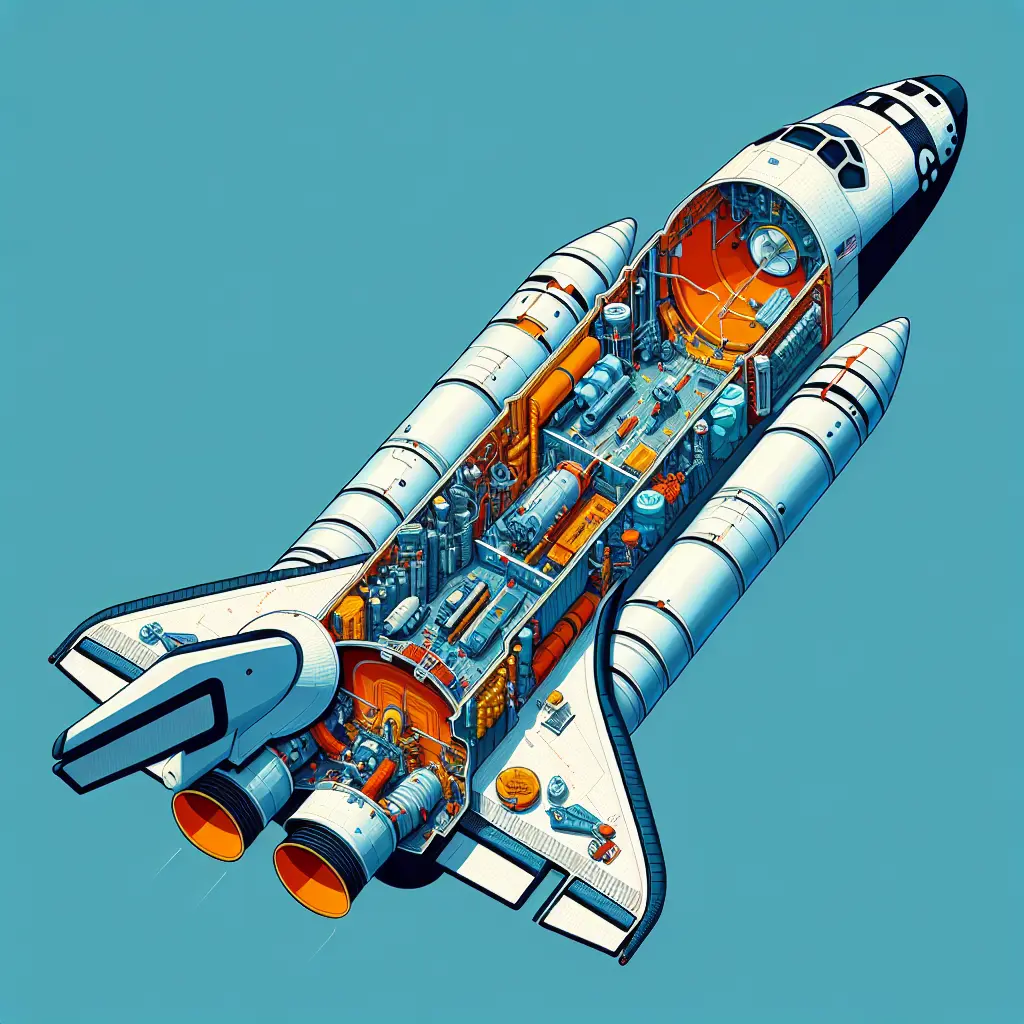
The Space Shuttle system comprised three main components: the Solid Rocket Boosters (SRBs), the External Tank (ET), and the Orbiter. The SRBs provided the initial thrust during liftoff and were jettisoned after burnout. The ET housed liquid hydrogen and oxygen, fueling the Orbiter’s main engines during ascent. The Orbiter, resembling a large airplane, contained the crew, payload bay, and flight systems, and re-entered Earth’s atmosphere for landing after completing its mission.
Space Shuttle Systems: SRBs, ET, and Orbiter Anatomy
The Space Shuttle system comprised three main components: the Solid Rocket Boosters (SRBs), the External Tank (ET), and the Orbiter. The SRBs provided the initial thrust during liftoff and were jettisoned after burnout. The ET housed liquid hydrogen and oxygen, fueling the Orbiter’s main engines during ascent. The Orbiter, resembling a large airplane, contained the crew, payload bay, and flight systems, and re-entered Earth’s atmosphere for landing after completing its mission.
💡 Key Takeaways
- Identify the three Space Shuttle components—SRBs, External Tank, and Orbiter—and their roles in launch.
- Explain how Solid Rocket Boosters provide initial liftoff thrust and are jettisoned after burnout.
- Describe the External Tank's function: storing LH2 and LOX and delivering propellants to the Orbiter's main engines during ascent.
- Recognize the Orbiter's main features (payload bay, wings, crew cabin) and its propulsion/attitude systems (SSMEs, OMS, RCS) used for orbital maneuvers and reentry.
❓ Frequently Asked Questions
What are the three main components of the Space Shuttle system?
The Solid Rocket Boosters (SRBs), the External Tank (ET), and the Orbiter. SRBs provide liftoff thrust and are jettisoned after burnout; the ET stores LH2/LOX to feed the orbiter's main engines during ascent; the Orbiter carries crew and payload and houses the main engines and flight systems.
What is the role of the Solid Rocket Boosters (SRBs)?
They provide the initial thrust at liftoff, burn for about two minutes, and are jettisoned after burnout; they are recovered from the ocean and refurbished for reuse.
What does the External Tank (ET) do during a shuttle flight?
It stores liquid hydrogen and liquid oxygen that feed the Orbiter's main engines during ascent; after engine cutoff, the ET is jettisoned and burns up in the atmosphere.
What is the Orbiter's role in the Space Shuttle system?
It carries the crew and payload, houses the three Space Shuttle Main Engines (SSMEs) and other flight systems, and remains attached to the ET during ascent before delivering the mission to orbit and returning to Earth.