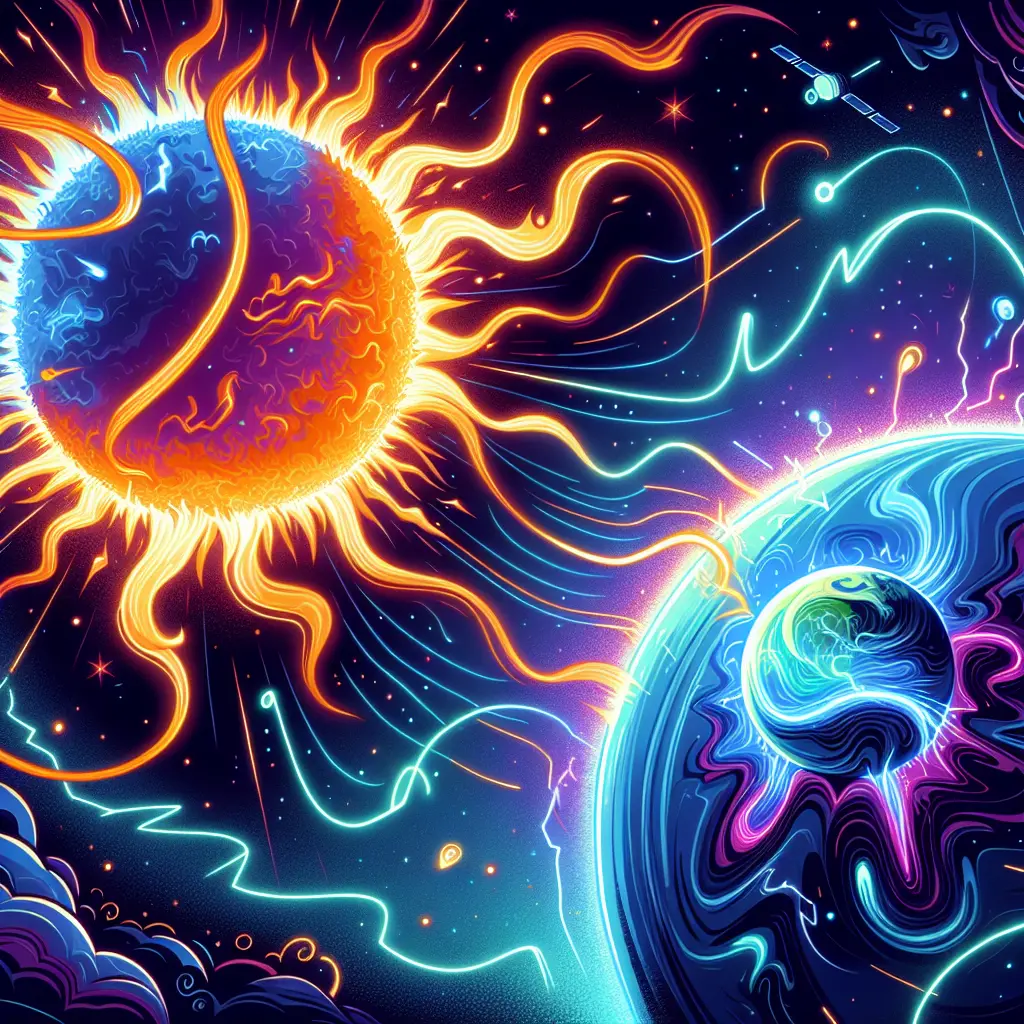
Space weather refers to the dynamic conditions in space driven primarily by the Sun’s activity, including solar flares and coronal mass ejections. Solar storms are intense bursts of energy and charged particles from the Sun that can disrupt Earth’s magnetic field. These phenomena can affect satellites, power grids, GPS, and communication systems, making monitoring and forecasting space weather crucial for technology and infrastructure on Earth.
Space Weather & Solar Storms
Space weather refers to the dynamic conditions in space driven primarily by the Sun’s activity, including solar flares and coronal mass ejections. Solar storms are intense bursts of energy and charged particles from the Sun that can disrupt Earth’s magnetic field. These phenomena can affect satellites, power grids, GPS, and communication systems, making monitoring and forecasting space weather crucial for technology and infrastructure on Earth.
💡 Key Takeaways
- Define space weather and identify Sun-driven events such as solar flares and coronal mass ejections.
- Explain how solar storms interact with Earth's magnetic field and atmosphere, including auroras and increased radiation exposure.
- Recognize potential impacts on technology and infrastructure—satellites, GPS, communications, power grids, and aviation.
- Describe how scientists monitor, forecast, and mitigate space weather to protect systems and people.
❓ Frequently Asked Questions
What is space weather?
Space weather describes conditions in space driven by the Sun’s activity—solar flares, coronal mass ejections, and solar wind—that can affect satellites, communications, navigation, and power systems on Earth.
What is the difference between a solar flare and a coronal mass ejection (CME)?
A solar flare is a brief, intense burst of radiation from the Sun; a CME is a large eruption of plasma and magnetic field released into space. They can occur together but are distinct phenomena.
How can solar storms affect technology and daily life?
They can disrupt satellites, GPS and radio communications, and power grids; auroras may appear at high latitudes during geomagnetic activity.
How is space weather monitored and predicted?
Scientists monitor solar activity and solar wind with satellites and ground instruments (e.g., SOHO, SDO, DSCOVR, NOAA SWPC) to provide forecasts and alerts.