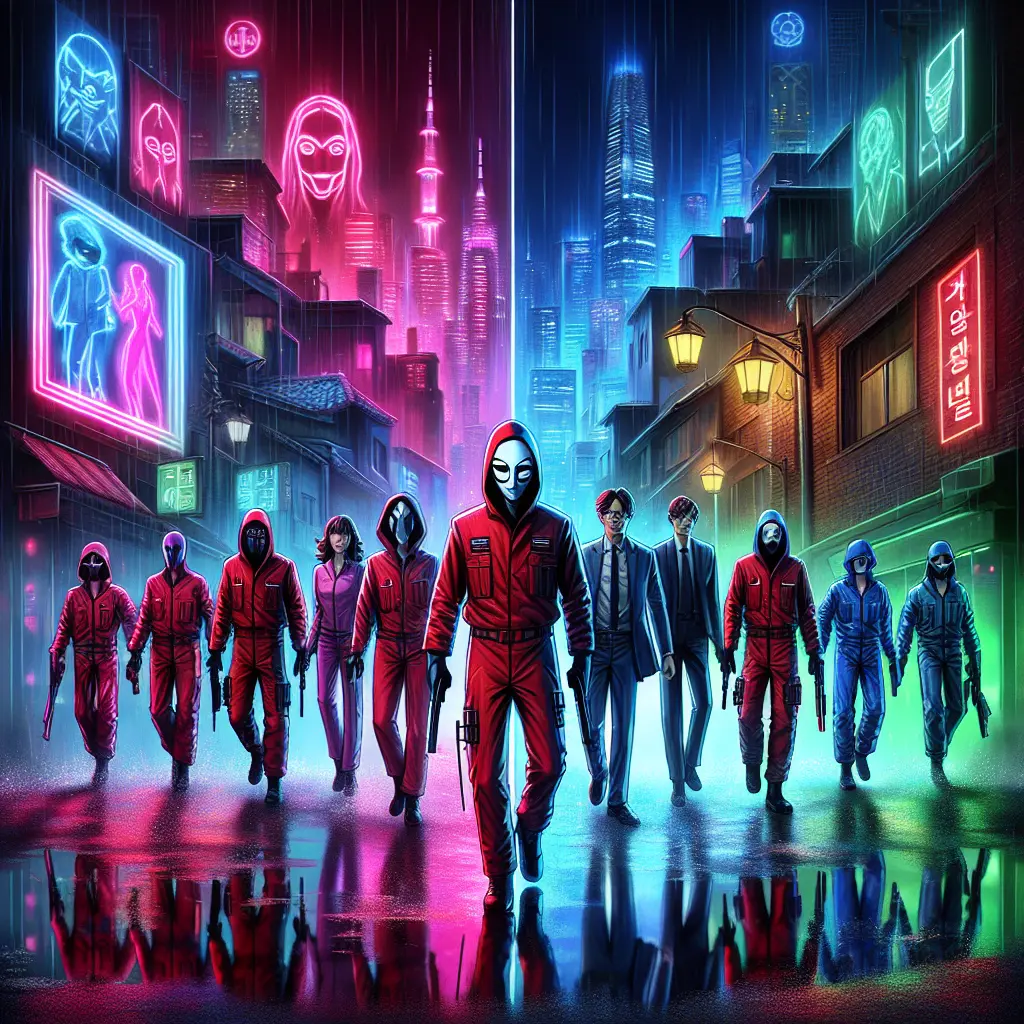
"Squid Game: Lines, Numbers & Symbols" refers to the recurring visual motifs in the popular series "Squid Game." Lines often represent the boundaries and divisions between players or stages. Numbers are used to identify contestants, signifying their loss of identity and individuality. Symbols—such as circles, triangles, and squares—are seen on guards’ masks and game props, denoting hierarchy and structure within the game’s organization, and enhancing the show’s visual storytelling.
Squid Game: Lines, Numbers & Symbols
"Squid Game: Lines, Numbers & Symbols" refers to the recurring visual motifs in the popular series "Squid Game." Lines often represent the boundaries and divisions between players or stages. Numbers are used to identify contestants, signifying their loss of identity and individuality. Symbols—such as circles, triangles, and squares—are seen on guards’ masks and game props, denoting hierarchy and structure within the game’s organization, and enhancing the show’s visual storytelling.

💡 Key Takeaways
- Understand how lines function as visual boundaries that separate players, stages, and power in Squid Game.
- Learn how numbers anonymize contestants, eroding individual identity for collective stakes.
- Identify the meanings of on-screen symbols (circle, triangle, square) and how they indicate roles and authority.
- Explore how these recurring motifs—lines, numbers, and symbols—convey themes of control, surveillance, and social critique across streaming shows.
❓ Frequently Asked Questions
What visual motifs are highlighted in Squid Game: Lines, Numbers & Symbols?
The show uses lines, numbers, and symbols as recurring motifs that encode boundaries, identity, and social roles within the game, underscoring themes of control and dehumanization.
What do the lines represent in Squid Game?
Lines mark boundaries between players or stages, signaling when moves or divisions are enforced by the game's rules.
Why are contestants identified by numbers rather than names?
Numbers erase personal identity, emphasize submission to the system, and remind players of their status as interchangeable participants in a game.
What do the circle, triangle, and square symbols stand for?
These shapes denote different roles: circle = workers, triangle = guards, square = higher-ups/managers, reflecting a layered hierarchy.
How do these motifs contribute to the show's themes?
They reinforce power, control, surveillance, and the erosion of individuality, creating a ritualized, dehumanizing atmosphere.