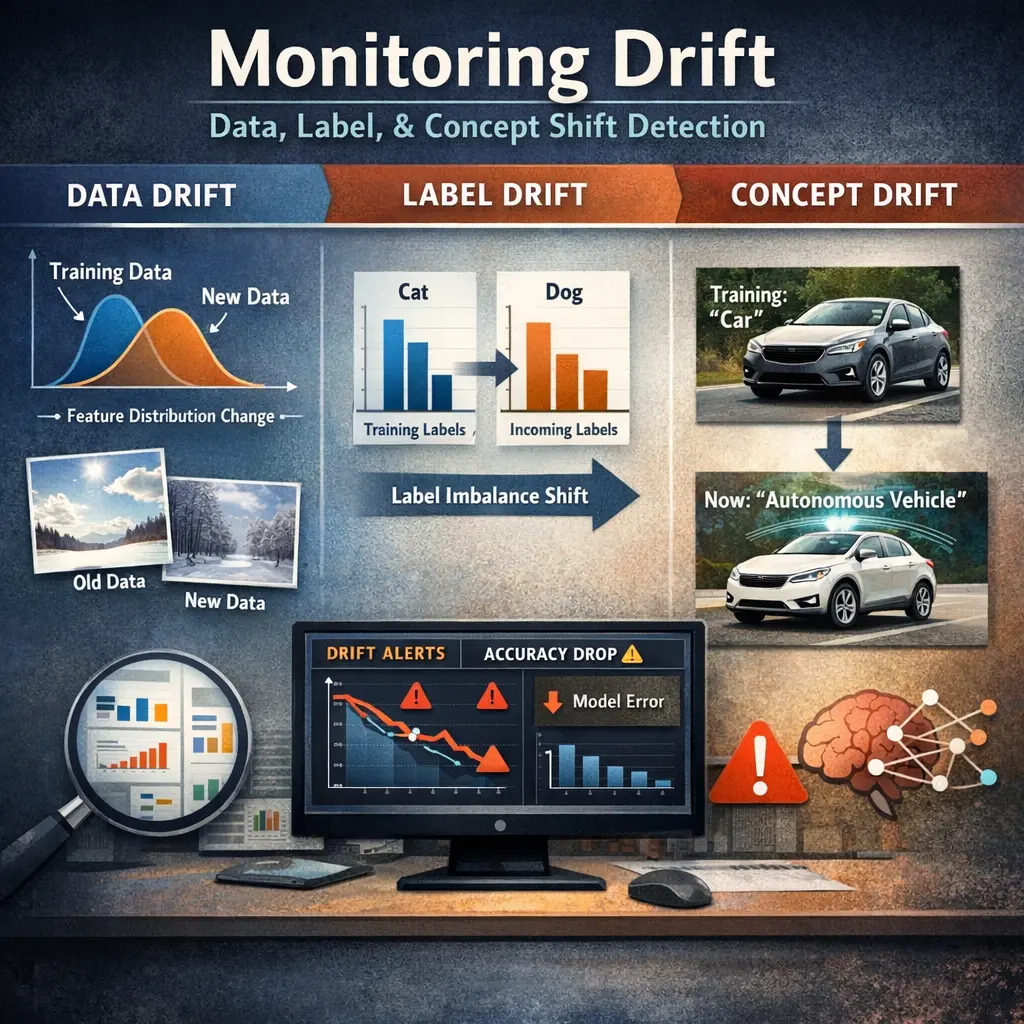
Standardization efforts in AI, such as those by MLCommons and HELM-style frameworks, aim to create consistent benchmarks and evaluation protocols for machine learning models, particularly large language models (LLMs). MLCommons develops shared datasets and performance metrics, while HELM-style frameworks focus on systematic, transparent, and comprehensive LLM evaluations (evals). Together, these initiatives promote fair comparisons, reproducibility, and transparency, fostering trust and accelerating progress in AI development and deployment.
Standardization Efforts: MLCommons, HELM-style Frameworks
Standardization efforts in AI, such as those by MLCommons and HELM-style frameworks, aim to create consistent benchmarks and evaluation protocols for machine learning models, particularly large language models (LLMs). MLCommons develops shared datasets and performance metrics, while HELM-style frameworks focus on systematic, transparent, and comprehensive LLM evaluations (evals). Together, these initiatives promote fair comparisons, reproducibility, and transparency, fostering trust and accelerating progress in AI development and deployment.
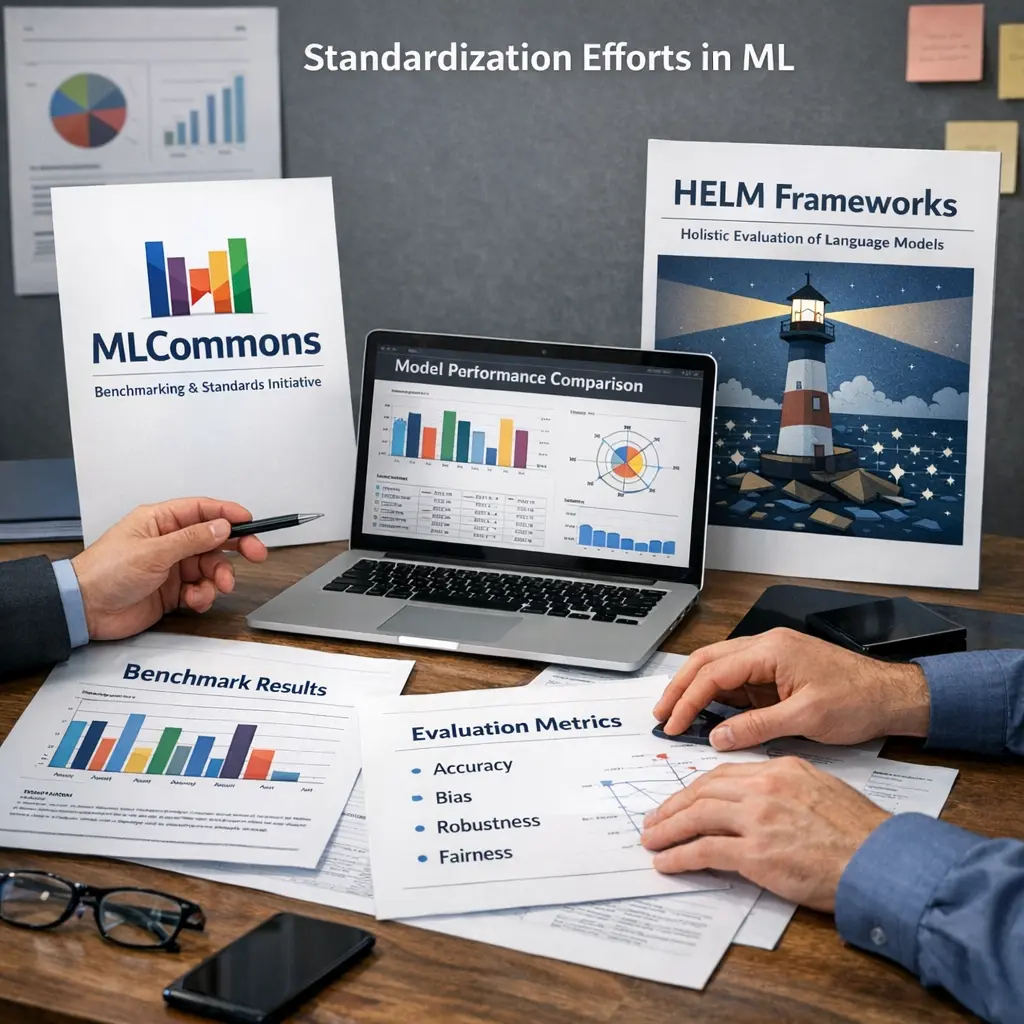
💡 Key Takeaways
- Understand the role of MLCommons in creating standardized benchmarks for machine learning systems.
- Learn what HELM-style evaluation frameworks are and how they enable holistic model assessments.
- Identify the core elements of standardization: representative datasets, agreed metrics, evaluation protocols, and reproducibility.
- Appreciate how standardized benchmarks improve fairness, comparability, and transparency in ML research and deployment.
❓ Frequently Asked Questions
What is MLCommons?
MLCommons is a nonprofit consortium that develops open benchmarks and standards for evaluating machine learning systems, enabling fair, reproducible comparisons across hardware and software.
What is a HELM-style framework?
HELM (Holistic Evaluation of Language Models) is a framework that evaluates language models across multiple dimensions—such as accuracy, safety, bias, and robustness—using standardized benchmarks and scoring.
Why is standardization important for ML benchmarks?
Standardization ensures results are fair, reproducible, and comparable across teams and environments, accelerating progress and building trust in model claims.
How can organizations participate in MLCommons or HELM?
Organizations can join MLCommons as members, contribute benchmarks or datasets, run standardized tests, and publish results. For HELM, researchers can contribute evaluation suites or use HELM guidelines to assess models.
How do HELM-style benchmarks impact language-model deployment?
They reveal strengths and limitations across dimensions, helping teams choose models that balance performance with safety and fairness for real-world use.