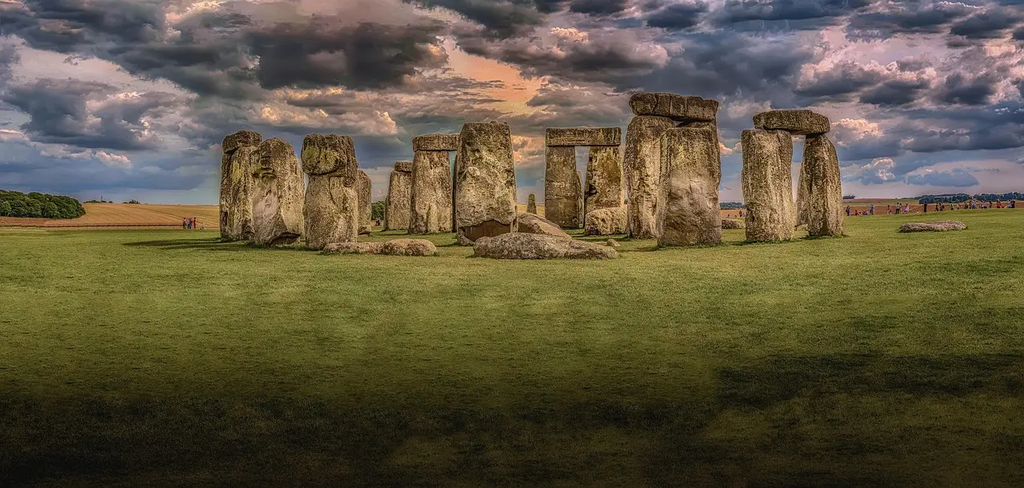
Stonehenge is a prehistoric monument located in Wiltshire, England, renowned for its massive upright stones arranged in a circular layout. Believed to have been constructed between 3000 and 2000 BCE, its exact purpose remains a mystery, though it is often associated with ancient rituals, astronomy, and burial practices. Stonehenge is a UNESCO World Heritage Site and a popular destination for travelers fascinated by history and ancient engineering marvels.
Stonehenge
Stonehenge is a prehistoric monument located in Wiltshire, England, renowned for its massive upright stones arranged in a circular layout. Believed to have been constructed between 3000 and 2000 BCE, its exact purpose remains a mystery, though it is often associated with ancient rituals, astronomy, and burial practices. Stonehenge is a UNESCO World Heritage Site and a popular destination for travelers fascinated by history and ancient engineering marvels.
💡 Key Takeaways
- Understand what Stonehenge is and its possible ceremonial or burial roles in prehistory.
- Learn about the two main stone types (sarsen and bluestone) and how and when Stonehenge was constructed.
- Explore the astronomical alignments, especially to the solstices, and what they reveal about ancient science.
- Recognize Stonehenge's cultural significance and its status as a UNESCO World Heritage Site.
❓ Frequently Asked Questions
What is Stonehenge and where is it located?
Stonehenge is a prehistoric monument in Wiltshire, England, built in stages beginning around 3000 BCE. It features a circular arrangement of massive standing stones.
What stones are used at Stonehenge and where did they come from?
The outer ring uses large sarsen stones with lintels, and the inner ring contains smaller bluestones. Sarsen stones come from the Marlborough Downs area, while the bluestones originated in the Preseli Hills in Wales.
What are common theories about Stonehenge’s purpose?
Theories include astronomical alignments with solstices, ceremonial or religious rituals, and use as a burial site for elites. There is no single confirmed purpose.
How was Stonehenge built and moved into place?
Ancient builders used manpower, wooden rollers, sledges, and ramps to transport stones, and mortise-and-tenon joints to fit lintels on top of the uprights, forming a post-and-lintel structure. Construction occurred between 3000–2000 BCE.