

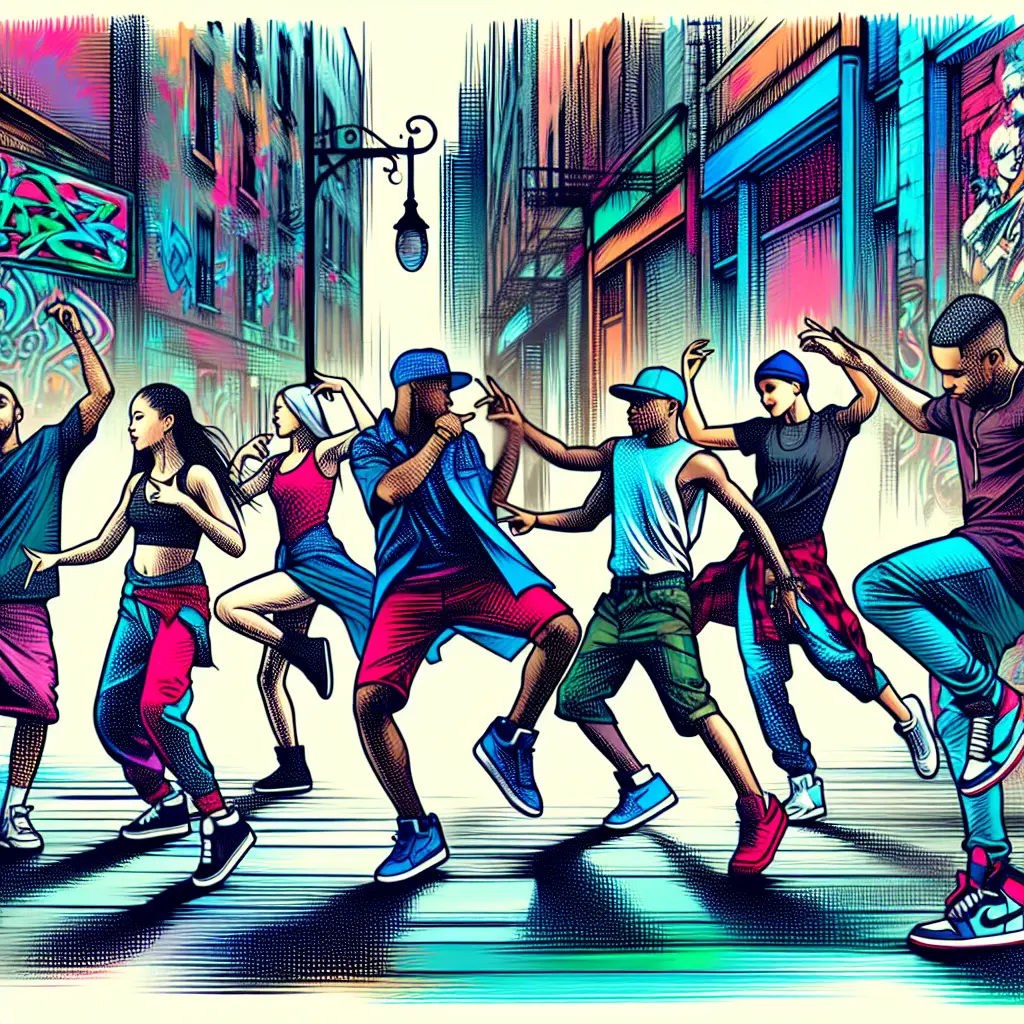
Street dancing refers to a style of dance that is performed outdoors, typically in urban settings such as parks, sidewalks, or street corners. It often incorporates elements of hip-hop, breakdancing, and other urban dance styles. Street dancing is known for its energetic and freestyle movements, and is often a form of self-expression and creativity for dancers.
Street dancing+50
Street dancing refers to a style of dance that is performed outdoors, typically in urban settings such as parks, sidewalks, or street corners. It often incorporates elements of hip-hop, breakdancing, and other urban dance styles. Street dancing is known for its energetic and freestyle movements, and is often a form of self-expression and creativity for dancers.
💡 Key Takeaways
- Identify the hip-hop and breakdancing elements commonly woven into street dancing.
- Describe typical outdoor settings for street dancing (parks, sidewalks, street corners) and how the environment shapes the style.
- Understand the energetic, freestyle nature of street dancing and the importance of improvisation.
- Recognize how street dancing blends different urban styles to create expressive performances.
❓ Frequently Asked Questions
What is street dancing?
Street dancing is a dance style performed outdoors in urban spaces (parks, sidewalks, street corners) that emphasizes energetic, freestyle movement and often blends hip-hop, breakdancing, and other urban styles.
Which dance elements are commonly found in street dancing?
Common elements include hip-hop moves, breakdancing (b-boying/b-girling), popping, locking, and other urban dance styles, typically executed with freestyle improvisation.
Where do street dances typically take place?
Outdoor urban settings such as parks, sidewalks, and street corners, as well as informal jams and street battles.
How is street dancing different from traditional stage dance?
It emphasizes improvised, freestyle moves and personal expression in real-time, often with a community or competitive vibe, rather than strictly choreographed routines performed on a stage.