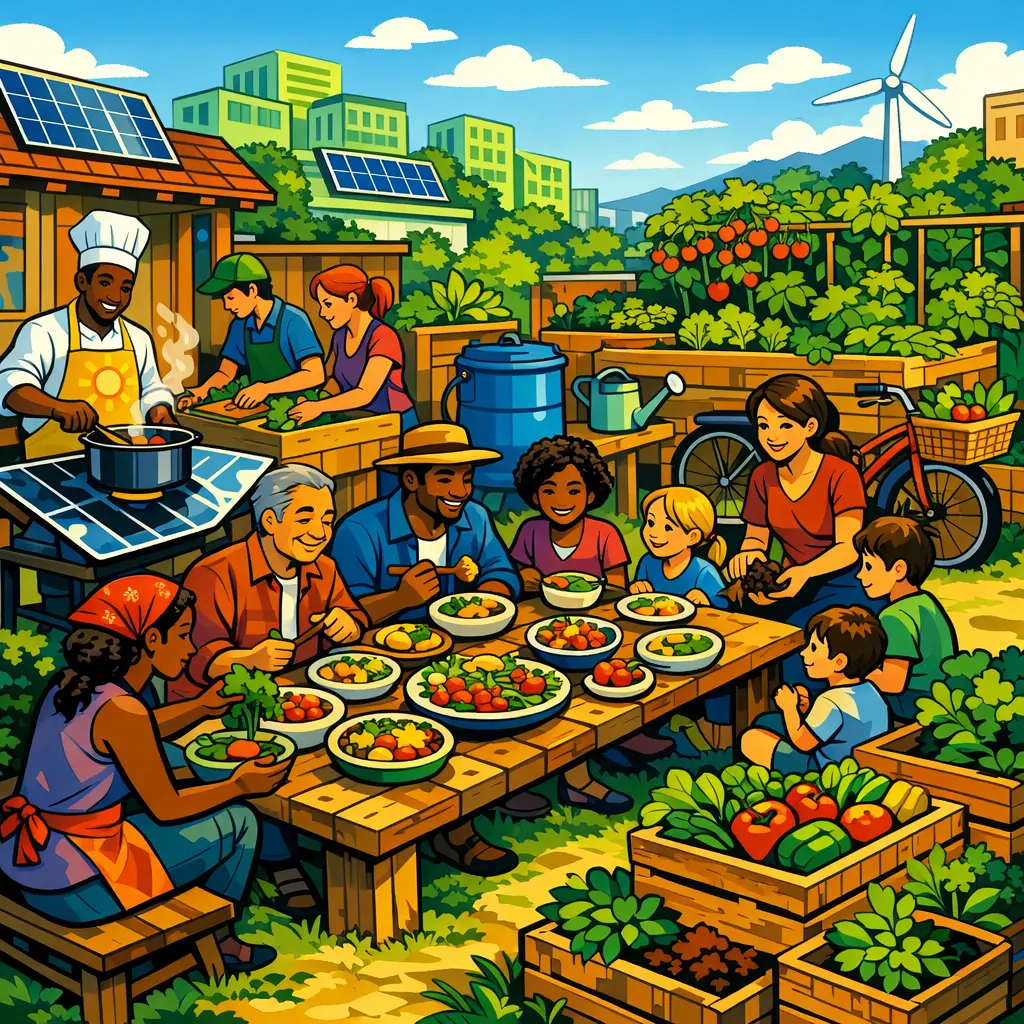
Sustainable gastronomy and food justice explore how food choices impact the environment, equity, and cultural identity. This concept emphasizes sourcing ingredients responsibly, minimizing waste, and ensuring fair access to nutritious food for all. It recognizes the influence of culture and religion on dietary practices, advocating for respect and inclusion. Ultimately, it seeks to create food systems that honor traditions, support communities, and promote ecological balance and social fairness.
Sustainable Gastronomy & Food Justice
Sustainable gastronomy and food justice explore how food choices impact the environment, equity, and cultural identity. This concept emphasizes sourcing ingredients responsibly, minimizing waste, and ensuring fair access to nutritious food for all. It recognizes the influence of culture and religion on dietary practices, advocating for respect and inclusion. Ultimately, it seeks to create food systems that honor traditions, support communities, and promote ecological balance and social fairness.
💡 Key Takeaways
- Understand the core of sustainable gastronomy: environmental stewardship, social equity, and culinary creativity.
- Grasp food justice concepts: equitable access to nutritious food and fair labor practices for workers.
- Learn sustainable sourcing and waste reduction: local, seasonal ingredients, regenerative farming, and minimizing food waste.
- Implement sustainable kitchen practices: efficient operations, mindful packaging, supplier diversity, and measuring impact.
❓ Frequently Asked Questions
What is sustainable gastronomy?
An approach to cooking and eating that minimizes environmental impact while supporting communities and cultures, through ethical sourcing, seasonal menus, waste reduction, and fair labor practices.
What is food justice?
A movement and framework for equitable access to nutritious food, fair treatment of food workers, and just distribution of food resources, addressing systemic inequities.
How can a kitchen practice sustainability?
Source locally and seasonally; minimize energy and water use; reduce, reuse, and recycle waste; compost organic matter; and choose fair labor practices and sustainable ingredients.
What is the difference between food loss and food waste?
Food loss occurs in production and supply chains due to spoilage or inefficiencies; food waste happens at the retail, restaurant, or household level when edible food is discarded.