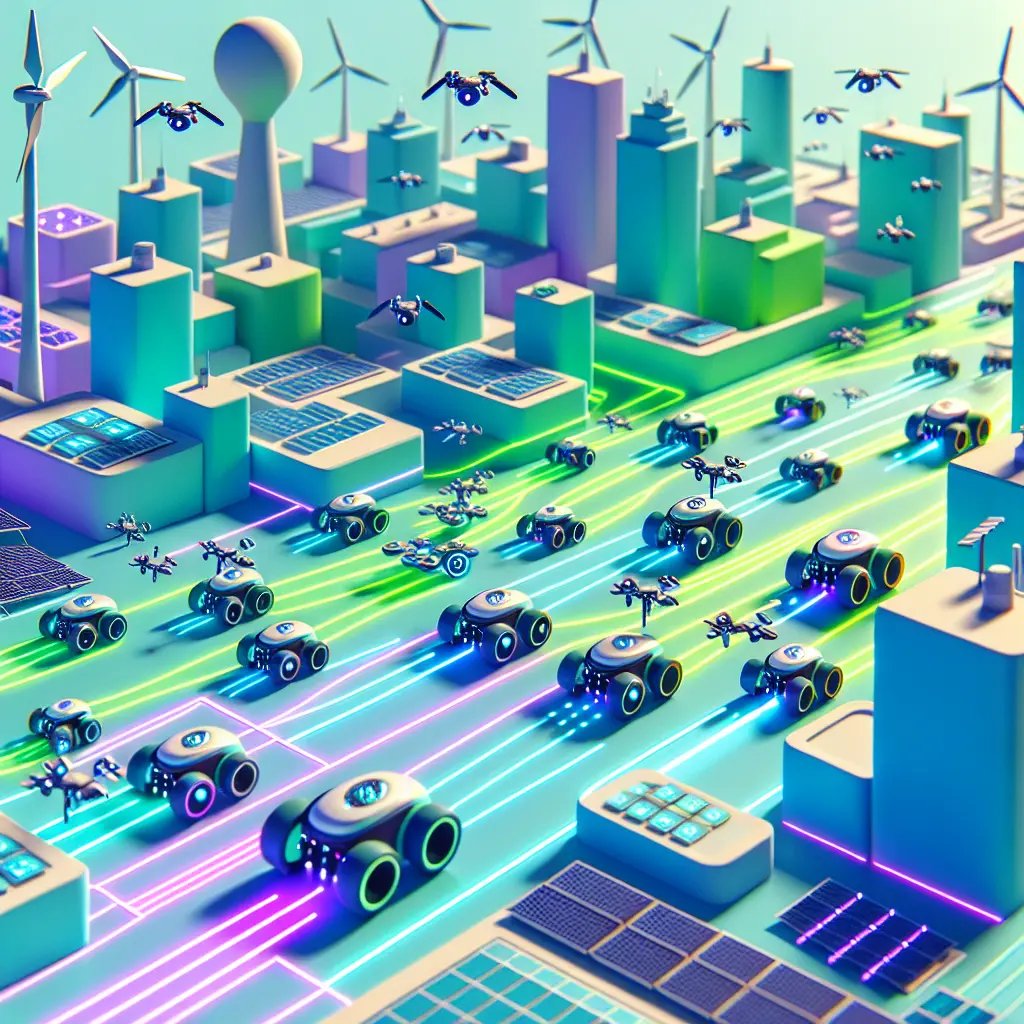
Swarm robotics is a field within robotics that studies how large groups of relatively simple robots can work together to accomplish complex tasks. Inspired by the collective behavior of social insects like ants or bees, swarm robotics emphasizes decentralized control, local communication, and self-organization. The approach enables robust, scalable, and flexible solutions for tasks such as exploration, search and rescue, or environmental monitoring, where individual robots cooperate autonomously without central coordination.
Swarm Robotics
Swarm robotics is a field within robotics that studies how large groups of relatively simple robots can work together to accomplish complex tasks. Inspired by the collective behavior of social insects like ants or bees, swarm robotics emphasizes decentralized control, local communication, and self-organization. The approach enables robust, scalable, and flexible solutions for tasks such as exploration, search and rescue, or environmental monitoring, where individual robots cooperate autonomously without central coordination.
💡 Key Takeaways
- Understand how large groups of simple robots can achieve complex tasks through emergent group behavior.
- Explain decentralized control and local communication as the foundation of swarm robotics (no single central commander).
- Describe self-organization and robustness that arise from simple rules and interactions.
- Identify space and future-tech applications, such as autonomous exploration, mapping, and cooperative manipulation, and recognize practical challenges like fault tolerance and energy constraints.
❓ Frequently Asked Questions
What is swarm robotics?
Swarm robotics studies how many simple robots can cooperate to perform complex tasks using decentralized control, local communication, and self-organization, inspired by social insects.
How do robots in a swarm coordinate without a central controller?
Each robot follows simple rules based on local information and communication with nearby robots; the group’s collective behavior emerges from many interactions.
Why is swarm robotics relevant to space and future tech?
In space, many small robots can work together for exploration, assembly, or maintenance, offering redundancy, fault tolerance, and scalability with limited central planning.
What are common challenges in swarm robotics?
Key challenges include designing robust local rules, managing limited communication, avoiding collisions, allocating tasks efficiently, and predicting emergent global behavior.