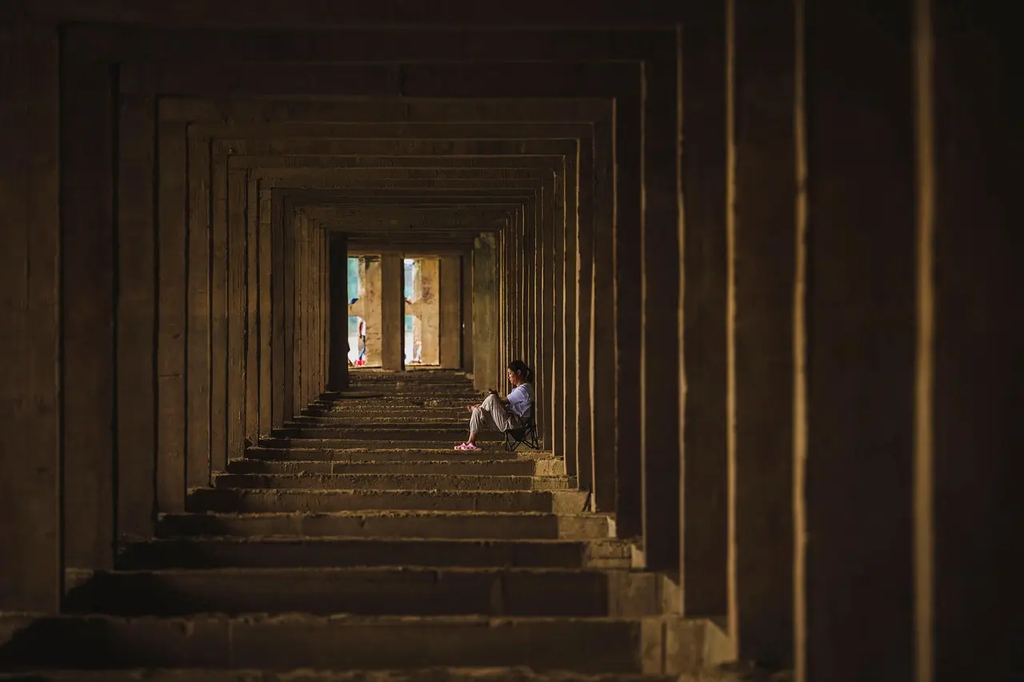
"Symmetry Challenges (Riddle Master: Simple Brain Teasers for Everyone)" refers to a collection of engaging puzzles focused on identifying or creating symmetrical patterns. Designed to be accessible for all ages, these brain teasers encourage logical thinking and visual perception. Participants are tasked with solving riddles that involve recognizing balanced shapes or mirroring images, making it a fun and educational way to sharpen problem-solving skills while enjoying lighthearted mental exercises.
Symmetry Challenges
"Symmetry Challenges (Riddle Master: Simple Brain Teasers for Everyone)" refers to a collection of engaging puzzles focused on identifying or creating symmetrical patterns. Designed to be accessible for all ages, these brain teasers encourage logical thinking and visual perception. Participants are tasked with solving riddles that involve recognizing balanced shapes or mirroring images, making it a fun and educational way to sharpen problem-solving skills while enjoying lighthearted mental exercises.
💡 Key Takeaways
- Identify the axis (or axes) of symmetry in common 2D shapes and patterns.
- Differentiate between line symmetry and rotational symmetry and recognize examples of each.
- Use symmetry to simplify geometric problems and pattern counting.
- Apply symmetry concepts to reflections, coordinate geometry, and transformations to solve questions.
❓ Frequently Asked Questions
What is symmetry in geometry?
A figure has symmetry if it can be transformed into itself by a nontrivial movement (like a reflection or rotation) so parts match.
What is a line of symmetry?
A line that divides a figure into two mirror-image halves that coincide when folded along the line.
What is rotational symmetry and how is its order determined?
Rotational symmetry means the figure looks the same after rotating around a center by some angle less than 360°. The order is the number of distinct such rotations (e.g., a square has order 4).
What is the difference between reflective and rotational symmetry?
Reflective symmetry uses a mirror line; rotational symmetry uses turning around a center. Some shapes have both.