Between 2007 and 2016, Manchester City F.C. underwent significant tactical evolution, transitioning from a mid-table Premier League team to title contenders. Under managers like Mark Hughes, Roberto Mancini, and Manuel Pellegrini, City shifted from direct, physical football to a more possession-based, attacking style. Key signings and increased investment enabled tactical flexibility, with Mancini’s disciplined defense and Pellegrini’s fluid offense laying the groundwork for future success before Pep Guardiola’s arrival.
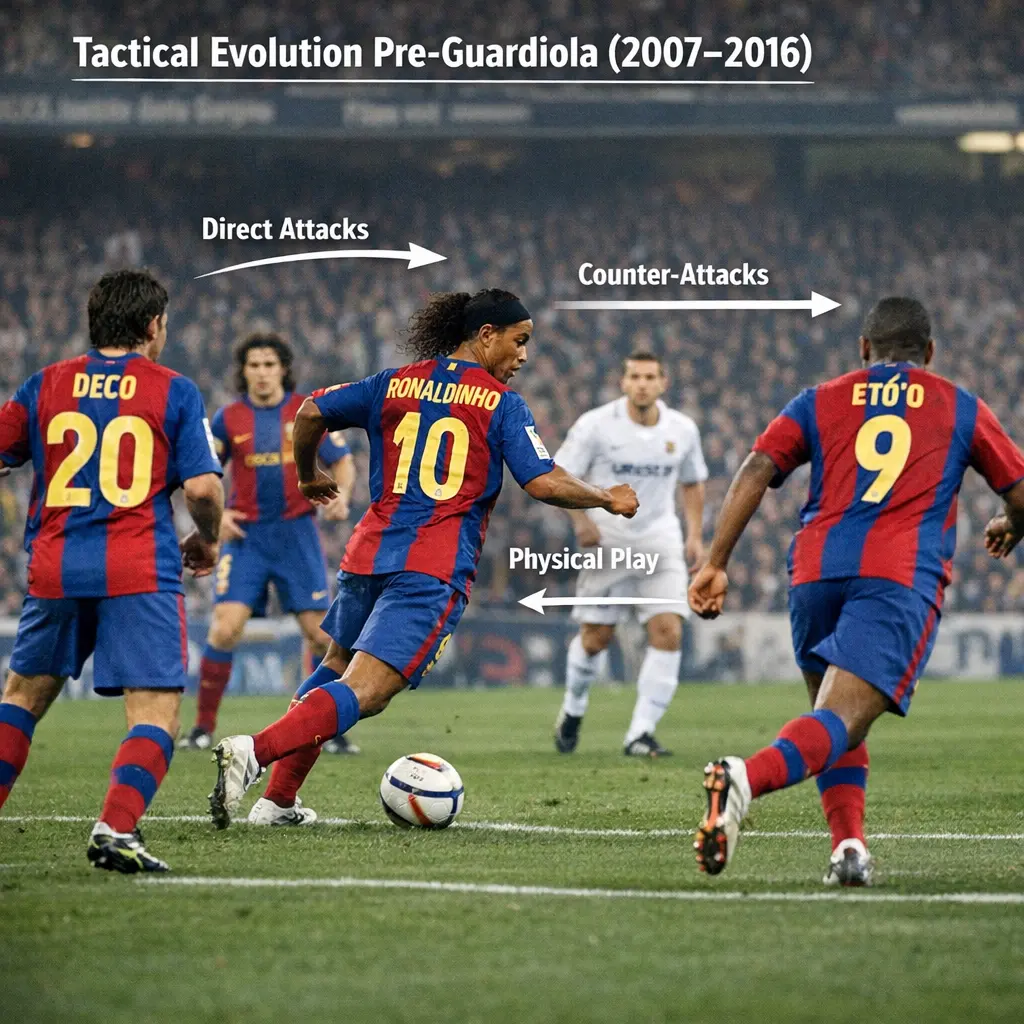
Tactical Evolution Pre-Guardiola (2007–2016)
Between 2007 and 2016, Manchester City F.C. underwent significant tactical evolution, transitioning from a mid-table Premier League team to title contenders. Under managers like Mark Hughes, Roberto Mancini, and Manuel Pellegrini, City shifted from direct, physical football to a more possession-based, attacking style. Key signings and increased investment enabled tactical flexibility, with Mancini’s disciplined defense and Pellegrini’s fluid offense laying the groundwork for future success before Pep Guardiola’s arrival.
💡 Key Takeaways
- Identify the dominant formations of 2007–2016 and the typical roles of attackers, midfielders, and defenders.
- Explain how teams built from the back, progressed through midfield, and executed quick transitions before Guardiola's influence became widespread.
- Describe defensive organization and pressing patterns that defined this era and how teams defended transitions.
- Compare tactical trends across major leagues (La Liga, Premier League, Serie A, Bundesliga) during 2007–2016 and how philosophies varied by league.
❓ Frequently Asked Questions
What does 'Tactical Evolution Pre-Guardiola (2007–2016)' refer to?
It highlights how football tactics developed in the years around 2007–2016, focusing on formations, pressing styles, ball progression, and how teams adapted to evolving strategies before Guardiola's long-term influence.
What were the common formations used during this period?
Popular setups included 4-3-3, 4-2-3-1, and variations like 3-5-2 or 4-4-2 diamond, reflecting emphasis on possession, width, and defensive compactness.
What is pressing, and why did it become more prominent?
Pressing is the attempt to win the ball high up the pitch or in the midfield. During this era, teams increasingly used coordinated pressure to disrupt opponents’ build-up and accelerate transitions.
What roles did defenders and midfielders play in build-up play?
Defenders and defensive midfielders often acted as ball-playing connectors, starting attacks from the back and helping control tempo through patient or timely progression of passes.