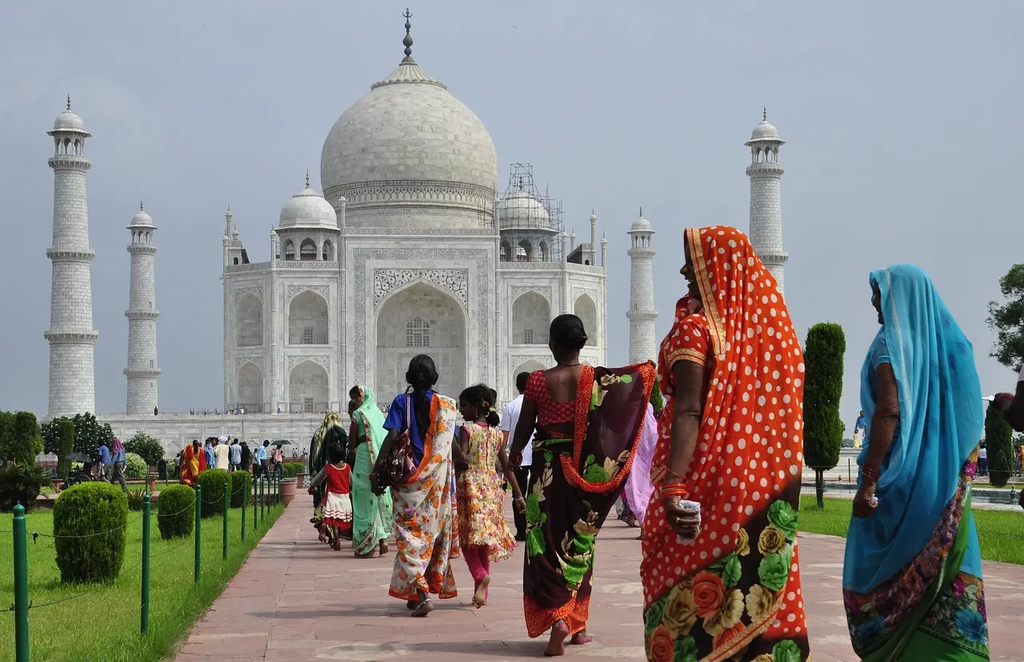
The Taj Mahal, located in Agra, India, is an iconic white marble mausoleum built by Mughal Emperor Shah Jahan in memory of his wife Mumtaz Mahal. Renowned for its stunning architecture, intricate carvings, and symmetrical gardens, it symbolizes eternal love. Recognized as one of the New Seven Wonders of the World, the Taj Mahal attracts millions of visitors annually and stands as a masterpiece of Mughal architecture and cultural heritage.
Taj Mahal+50
The Taj Mahal, located in Agra, India, is an iconic white marble mausoleum built by Mughal Emperor Shah Jahan in memory of his wife Mumtaz Mahal. Renowned for its stunning architecture, intricate carvings, and symmetrical gardens, it symbolizes eternal love. Recognized as one of the New Seven Wonders of the World, the Taj Mahal attracts millions of visitors annually and stands as a masterpiece of Mughal architecture and cultural heritage.
💡 Key Takeaways
- Identify the Taj Mahal as a mausoleum built by Emperor Shah Jahan in memory of his wife Mumtaz Mahal.
- Recognize signature architectural features: white marble exterior, a large central dome, four slender minarets, and intricate pietra dura inlay.
- Understand the garden setting (charbagh) and the reflecting pool that frame the tomb's layout.
- Know its location in Agra, India, and its status as a UNESCO World Heritage Site and a premier example of Mughal architecture.
❓ Frequently Asked Questions
What is the Taj Mahal and where is it located?
The Taj Mahal is a white marble mausoleum in Agra, India, built by Mughal emperor Shah Jahan in memory of his wife Mumtaz Mahal; it sits beside the Yamuna River.
Who built the Taj Mahal and why?
Commissioned by Shah Jahan in the 17th century as a memorial to Mumtaz Mahal, it symbolizes enduring love.
When was it built and what architectural styles does it reflect?
Construction began in 1632 and was largely completed by 1653, blending Persian, Indian, and Islamic architectural elements.
What are notable features of its design?
A white marble exterior, a large central dome, four corner minarets, intricate pietra dura inlays and calligraphy, and a surrounding charbagh garden as part of a larger complex that includes a mosque and guesthouse.
Is the Taj Mahal a UNESCO World Heritage Site?
Yes. It was designated a UNESCO World Heritage Site in 1983 for its beauty and historic significance.