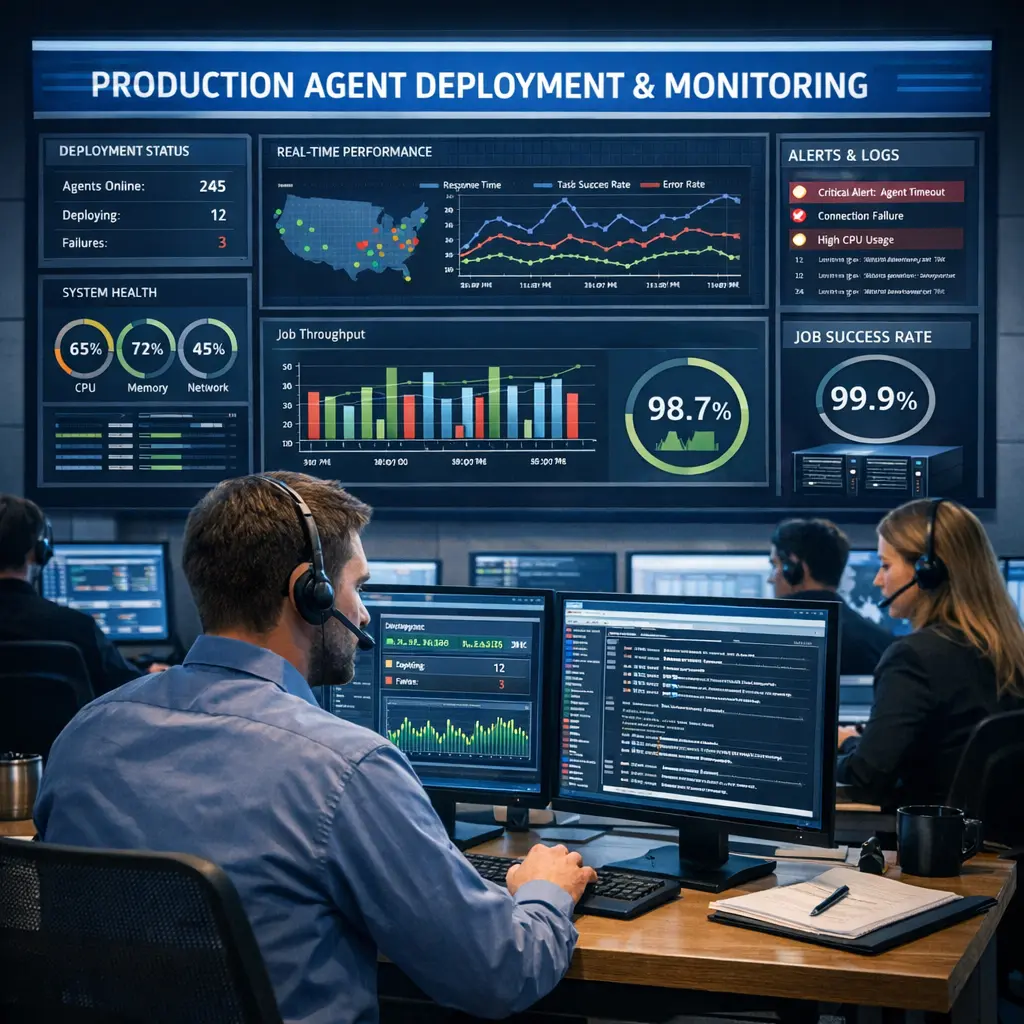
Task Success Metrics & KPIs (Agent Architecture) refer to the quantitative and qualitative measures used to evaluate how effectively an agent-based system achieves its objectives. These metrics track performance indicators such as task completion rate, response accuracy, processing speed, and user satisfaction. By analyzing these KPIs, organizations can assess agent efficiency, identify areas for improvement, and ensure that the architecture supports desired business outcomes and operational goals.
Task Success Metrics & KPIs
Task Success Metrics & KPIs (Agent Architecture) refer to the quantitative and qualitative measures used to evaluate how effectively an agent-based system achieves its objectives. These metrics track performance indicators such as task completion rate, response accuracy, processing speed, and user satisfaction. By analyzing these KPIs, organizations can assess agent efficiency, identify areas for improvement, and ensure that the architecture supports desired business outcomes and operational goals.

💡 Key Takeaways
- Understand what task success metrics and KPIs are and why they matter for measuring performance.
- Identify key task performance KPIs such as on-time completion, quality rate, rework rate, and throughput.
- Differentiate leading indicators from lagging indicators and know when to use each to monitor progress and predict outcomes.
- Learn how to set SMART KPIs and align them with business goals to drive data-driven improvement.
❓ Frequently Asked Questions
What is a KPI and why are KPIs used for task success?
A KPI (Key Performance Indicator) is a measurable value showing progress toward a defined goal. For tasks, KPIs help you assess if the task is on track, identify bottlenecks, and drive improvements.
How do you choose the right KPIs for a task?
Start with the task goal, choose SMART indicators that are observable, measurable, and tied to outcomes; ensure data is available, limit to 3–5 metrics, and align with stakeholders.
What is the difference between leading and lagging indicators in task metrics?
Leading indicators predict future performance (e.g., milestone progress, resource utilization); lagging indicators report results after completion (e.g., tasks finished, defects found). Use both to guide action.
What are common task success metrics?
On-time delivery, scope/adherence, budget variance, defect/rework rate, quality of output, stakeholder satisfaction, and changes in scope.