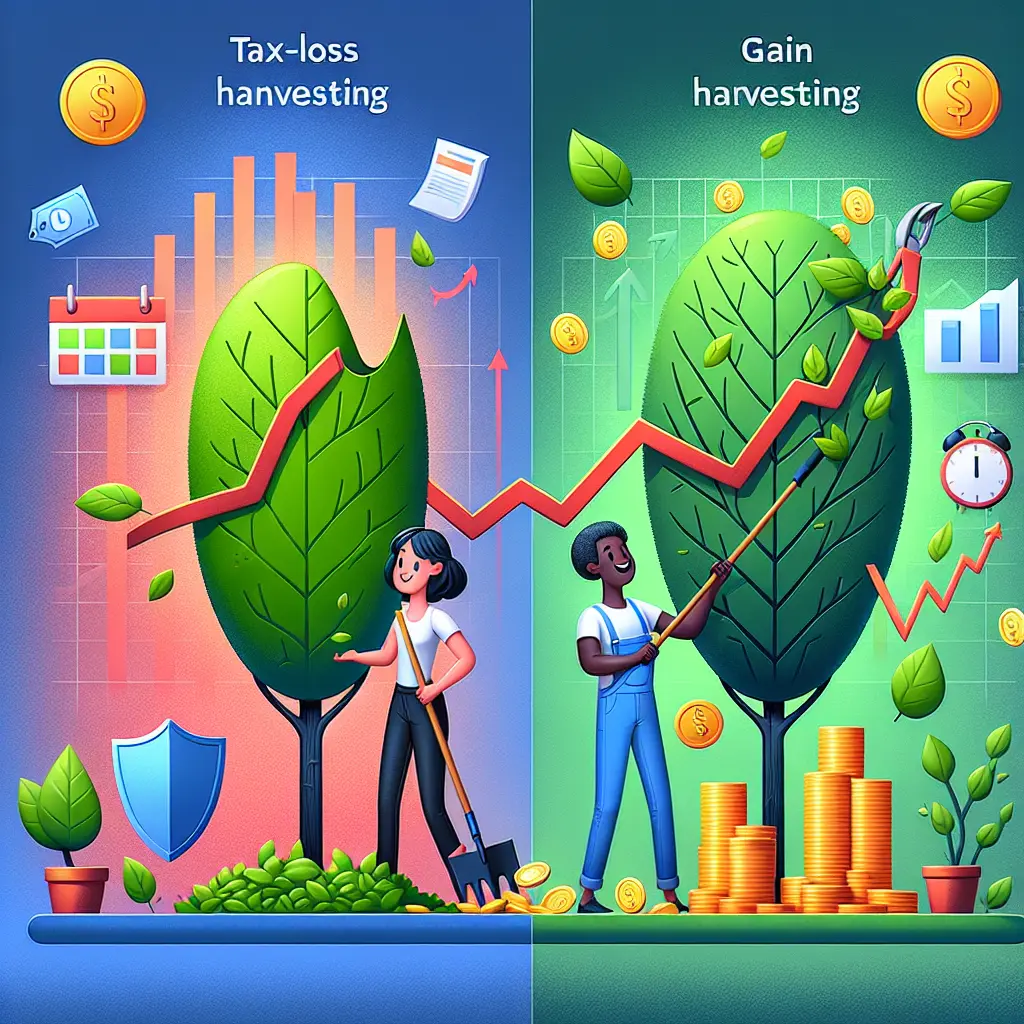
Tax-loss harvesting is an investment strategy where investors sell securities at a loss to offset capital gains taxes from profitable investments, thereby reducing their overall tax liability. Gain harvesting, on the other hand, involves selling investments that have appreciated in value to realize gains, often during periods of lower income or lower tax rates, to minimize future tax impacts. Both strategies are used to optimize after-tax returns in a portfolio.
Tax-Loss Harvesting and Gain Harvesting Strategies
Tax-loss harvesting is an investment strategy where investors sell securities at a loss to offset capital gains taxes from profitable investments, thereby reducing their overall tax liability. Gain harvesting, on the other hand, involves selling investments that have appreciated in value to realize gains, often during periods of lower income or lower tax rates, to minimize future tax impacts. Both strategies are used to optimize after-tax returns in a portfolio.
💡 Key Takeaways
- Understand how tax-loss harvesting uses investment losses to offset capital gains and reduce tax liability.
- Learn how gain harvesting realizes appreciated gains to manage tax exposure and rebalance portfolios.
- Identify key rules and timing factors, such as the wash-sale rule and the impact of short-term vs long-term gains.
- Consider practical trade-offs, including costs, risk, and how harvesting fits with your overall investment and tax strategy.
❓ Frequently Asked Questions
What is tax-loss harvesting?
Tax-loss harvesting is an investment strategy that sells securities at a loss to offset realized capital gains, reducing your overall tax bill. If losses exceed gains, you can deduct up to $3,000 of ordinary income per year (with any remaining losses carried forward). Be mindful of the wash-sale rule, which disallows the loss if you repurchase a substantially identical security within 30 days.
What is gain harvesting?
Gain harvesting is selling investments that have appreciated to realize gains. This can help manage taxes by timing gains in years with lower income or by resetting the cost basis for future growth. Long-term gains are typically taxed at lower rates than short-term gains.
What is the wash-sale rule and why does it matter for tax-loss harvesting?
The wash-sale rule prevents you from claiming a tax deduction for a loss if you buy a substantially identical security within 30 days before or after the sale. To harvest losses effectively, wait 31 days or apply a different security in the interim.
When should you consider using tax-loss or gain harvesting?
Consider harvesting when you have realized gains to offset or when rebalancing your portfolio in a tax-efficient way. Align harvesting with your tax bracket and long-term goals, and avoid over-harvesting that could compromise your investment plan.