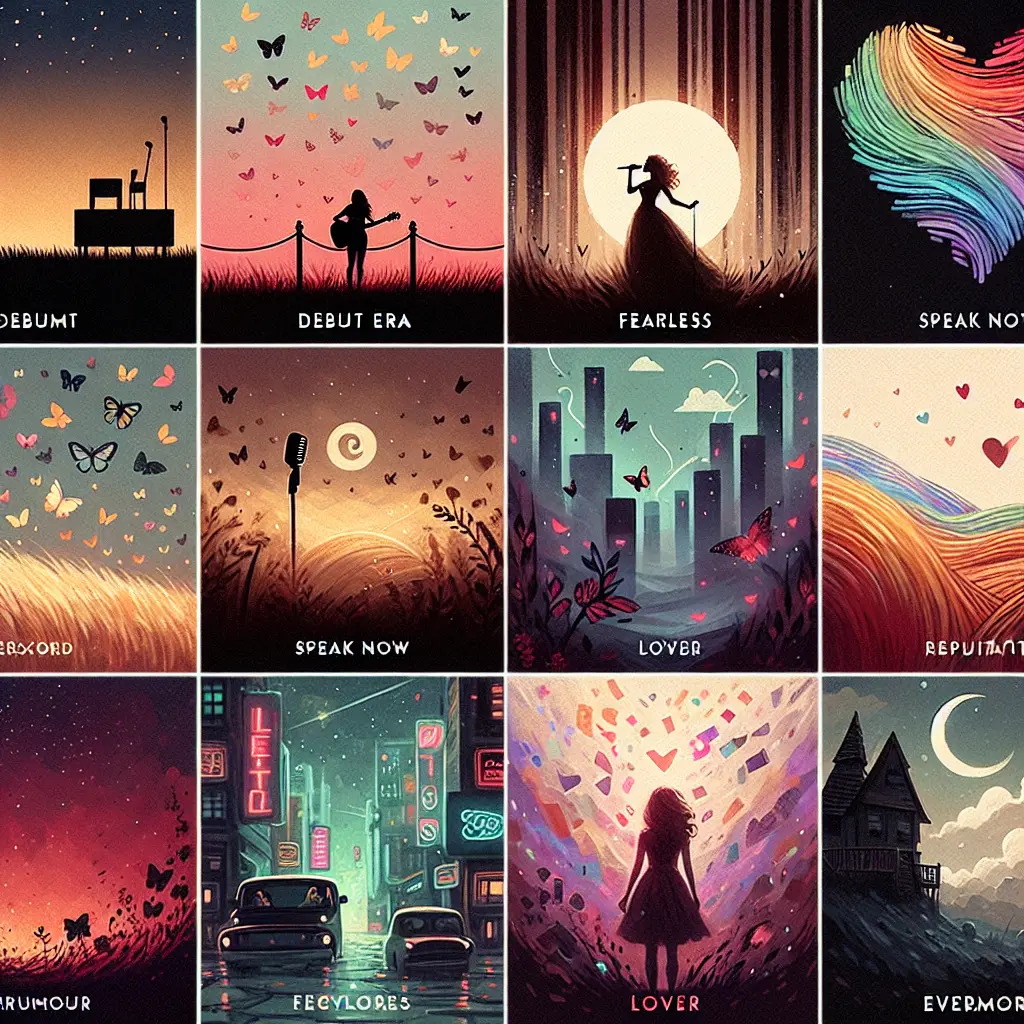
"Taylor Swift Narrative Arcs by Era" refers to the distinct storytelling themes and personal journeys reflected in each phase of Taylor Swift’s music career. Each era—such as "Fearless," "Red," "1989," "Reputation," "Lover," "Folklore," and "Midnights"—showcases unique emotional growth, relationships, and self-discovery, marked by shifts in musical style, lyrical content, and public persona, illustrating her evolution as both an artist and individual.
Taylor Swift Narrative Arcs by Era
"Taylor Swift Narrative Arcs by Era" refers to the distinct storytelling themes and personal journeys reflected in each phase of Taylor Swift’s music career. Each era—such as "Fearless," "Red," "1989," "Reputation," "Lover," "Folklore," and "Midnights"—showcases unique emotional growth, relationships, and self-discovery, marked by shifts in musical style, lyrical content, and public persona, illustrating her evolution as both an artist and individual.
💡 Key Takeaways
- Map each era to its core narrative arc and emotional journey.
- Identify Swift's storytelling devices (confessional lyrics, vivid metaphors, and shifting perspectives) used across eras.
- Explain how genre and production choices (country, pop, indie folk, synth-pop) reinforce each era's story.
- Explore how public image, media narratives, and fan interpretation shape the lore of the eras.
❓ Frequently Asked Questions
What are narrative arcs in Taylor Swift's eras?
Narrative arcs are the overarching storytelling themes and personal journeys reflected in each era, showing how her music's emotional and stylistic focus evolves.
Which Taylor Swift era is known for fairy-tale romance and country-pop roots?
Fearless marks the era with youthful romance, a fairy-tale vibe, and country-pop roots—the breakout phase of her career.
How do the 1989 and Reputation eras differ in mood and themes?
1989 is a bold pop reinvention with bright, confident energy; Reputation leans into fame, media scrutiny, and reinvention with darker, more introspective tones.
How can I tell which era a quiz question refers to?
Look for era-specific motifs such as romance, fame, or storytelling style, plus tonal cues and distinctive sounds or visuals associated with each era.
Are Folklore and Midnights more about storytelling and introspection than traditional romance?
Yes. Folklore emphasizes fictional storytelling with a folk-influenced mood, while Midnights centers on late-night reflection and candid self-scrutiny, expanding beyond pure romance.