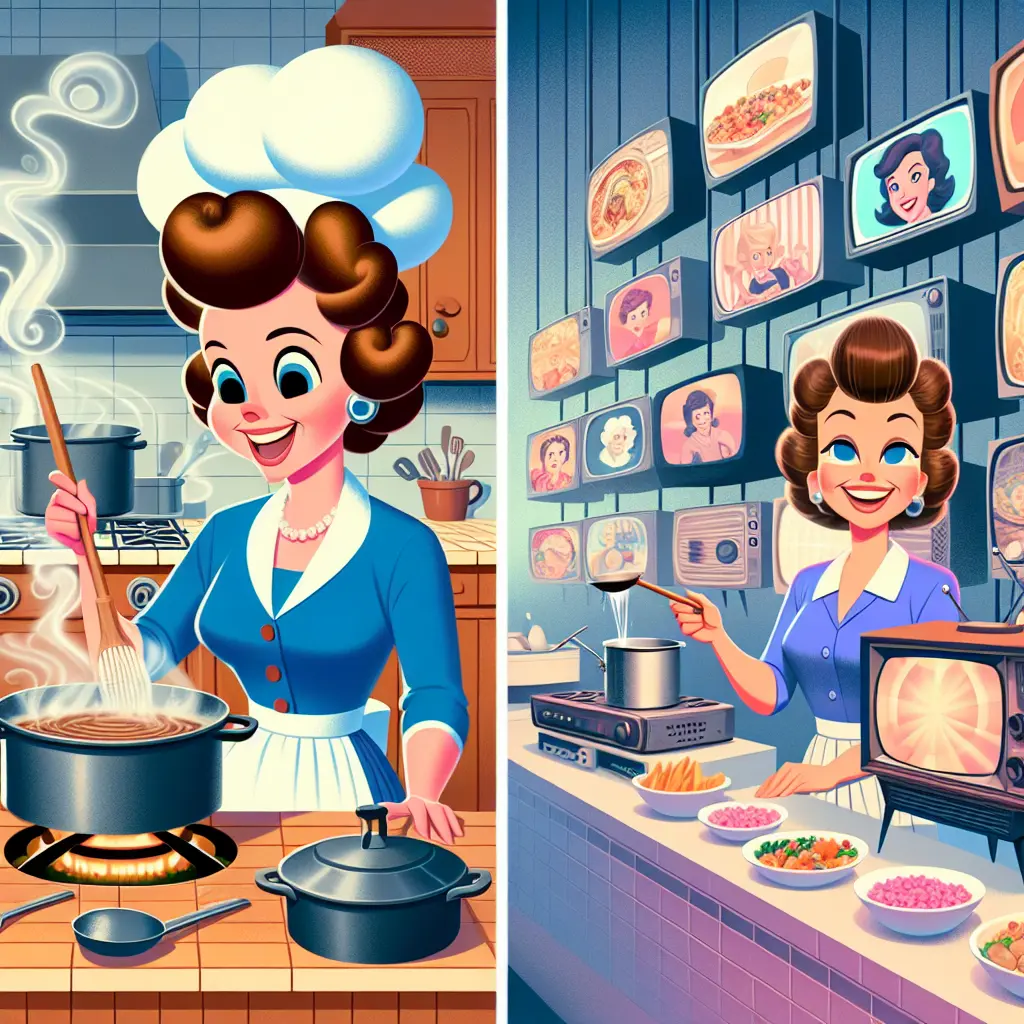
Television has profoundly shaped culinary culture, beginning with Julia Child, who brought French cooking into American homes and made cooking accessible and entertaining. As television evolved, cable networks like Food Network emerged, introducing a new generation of charismatic food stars. These personalities not only taught recipes but also built brands and lifestyles around food, turning cooking shows into mainstream entertainment and making chefs into celebrities.
Television's influence: Julia Child to cable food stars
Television has profoundly shaped culinary culture, beginning with Julia Child, who brought French cooking into American homes and made cooking accessible and entertaining. As television evolved, cable networks like Food Network emerged, introducing a new generation of charismatic food stars. These personalities not only taught recipes but also built brands and lifestyles around food, turning cooking shows into mainstream entertainment and making chefs into celebrities.
💡 Key Takeaways
- Understand how Julia Child popularized French cooking in American homes and made it approachable and entertaining.
- Explore how television shifted from traditional broadcasts to cable networks, reshaping how cooking shows are produced and consumed.
- Identify how charismatic food stars influenced culinary trends, home cooking practices, and food culture.
- Recognize the lasting impact of TV on American culinary history and the careers of food media personalities.
❓ Frequently Asked Questions
Who was Julia Child and what impact did she have on American cooking on TV?
Julia Child popularized French techniques in American homes, made cooking approachable on television, and used an engaging style to teach and entertain viewers.
How did television shape American culinary culture beyond Julia Child?
TV brought cooking into living rooms, normalized home experimentation, showcased diverse cuisines, and helped create celebrity chefs and cooking as entertainment.
What is the difference between early broadcast cooking shows and later cable networks like Food Network?
Broadcast shows targeted broad audiences with general recipes, while cable networks offered longer formats, more personality-driven hosts, and niche food programming.
Why did cable food networks contribute to a new generation of charismatic food stars?
Cable's 24/7 schedules and multiple channels allowed hosts to build distinct personas, develop brands, and cultivate loyal audiences around food entertainment.