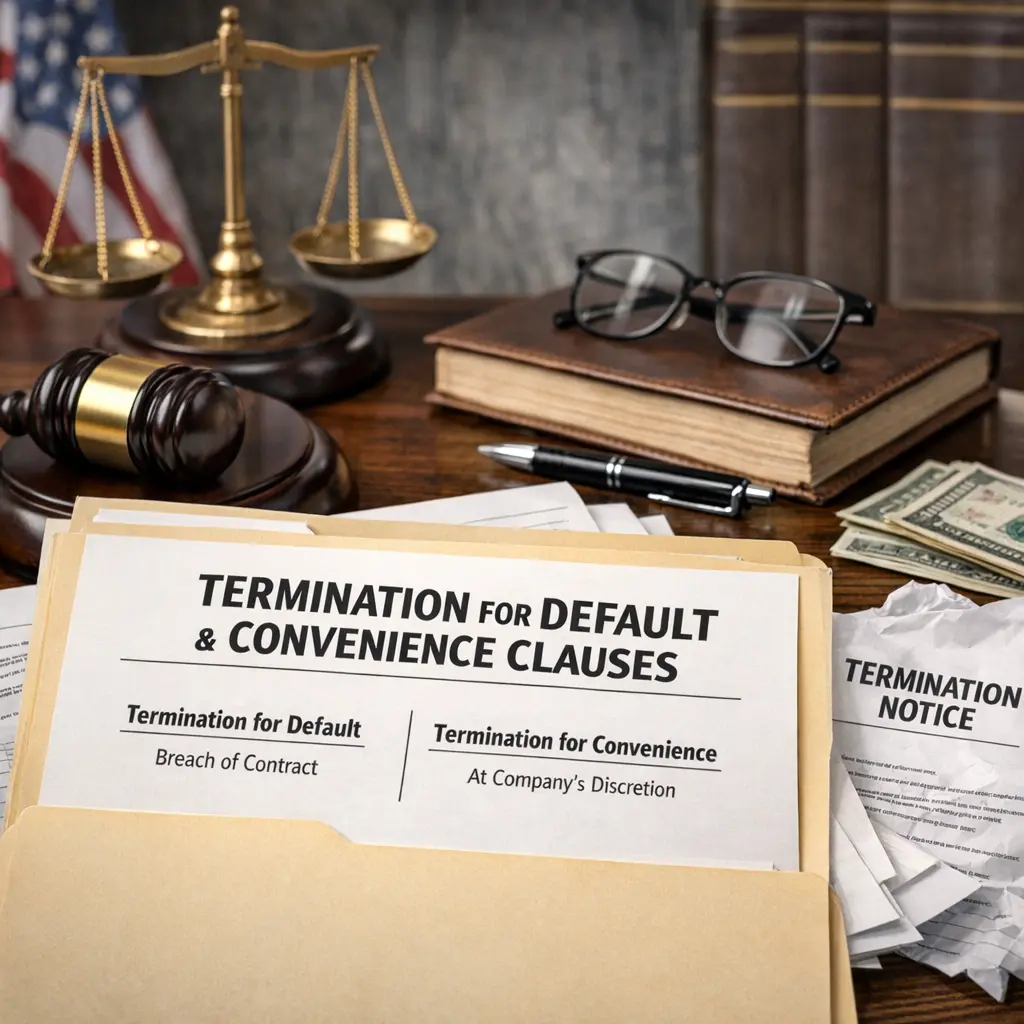
Termination for Default and Convenience Clauses in tender and procurement contracts outline the conditions under which a contract may be ended. Termination for default allows the purchaser to end the contract if the supplier fails to meet obligations, such as delays or poor performance. Termination for convenience permits the purchaser to terminate the contract at their discretion, even without supplier fault, typically providing compensation for work performed up to the termination date.
Termination for Default and Convenience Clauses
Termination for Default and Convenience Clauses in tender and procurement contracts outline the conditions under which a contract may be ended. Termination for default allows the purchaser to end the contract if the supplier fails to meet obligations, such as delays or poor performance. Termination for convenience permits the purchaser to terminate the contract at their discretion, even without supplier fault, typically providing compensation for work performed up to the termination date.
💡 Key Takeaways
- Define termination for default and termination for convenience and when each is typically used.
- Distinguish the triggers: termination for default is for material breach or non-performance, while termination for convenience is a discretionary decision by the contracting party.
- Explain required notice and cure periods, and outline wind-down and transition obligations.
- Understand the financial consequences: payment for work performed, termination costs, and implications for re-procurement or damages.
- Identify drafting considerations: specify grounds, procedures, remedies, and closeout obligations to minimize disputes.
❓ Frequently Asked Questions
What is termination for default?
Termination for default (also called termination for cause) lets the non‑breaching party end the contract if the other party fails to meet essential obligations or breaches a material term, usually after notice and a cure period.
What is termination for convenience?
Termination for convenience allows one or both parties to end the contract without fault, typically on written notice and with payment for work performed and reasonable closeout costs.
How do termination for default and termination for convenience differ?
Termination for default is tied to fault or nonperformance; termination for convenience is not tied to fault and can occur at any time (subject to notice). They also lead to different financial obligations and wind‑down requirements.
What happens to work and payments when termination for convenience is exercised?
Work performed up to termination is usually payable under the contract, and the terminating party may cover reasonable closeout costs; unfinished work is halted and remaining obligations are settled as defined in the termination clause.