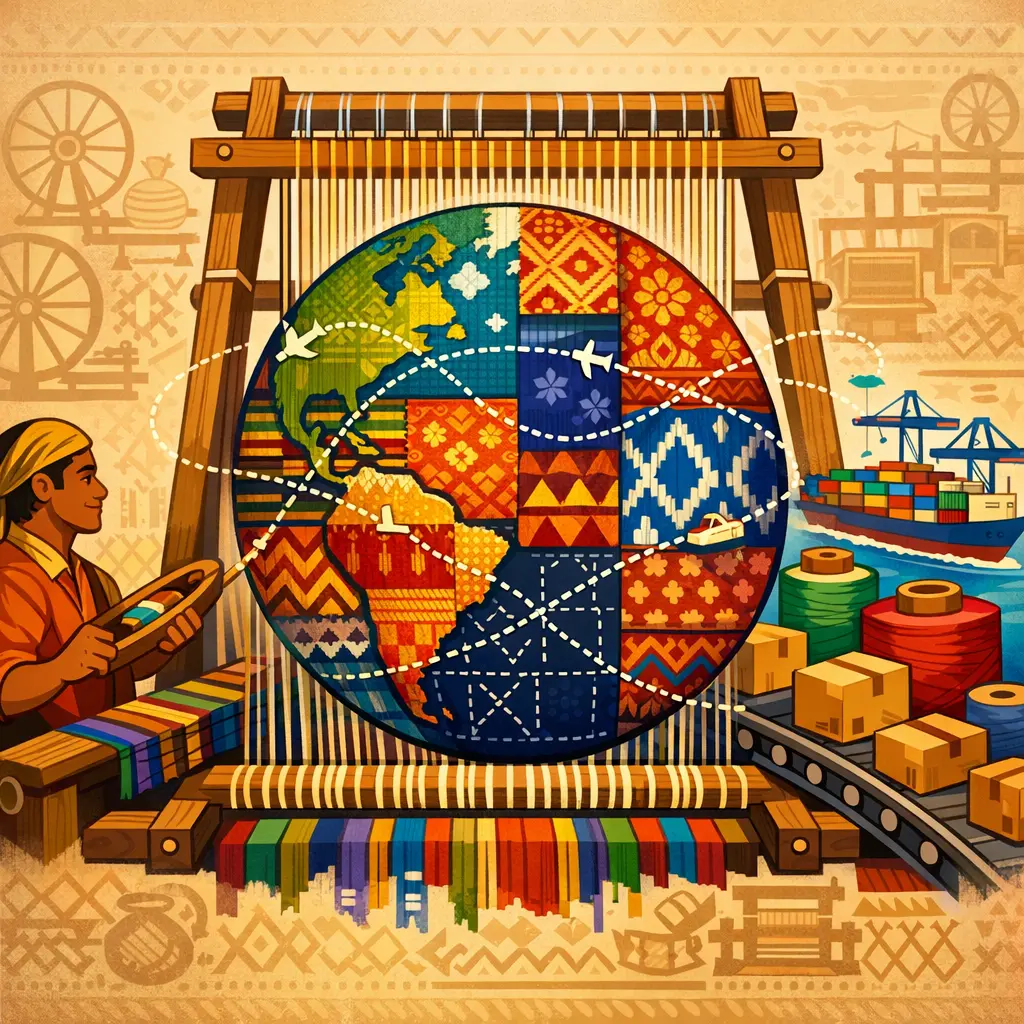
Textile heritage encompasses the traditional skills, patterns, and cultural significance of fabric-making, reflecting the identities and beliefs of diverse societies. Craftsmanship in textiles often intertwines with religious practices and social customs, preserving ancestral knowledge. In today’s global supply chains, these rich traditions face challenges and opportunities, as mass production and international trade reshape local economies, cultural expressions, and the relationship between artisans, consumers, and their shared heritage.
Textile Heritage, Craft & Global Supply Chains
Textile heritage encompasses the traditional skills, patterns, and cultural significance of fabric-making, reflecting the identities and beliefs of diverse societies. Craftsmanship in textiles often intertwines with religious practices and social customs, preserving ancestral knowledge. In today’s global supply chains, these rich traditions face challenges and opportunities, as mass production and international trade reshape local economies, cultural expressions, and the relationship between artisans, consumers, and their shared heritage.
💡 Key Takeaways
- Explore how textile heritage captures cultural identity through regional techniques and materials.
- Trace how textiles move from makers to markets by mapping global supply chains.
- Evaluate ethical and environmental issues in textile sourcing, including labor conditions and sustainability.
- Compare traditional crafts with mass-produced textiles and discuss tensions between preservation and globalization.
❓ Frequently Asked Questions
What does textile heritage mean?
Textile heritage refers to traditional techniques, patterns, materials, and skills passed down within a culture, shaping its textile arts and identity.
How do traditional textile crafts influence modern design?
They introduce unique methods and motifs that designers adapt into contemporary products, keeping cultural connections alive.
What is a global textile supply chain?
A worldwide network of farms, mills, manufacturers, traders, and retailers that convert fibers into finished textile goods and distribute them globally.
Why are ethics and sustainability important in textile supply chains?
They address fair labor, safe conditions, environmental impact, and transparency, helping meet consumer expectations and protect communities.