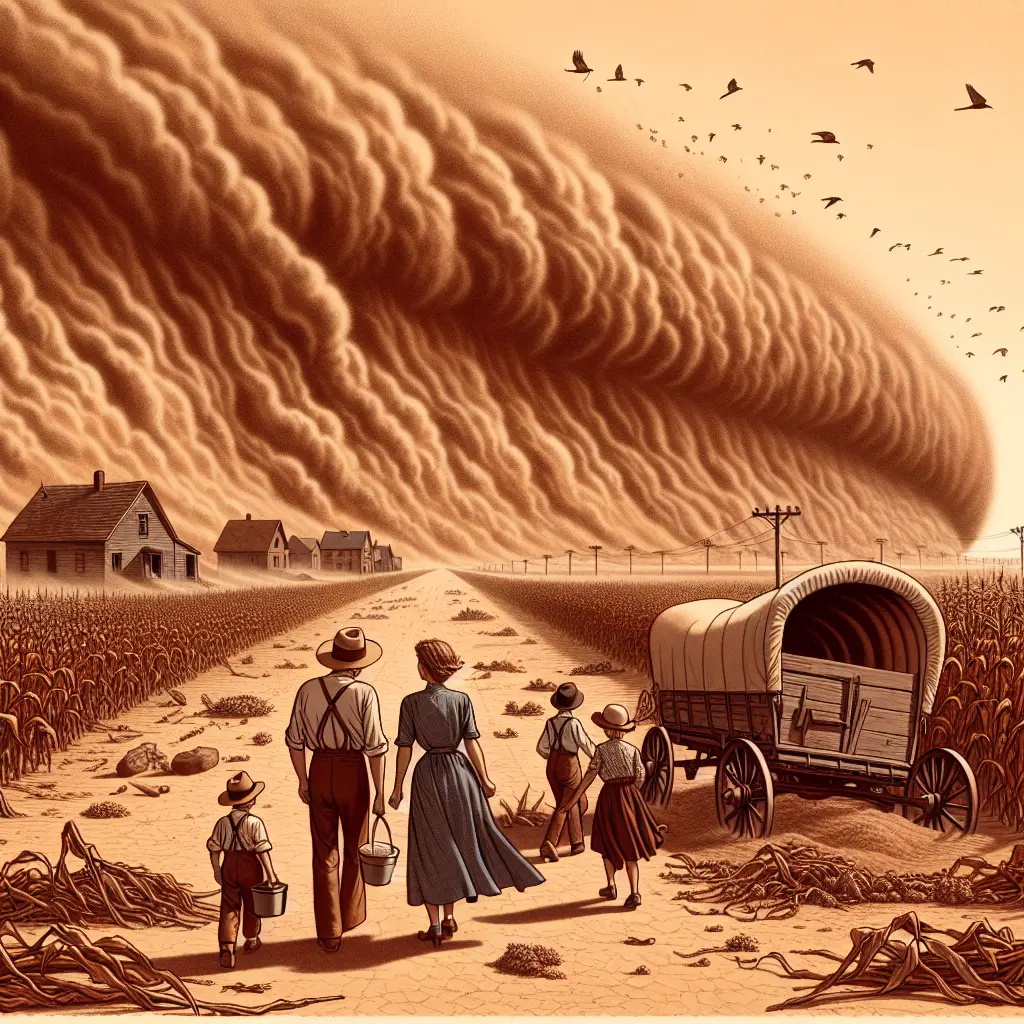
The Black Sunday Dust Storm refers to a massive dust storm that struck the Great Plains on April 14, 1935, during the Dust Bowl era. It darkened skies across several states, devastating farms and communities. The storm symbolized the environmental catastrophe caused by drought and poor land management, prompting thousands of families to abandon their homes in a mass migration westward, known as the Plains Exodus, seeking better living conditions and work, especially in California.
The Black Sunday Dust Storm and Plains Exodus (1935)
The Black Sunday Dust Storm refers to a massive dust storm that struck the Great Plains on April 14, 1935, during the Dust Bowl era. It darkened skies across several states, devastating farms and communities. The storm symbolized the environmental catastrophe caused by drought and poor land management, prompting thousands of families to abandon their homes in a mass migration westward, known as the Plains Exodus, seeking better living conditions and work, especially in California.
💡 Key Takeaways
- Understand Black Sunday (April 14, 1935) and how the dust storm swept across the Great Plains.
- Identify the main causes of the Dust Bowl, including drought, wind erosion, and exposed topsoil from farming practices.
- Explore the human impact—farm closures, community hardship, and large-scale migration from the Plains.
- Learn how the disaster shaped soil conservation and New Deal policies to prevent future erosion.
❓ Frequently Asked Questions
What is the Black Sunday Dust Storm?
A massive dust storm that struck the Great Plains on April 14, 1935, during the Dust Bowl, darkening skies and blowing large amounts of topsoil across several states.
When and where did it occur?
It happened on April 14, 1935, across the Great Plains—regions of Oklahoma, Texas, Kansas, Colorado, New Mexico, and neighboring areas.
What caused the Black Sunday Dust Storm?
A combination of severe drought, years of over-plowing and poor soil conservation, and strong winds that lifted loose, dry topsoil into the air.
What were the impacts on people and farms?
Crop losses and farm destruction, economic hardship, and mass migration known as the Plains Exodus (often called Okies) to California and other regions; health problems from dust exposure and degraded land.