The Chartist Riots refer to a series of protests and uprisings in Britain during the 1830s and 1840s, driven by the Chartist movement’s demand for political reforms such as universal male suffrage, secret ballots, and fairer parliamentary representation. Frustrated by economic hardship and lack of political voice, working-class activists organized mass demonstrations, petitions, and sometimes violent clashes with authorities. Although their immediate aims were not achieved, the Chartist Riots highlighted widespread discontent and influenced later democratic reforms.
The Chartist Riots
The Chartist Riots refer to a series of protests and uprisings in Britain during the 1830s and 1840s, driven by the Chartist movement’s demand for political reforms such as universal male suffrage, secret ballots, and fairer parliamentary representation. Frustrated by economic hardship and lack of political voice, working-class activists organized mass demonstrations, petitions, and sometimes violent clashes with authorities. Although their immediate aims were not achieved, the Chartist Riots highlighted widespread discontent and influenced later democratic reforms.
💡 Key Takeaways
- Understand who the Chartists were and why mass protests and riots emerged in the 1830s and 1840s, including economic hardship and political exclusion.
- Identify the six demands of the People’s Charter and how they aimed to expand suffrage, ensure fair representation, and create a more accessible Parliament.
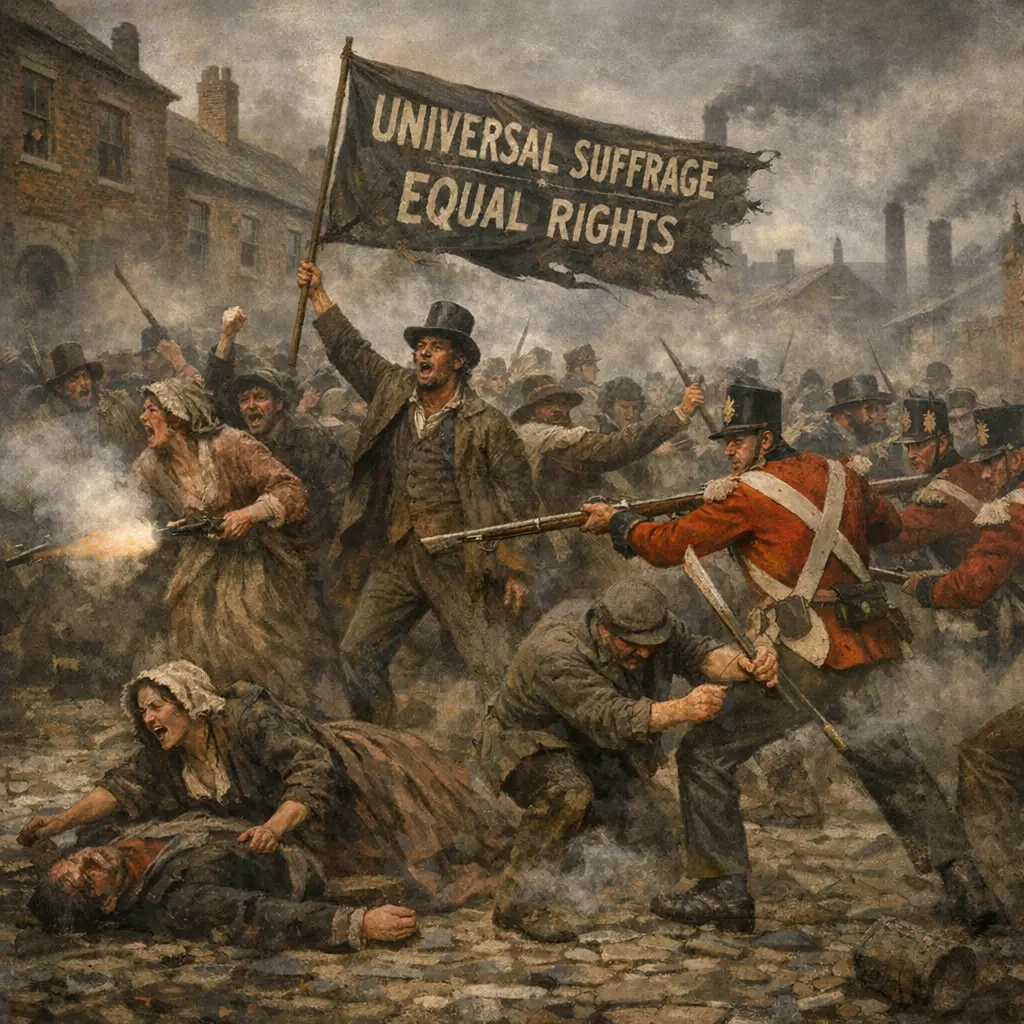
- Explore major Chartist actions and riots (e.g., Newport Rising of 1839 and the Plug Plot Riots of 1842) and what they revealed about working-class political mobilization.
- Evaluate the short- and long-term impact of Chartism on British political reform and the eventual expansion of democratic rights in the 19th century.
❓ Frequently Asked Questions
What were the Chartists?
A working-class movement in Britain during the 1830s–1840s pushing for political reforms through the People’s Charter, aiming to broaden suffrage and reform Parliament.
What is the People’s Charter and its six demands?
The Charter outlined six key demands: universal male suffrage; secret ballot; equal electoral districts; payment of MPs; annual parliaments; and the abolition of property qualifications for voters and MPs.
Were Chartist actions mostly peaceful or violent?
Most activity was peaceful, focusing on petitions and mass meetings. There were some violent episodes, such as the Newport Rising in 1839, when Chartists clashed with troops.
What is the legacy of Chartism?
Although the Charter’s goals weren’t achieved immediately, Chartism shaped public demand for reform and influenced later expansions of suffrage and working-class political organization.