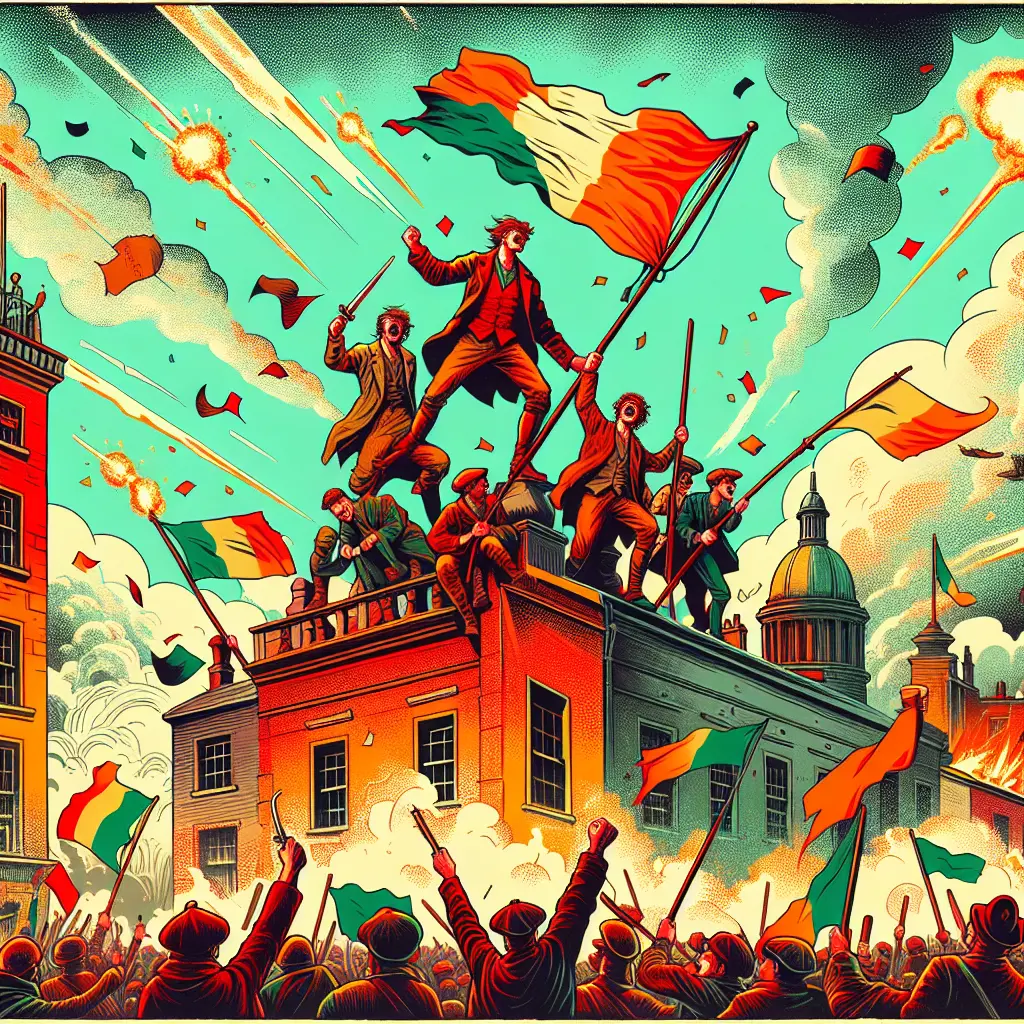
The Easter Rising was an armed insurrection that took place in Ireland during Easter Week in April 1916. Organized by Irish republicans seeking independence from British rule, the rebellion centered in Dublin, where key buildings were seized. Although it was suppressed within a week, the event galvanized public opinion, leading to increased support for Irish independence and ultimately contributing to the establishment of the Irish Free State in 1922.
The Easter Rising
The Easter Rising was an armed insurrection that took place in Ireland during Easter Week in April 1916. Organized by Irish republicans seeking independence from British rule, the rebellion centered in Dublin, where key buildings were seized. Although it was suppressed within a week, the event galvanized public opinion, leading to increased support for Irish independence and ultimately contributing to the establishment of the Irish Free State in 1922.
💡 Key Takeaways
- Understand that the Easter Rising (1916) was an armed insurrection in Ireland during Easter Week, led by Irish republicans seeking independence from British rule.
- Know that the rebellion centered in Dublin, with rebels seizing key buildings in the city.
- Recognize that the Rising was suppressed within a week, but it galvanized Irish nationalism and influenced future moves toward independence.
- See how the Rising's legacy shaped Irish history and memory, contributing to later struggles for self-government.
❓ Frequently Asked Questions
What was the Easter Rising?
An armed insurrection by Irish republicans seeking independence from British rule, centered in Dublin during Easter Week, April 1916.
When and where did it take place, and what did the rebels aim to do?
It began on Easter Monday, April 24, 1916, mainly in Dublin. The rebels aimed to seize key buildings and proclaim an Irish Republic.
Who led or organized the rebellion?
It was organized by Irish nationalists and groups such as the Irish Volunteers, with leaders including Patrick Pearse and James Connolly, and other notable figures like Thomas MacDonagh and Joseph Mary Plunkett.
What were the consequences and significance?
The rising was suppressed within about a week, but it galvanized public support for independence and influenced Irish politics and British policy, with several leaders executed after the uprising.