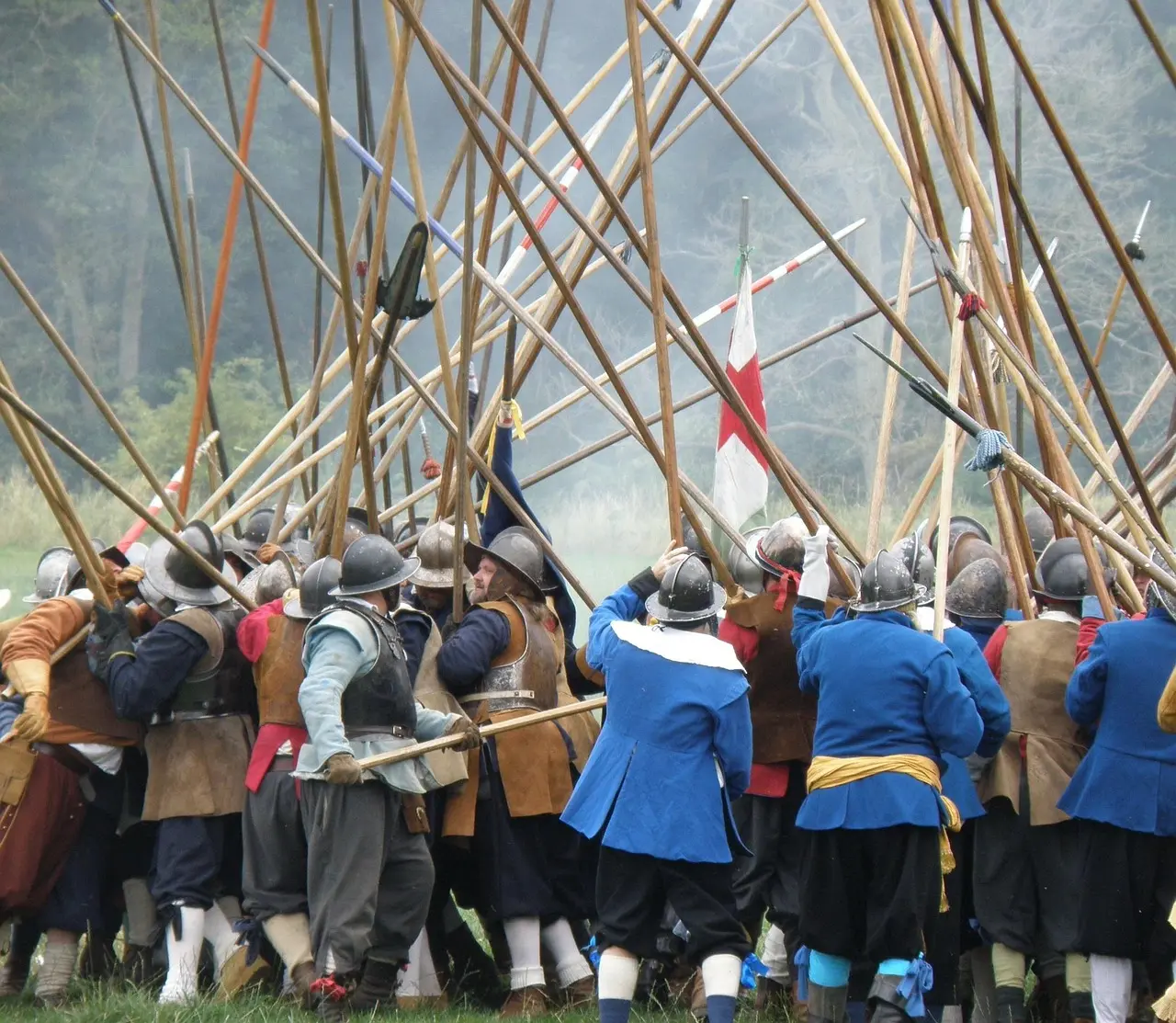
The English Civil War was a series of armed conflicts and political struggles between Parliamentarians ("Roundheads") and Royalists ("Cavaliers") from 1642 to 1651. The conflict arose over issues of governance, authority, and religion, primarily between King Charles I and Parliament. The war ended with the defeat of the Royalists, the execution of Charles I, and the establishment of the Commonwealth under Oliver Cromwell, significantly altering the balance of power in England.
The English Civil War
The English Civil War was a series of armed conflicts and political struggles between Parliamentarians ("Roundheads") and Royalists ("Cavaliers") from 1642 to 1651. The conflict arose over issues of governance, authority, and religion, primarily between King Charles I and Parliament. The war ended with the defeat of the Royalists, the execution of Charles I, and the establishment of the Commonwealth under Oliver Cromwell, significantly altering the balance of power in England.
💡 Key Takeaways
- Identify the two sides: Parliamentarians (Roundheads) and Royalists (Cavaliers) in 1642–1651.
- Explain the governance, authority, and religious issues at the heart of the conflict between Charles I and Parliament.
- Describe how leadership and fortunes shifted during the war and the roles of key actors.
- Summarize the war's broader impact on British politics and religion and its long-term legacy for monarchy and Parliament.
❓ Frequently Asked Questions
What was the English Civil War?
A series of armed conflicts and political struggles in England between Parliamentarians (Roundheads) and Royalists (Cavaliers) from 1642–1651, centered on governance, authority, and religion, mainly between King Charles I and Parliament.
Who were the Roundheads and Cavaliers?
Roundheads supported Parliament and tended to be Puritans or townsfolk; Cavaliers supported the king and included many nobles and Anglican loyalists.
What caused the conflict between the King and Parliament?
Disputes over who should control government, taxation, and church governance, plus Charles I's attempts to rule without Parliament.
What were the major outcomes and how did it end?
Charles I was executed in 1649, England became a Commonwealth under Oliver Cromwell, and after the Protectorate, the monarchy was restored in 1660; the final Royalist defeat came at Worcester in 1651.