The evolution of R&B traces its roots from the soulful rhythms and heartfelt lyrics of the 1940s and 1950s to today’s genre-blending soundscapes. Influential icons like Ray Charles, Aretha Franklin, Whitney Houston, and Beyoncé have each redefined R&B, integrating elements of jazz, funk, hip-hop, and pop. This ongoing transformation reflects changing social landscapes, technological advancements, and the enduring power of emotional storytelling in music.
The Evolution of R&B
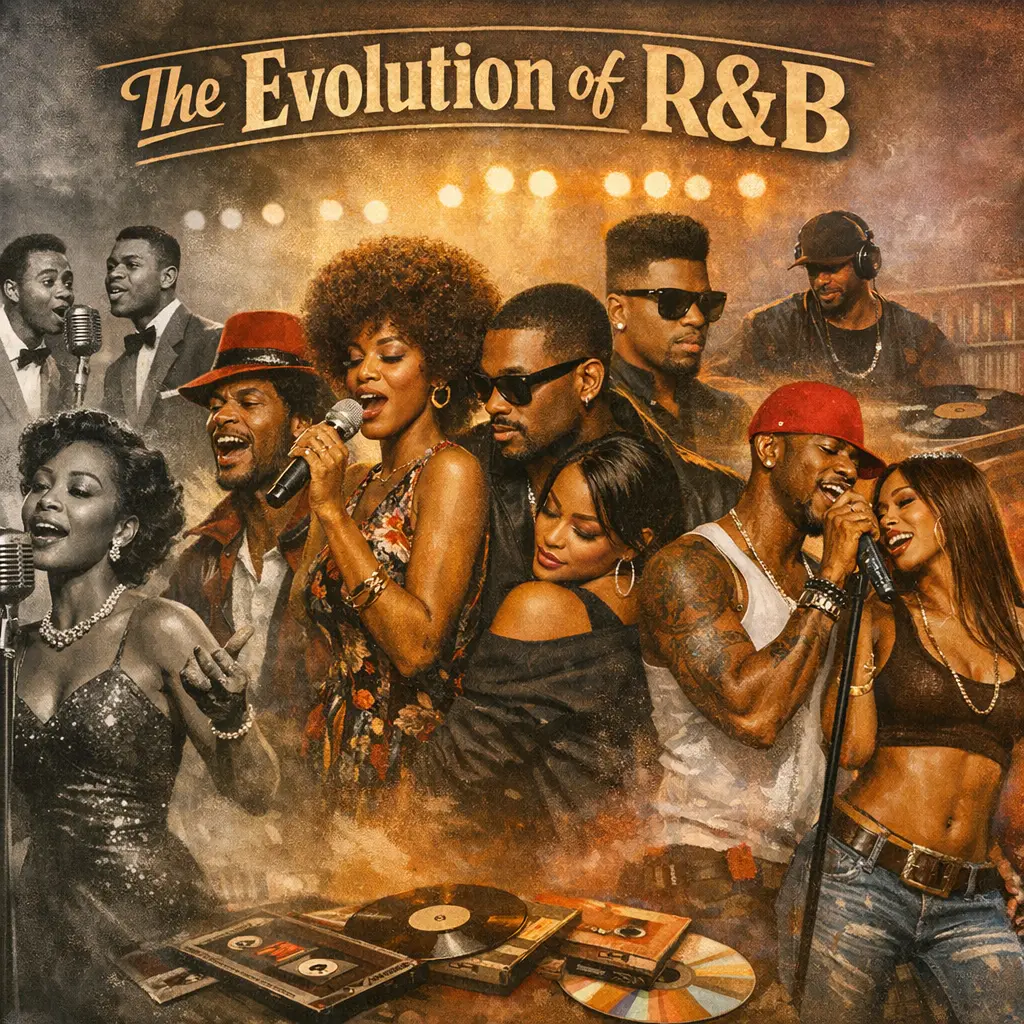
The evolution of R&B traces its roots from the soulful rhythms and heartfelt lyrics of the 1940s and 1950s to today’s genre-blending soundscapes. Influential icons like Ray Charles, Aretha Franklin, Whitney Houston, and Beyoncé have each redefined R&B, integrating elements of jazz, funk, hip-hop, and pop. This ongoing transformation reflects changing social landscapes, technological advancements, and the enduring power of emotional storytelling in music.
💡 Key Takeaways
- Trace how R&B evolved from blues and gospel to soul, funk, and modern R&B across key decades.
- Identify the defining musical traits of each era—vocal styles, rhythms, and production techniques.
- Explore how social, cultural, and technological shifts shaped R&B's sound and themes.
- See R&B's influence on and cross-pollination with hip-hop, pop, and dance music.
❓ Frequently Asked Questions
What does R&B stand for and what are its early roots?
R&B stands for rhythm and blues. Originating in mid-20th-century African American communities, it blends blues, gospel, and jazz with a strong groove.
How did R&B evolve across the decades?
From blues-influenced roots in the 1940s–50s, it evolved through soul in the 1960s, funk and disco in the 1970s, electronic production and New Jack Swing in the 1980s, neo-soul in the 1990s, and contemporary R&B that blends hip-hop and modern pop.
Who are some milestone artists that helped shape R&B?
Aretha Franklin and Ray Charles (roots), Stevie Wonder (1960s–70s), Prince and Michael Jackson (1980s), D'Angelo and Erykah Badu (1990s), and Alicia Keys and Usher (2000s).
How is modern R&B different from classic R&B?
Modern R&B often fuses hip-hop production, electronic sounds, and glossy studio techniques with vocal storytelling, while classic R&B emphasized live grooves, gospel-inflected vocals, and band-driven arrangements.