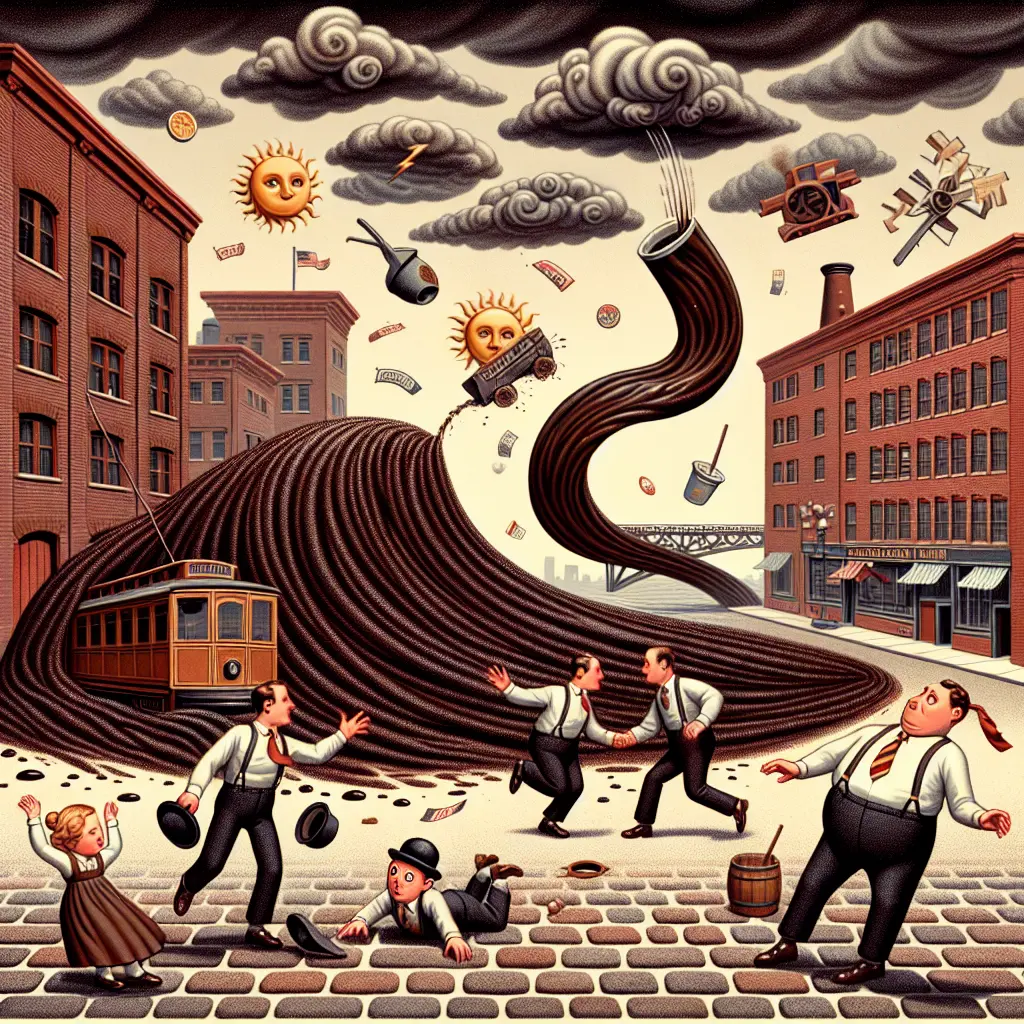
The Great Molasses Flood of 1919 was a disastrous event in Boston when a massive storage tank burst, releasing a wave of molasses through city streets. The catastrophe killed 21 people and injured many more. Weather played a significant role; unusually warm temperatures caused fermentation and gas buildup inside the tank, increasing internal pressure. This industrial tragedy highlights how environmental conditions can amplify risks associated with poorly maintained infrastructure.
The Great Molasses Flood: An Industrial Catastrophe's Weather Tie (1919)
The Great Molasses Flood of 1919 was a disastrous event in Boston when a massive storage tank burst, releasing a wave of molasses through city streets. The catastrophe killed 21 people and injured many more. Weather played a significant role; unusually warm temperatures caused fermentation and gas buildup inside the tank, increasing internal pressure. This industrial tragedy highlights how environmental conditions can amplify risks associated with poorly maintained infrastructure.
💡 Key Takeaways
- Understand how unusually warm weather contributed to gas buildup inside the molasses storage tank, linking climate conditions to industrial risk.
- Learn how a tank rupture generated a fast-moving wave of molasses that swept through Boston streets and caused fatalities and injuries.
- Explore how weather-driven disasters reveal infrastructure and safety gaps, leading to reforms in tank design, building codes, and emergency response.
- Recognize the importance of considering meteorological context in disaster analysis to improve risk assessment and prevention in urban settings.
❓ Frequently Asked Questions
What happened during the Great Molasses Flood?
In Boston on January 15, 1919, a large molasses storage tank burst, sending a wave of molasses through the North End streets and killing 21 people while injuring many more.
How did weather contribute to the disaster?
Unseasonably warm temperatures likely accelerated fermentation in the molasses, producing gas and pressure that weakened the tank and helped cause the rupture.
How many people were affected?
The flood killed 21 people and injured dozens; many residents and workers were affected and property damage was extensive.
What were the long-term lessons or impacts?
The disaster led to reforms in industrial safety, tank design and maintenance, and regulatory oversight to prevent similar catastrophes.