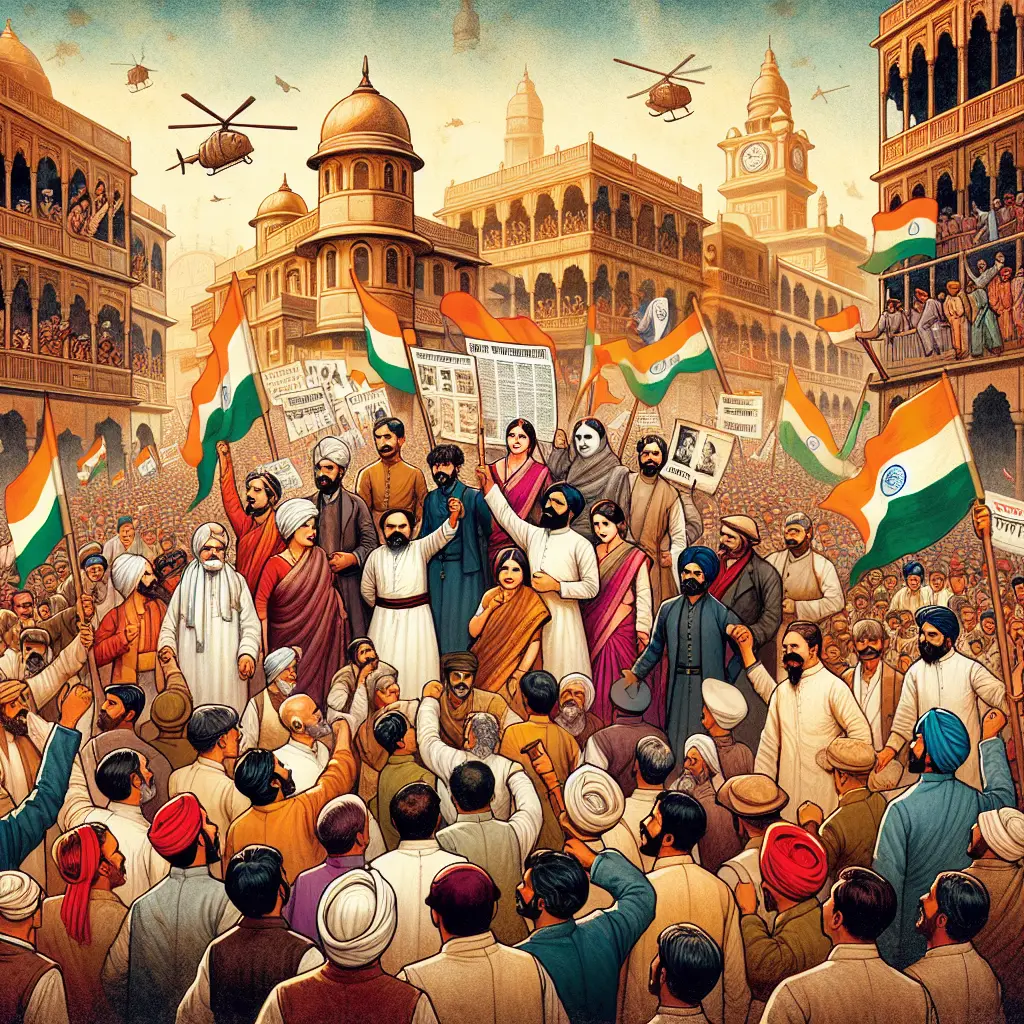
The Home Rule Movement was a significant political campaign in India during 1916-1918, led by Annie Besant and Bal Gangadhar Tilak. Its main objective was to achieve self-government within the British Empire, similar to the status enjoyed by Australia and Canada. The movement mobilized masses through public meetings, petitions, and propaganda, raising political awareness and demanding greater Indian participation in governance, thereby laying the groundwork for future independence movements.
The Home Rule Movement
The Home Rule Movement was a significant political campaign in India during 1916-1918, led by Annie Besant and Bal Gangadhar Tilak. Its main objective was to achieve self-government within the British Empire, similar to the status enjoyed by Australia and Canada. The movement mobilized masses through public meetings, petitions, and propaganda, raising political awareness and demanding greater Indian participation in governance, thereby laying the groundwork for future independence movements.
💡 Key Takeaways
- Identify the leaders (Annie Besant and Bal Gangadhar Tilak) and the 1916–1918 timeline of the Home Rule Movement.
- Explain the movement’s goal: self-government within the British Empire, similar to dominion status in Australia and Canada.
- Describe how the movement mobilized masses through Home Rule Leagues, public campaigns, and nationalist journalism.
- Assess its impact on the Indian freedom struggle and how it influenced later demands for Swaraj and subsequent movements.
❓ Frequently Asked Questions
What was the Home Rule Movement?
A political campaign in India (1916–1918) seeking self-government within the British Empire, modeled on dominion status like Australia and Canada, led by Annie Besant and Bal Gangadhar Tilak.
Who led the Home Rule Movement?
Annie Besant, a prominent reformer and theosophist, and Bal Gangadhar Tilak, a leading Indian nationalist, who mobilized public support through new leagues and mass campaigns.
What was the main objective of the movement?
To obtain self-government (Home Rule) for India within the British Empire, aiming for internal autonomy similar to other dominions.
How did the movement mobilize people?
Through mass meetings, public campaigns, and the formation of All India Home Rule League and provincial leagues to spread nationalist ideas and political education.