The United States has played a pivotal role in the International Space Station (ISS) by providing key modules, advanced technology, and ongoing operational support. NASA contributed critical elements like the Destiny laboratory, Tranquility module, and solar arrays that supply power. American astronauts regularly participate in missions, conduct scientific research, and perform maintenance. The U.S. also leads international collaboration, fostering partnerships that advance space exploration and scientific discovery on the ISS.
The International Space Station's American Contributions
The United States has played a pivotal role in the International Space Station (ISS) by providing key modules, advanced technology, and ongoing operational support. NASA contributed critical elements like the Destiny laboratory, Tranquility module, and solar arrays that supply power. American astronauts regularly participate in missions, conduct scientific research, and perform maintenance. The U.S. also leads international collaboration, fostering partnerships that advance space exploration and scientific discovery on the ISS.
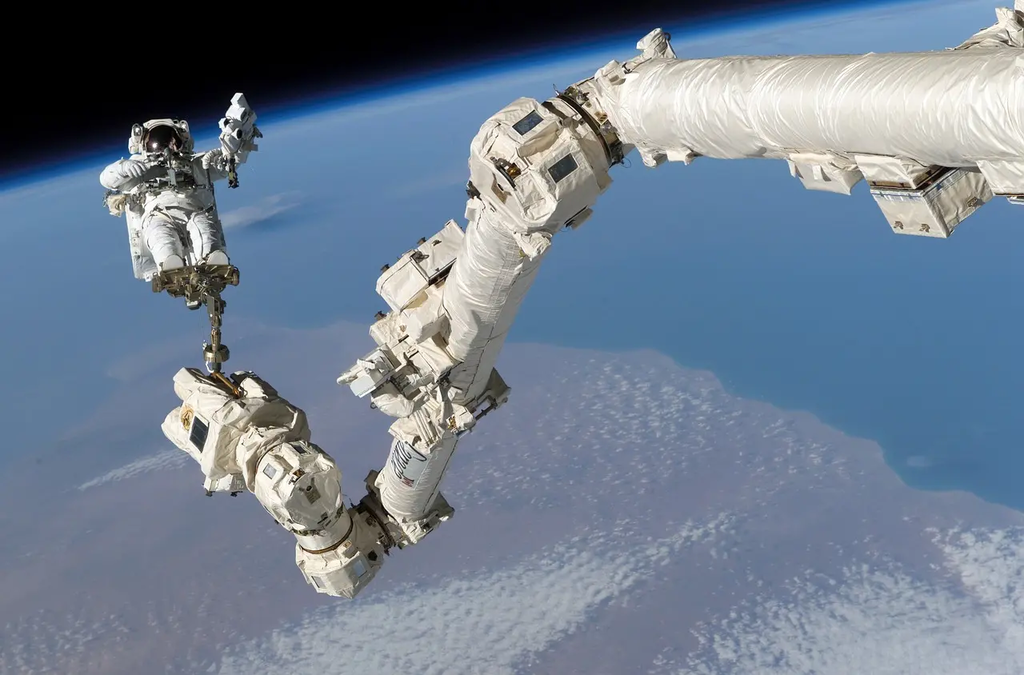
💡 Key Takeaways
- Identify the major American ISS contributions - Destiny lab, Tranquility module, and solar arrays - and their roles.
- Describe how U.S.-built hardware supports life support, power generation, and scientific research on the station.
- Explain NASA's ongoing operations, maintenance, and crew rotation that keep the ISS running.
- Recognize the broader impact of American leadership on international collaboration and long-duration spaceflight research aboard the ISS.
❓ Frequently Asked Questions
What is the Destiny Laboratory on the ISS?
Destiny is the United States’ primary research module aboard the ISS, launched in 2001 to host experiments across biology, physics, and materials science.
What is the Tranquility module and why is it important?
Tranquility is a U.S.-built module that provides life-support systems, environmental control, and a docking port for visiting spacecraft; it supports crew health and operations.
What do American solar arrays contribute to the ISS?
The solar arrays convert sunlight into electrical power to run the station’s systems and experiments, providing the ISS’s main source of power.
What does ongoing American operational support entail?
NASA leads mission control, planning, maintenance, and crew rotations; American personnel oversee daily operations and coordinate research with international partners.