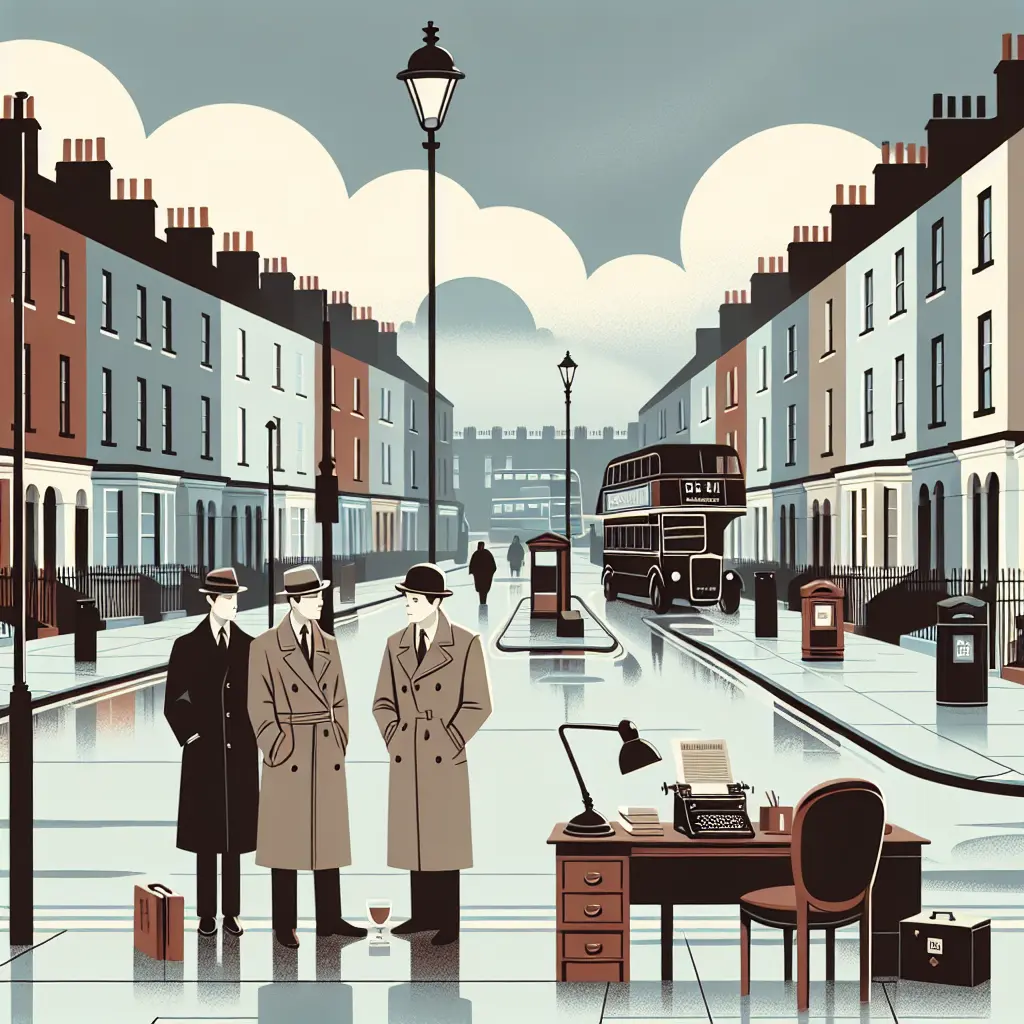
The Movement poets, including Philip Larkin, Kingsley Amis, and others like Donald Davie and Thom Gunn, emerged in 1950s Britain. They reacted against the romanticism and complexity of earlier poets, favoring clarity, rationality, and everyday language. Their work often displayed skepticism, irony, and a focus on ordinary life. The Movement sought to make poetry accessible, emphasizing restrained emotion and formal structure, marking a shift in post-war British literature.
The Movement poets: Larkin, Amis, etc.
The Movement poets, including Philip Larkin, Kingsley Amis, and others like Donald Davie and Thom Gunn, emerged in 1950s Britain. They reacted against the romanticism and complexity of earlier poets, favoring clarity, rationality, and everyday language. Their work often displayed skepticism, irony, and a focus on ordinary life. The Movement sought to make poetry accessible, emphasizing restrained emotion and formal structure, marking a shift in post-war British literature.
💡 Key Takeaways
- The Movement aimed to counter romanticism with clarity, restraint, and plain language in poetry.
- They favored everyday speech and accessible diction over ornate or experimental styles.
- Skepticism, irony, and understatement became common techniques to scrutinize modern life.
- Prominent poets include Philip Larkin, Kingsley Amis, Donald Davie, and Thom Gunn, who shared a concise, measured craft.
- Originating in 1950s Britain amid postwar disillusionment, the Movement influenced subsequent British poetry.
❓ Frequently Asked Questions
What is The Movement in British poetry?
A group of mid-1950s British poets who rejected ornate Romantic poetry in favor of clarity, rationality, and everyday language.
Who were the key Movement poets?
Philip Larkin, Kingsley Amis, Donald Davie, Thom Gunn, with Elizabeth Jennings and John Wain cited among notable members.
How did Movement poetry differ from earlier styles?
It prized plain diction, formal control, irony, and restrained emotion, avoiding grand Romanticism and experimental excess.
What themes did Movement poets often explore?
Mortality, ordinary life, social observation, skepticism about progress, and a skeptical, ironic view of modern society.
What is the legacy of The Movement?
It helped shape a more accessible, skeptical mid-20th‑century voice in British poetry, though it faced criticism for emotional reserve and perceived coldness.