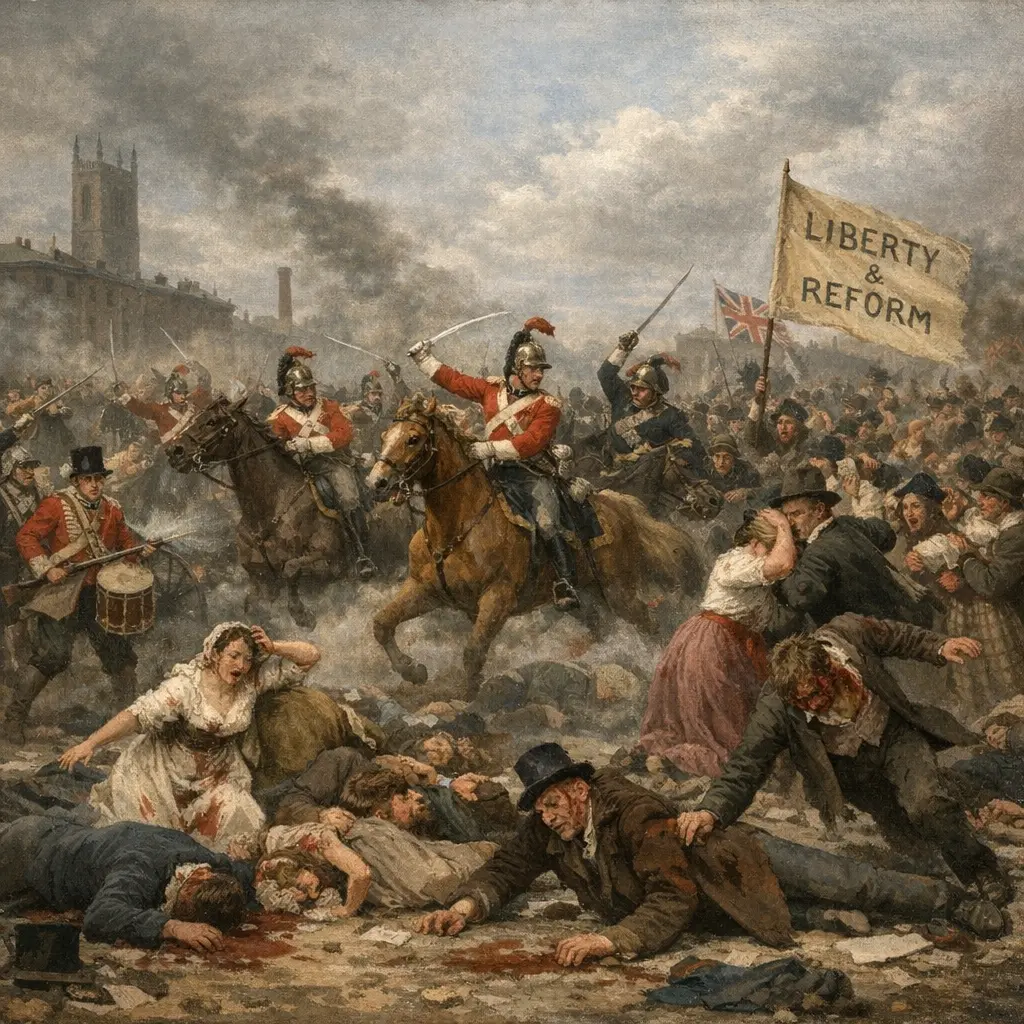
The Peterloo Massacre occurred on August 16, 1819, in St Peter’s Field, Manchester, when cavalry charged into a crowd of around 60,000 people gathered to demand parliamentary reform and greater representation. The peaceful protest turned deadly as soldiers killed at least 15 people and injured hundreds more. The event shocked Britain, highlighting the government's harsh response to calls for democracy and fueling further demands for political change and civil liberties.
The Peterloo Massacre
The Peterloo Massacre occurred on August 16, 1819, in St Peter’s Field, Manchester, when cavalry charged into a crowd of around 60,000 people gathered to demand parliamentary reform and greater representation. The peaceful protest turned deadly as soldiers killed at least 15 people and injured hundreds more. The event shocked Britain, highlighting the government's harsh response to calls for democracy and fueling further demands for political change and civil liberties.
💡 Key Takeaways
- What happened: a 1819 pro-reform rally in Manchester (St Peter's Field) ended with cavalry charging into the crowd.
- Why it mattered: it reflected the broader push for parliamentary reform and civil liberties in post-Napoleonic Britain.
- Consequences: public outrage, crackdown on reformers, and legislative responses like the Six Acts.
- Significance: the Peterloo Massacre became a symbol in Britain's reform movement and debate over democratic rights.
❓ Frequently Asked Questions
What is the Peterloo Massacre?
A peaceful political demonstration in Manchester on 16 August 1819 that was attacked by cavalry, resulting in at least 15 deaths and hundreds injured; it highlighted demands for parliamentary reform.
When and where did it happen?
16 August 1819 at St Peter's Field, Manchester, England. The name Peterloo comes from the site and is a pun on Waterloo.
What were the protesters asking for?
Reform of Parliament, universal male suffrage, greater civil liberties, and opposition to repressive laws like the Corn Laws.
What were the consequences or significance?
The massacre provoked outrage, helped trigger government repression such as the Six Acts of 1819, and became a lasting symbol for the reform movement.
How many people were affected?
Officially at least 15 people died and hundreds were injured; estimates of the crowd size range in the tens of thousands.