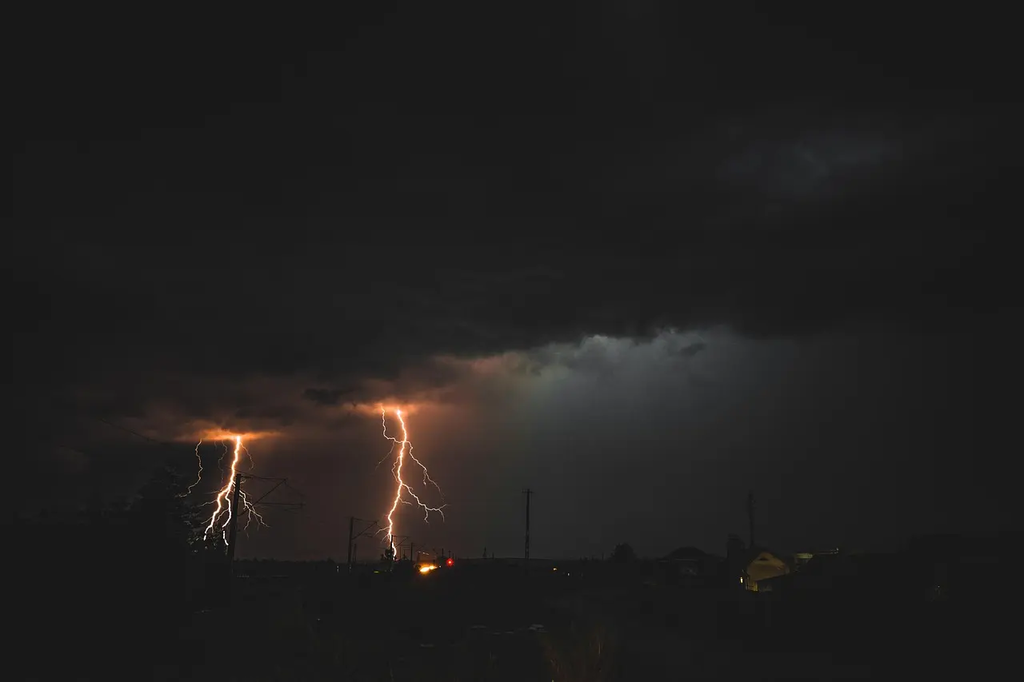
Ball lightning is a rare and mysterious weather phenomenon where glowing, spherical balls of light, typically ranging from pea-sized to several meters across, appear during thunderstorms. These luminous orbs can float, dart, or even pass through windows before vanishing, sometimes with a loud bang. Despite centuries of eyewitness accounts, scientists still debate its true cause, making ball lightning one of nature’s weirdest and most puzzling phenomena.
The Phenomenon of Ball Lightning
Ball lightning is a rare and mysterious weather phenomenon where glowing, spherical balls of light, typically ranging from pea-sized to several meters across, appear during thunderstorms. These luminous orbs can float, dart, or even pass through windows before vanishing, sometimes with a loud bang. Despite centuries of eyewitness accounts, scientists still debate its true cause, making ball lightning one of nature’s weirdest and most puzzling phenomena.
💡 Key Takeaways
- Understand what ball lightning is and how it differs from ordinary lightning.
- Review notable historical sightings and the reporting challenges that make verification difficult.
- Learn the leading theories about its origin (plasma formations, vaporized material combustion, and electromagnetic effects) and their pros and cons.
- Explore how scientists study ball lightning today and what evidence would help confirm its nature.
❓ Frequently Asked Questions
What is ball lightning?
Ball lightning is a rare, glowing sphere reported during thunderstorms. It’s usually a few centimeters to decimeters in diameter, lasts from fractions of a second to several minutes, and can move unpredictably.
How is ball lightning explained?
There is no single proven theory. Estimates include trapped plasma, vaporized materials reacting inside the sphere, and ideas about microwave resonance within a plasma. Observations vary, and the exact mechanism remains uncertain.
How does ball lightning differ from regular lightning?
Regular lightning is a rapid, bright flash that travels as a discharge. Ball lightning appears as a self-contained glowing sphere that can float or move slowly and lasts much longer.
Is ball lightning dangerous, and how is it studied?
Ball lightning can be hazardous; it has been reported to cause burns or fires. Since it’s rare and hard to reproduce, scientists study eyewitness reports, photos, and occasional measurements to learn more, always emphasizing safety during storms.