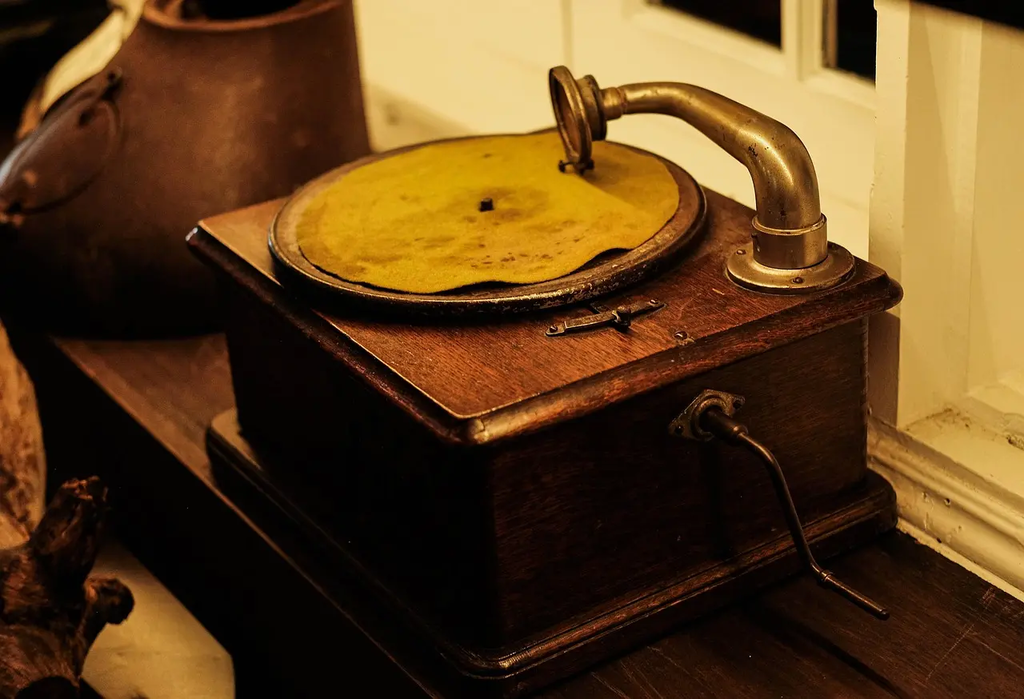
The phonograph, invented by Thomas Edison in 1877, revolutionized the way people experienced sound by allowing them to record and play back audio for the first time. This iconic invention used a rotating cylinder and a needle to capture sound vibrations, paving the way for the modern music industry and audio technology. The phonograph marked a significant milestone in communication, entertainment, and the preservation of voices and music for future generations.
The Phonograph
The phonograph, invented by Thomas Edison in 1877, revolutionized the way people experienced sound by allowing them to record and play back audio for the first time. This iconic invention used a rotating cylinder and a needle to capture sound vibrations, paving the way for the modern music industry and audio technology. The phonograph marked a significant milestone in communication, entertainment, and the preservation of voices and music for future generations.
💡 Key Takeaways
- Understand what a phonograph is and how it records and plays back sound using grooves on a rotating cylinder.
- Identify the core components involved—cylinder, grooves, diaphragm, stylus, and the mechanical drive system.
- Recognize the phonograph's historical significance as one of the first devices to enable recorded sound and mass listening.
- Compare cylinder-based phonographs to later disc-based systems (gramophones) and note how format differences affected audio distribution.
❓ Frequently Asked Questions
What is a phonograph?
A device that records and plays back sound by engraving grooves on a rotating medium (cylinder or disc) and tracing them with a stylus.
How does a phonograph record and reproduce sound?
Sound vibrations move a diaphragm attached to a stylus that engraves grooves on the rotating medium; during playback, the stylus follows the grooves to reproduce the sound.
Who invented the phonograph and when?
Thomas Edison invented the phonograph in 1877, originally using a wax cylinder for recording.
What is the difference between phonographs and gramophones?
Phonographs originally used cylinders to record sound, while gramophones used flat discs; discs became the standard for mass-produced records.