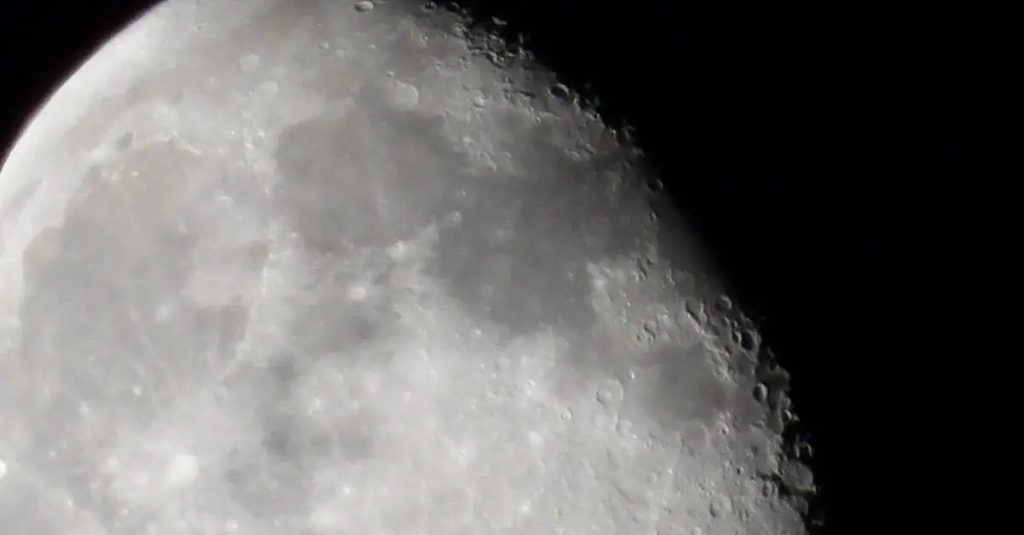
Gravity is the fundamental force that governs the structure and motion of the solar system. It holds the Sun, planets, moons, and other celestial bodies together, ensuring planets orbit the Sun and moons orbit planets. Gravity also shapes planetary rings, influences tides, and guides comets and asteroids in their paths. Without gravity, the solar system would lack order, and celestial bodies would drift apart into space.
The Role of Gravity
Gravity is the fundamental force that governs the structure and motion of the solar system. It holds the Sun, planets, moons, and other celestial bodies together, ensuring planets orbit the Sun and moons orbit planets. Gravity also shapes planetary rings, influences tides, and guides comets and asteroids in their paths. Without gravity, the solar system would lack order, and celestial bodies would drift apart into space.

💡 Key Takeaways
- Understand what gravity is and why it gives objects weight on Earth
- Learn how gravity governs motion on Earth and in space, from falling objects to planetary orbits
- Explore everyday effects of gravity, such as tides and weight changes with altitude
- Compare gravity with other forces and see how mass and distance influence its strength
❓ Frequently Asked Questions
What is gravity?
Gravity is the attractive force between objects with mass. On Earth it pulls everything toward the surface, keeping us grounded and giving objects weight.
What is the difference between mass and weight?
Mass is the amount of matter in an object. Weight is the gravitational force acting on that mass (weight = mass × gravity).
How does gravity affect motion on Earth?
Near Earth's surface, gravity accelerates objects downward at about 9.8 m/s² (ignoring air resistance). In vacuum, all objects fall at the same rate regardless of mass.
How does gravity influence orbits in space?
Orbits occur when objects are in continuous free fall toward a planet but have enough forward velocity to keep circling it. Gravity provides the inward force that shapes these orbits.
Is gravity a force or a feature of spacetime?
In Newtonian physics, gravity is a force between masses. In general relativity, gravity arises from the curvature of spacetime caused by mass and energy.