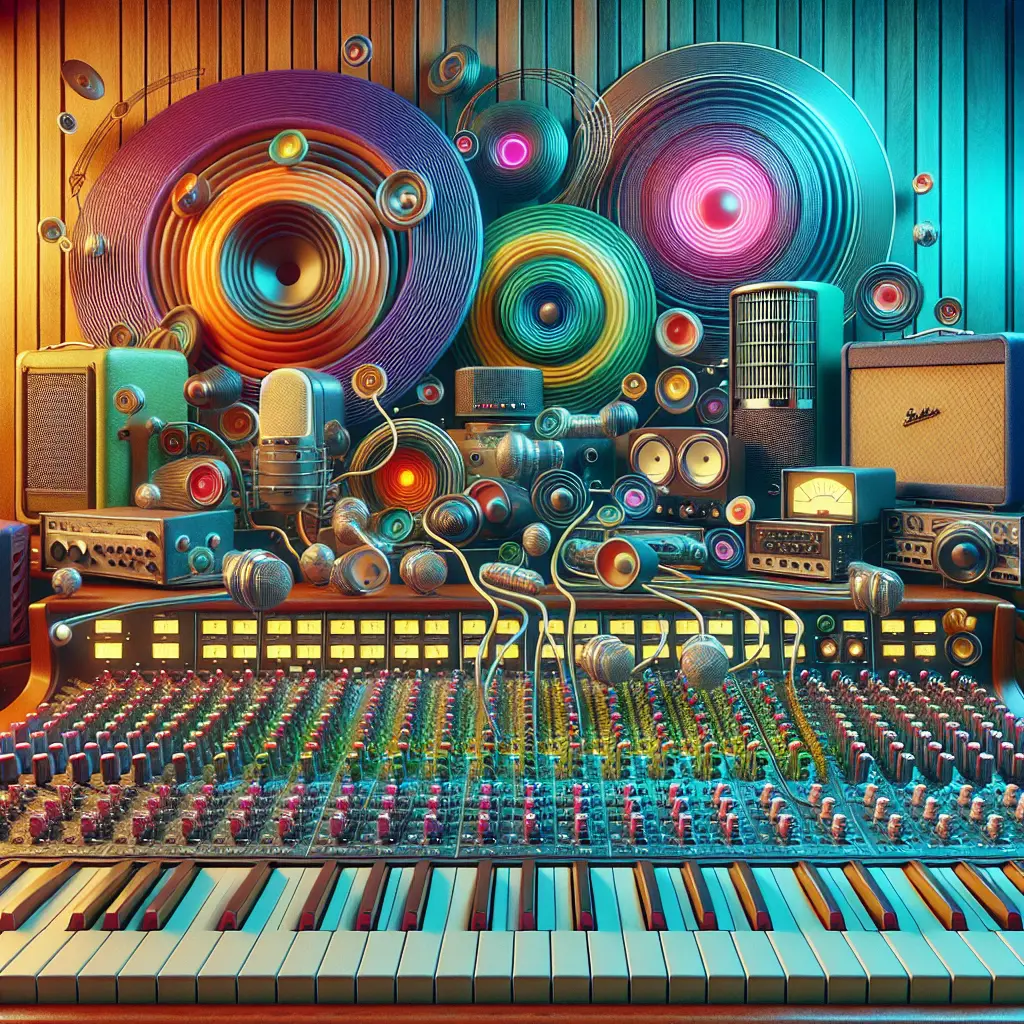
The phrase "The Studio as Instrument: From Phil Spector to Brian Wilson" refers to the innovative approach in music production where the recording studio itself becomes a creative tool, not just a place to capture performances. Phil Spector pioneered this with his "Wall of Sound," layering instruments for a rich texture, while Brian Wilson of The Beach Boys expanded on these ideas, using the studio to experiment with complex arrangements and sound manipulation, forever changing popular music’s possibilities.
The Studio as Instrument: From Phil Spector to Brian Wilson
The phrase "The Studio as Instrument: From Phil Spector to Brian Wilson" refers to the innovative approach in music production where the recording studio itself becomes a creative tool, not just a place to capture performances. Phil Spector pioneered this with his "Wall of Sound," layering instruments for a rich texture, while Brian Wilson of The Beach Boys expanded on these ideas, using the studio to experiment with complex arrangements and sound manipulation, forever changing popular music’s possibilities.
💡 Key Takeaways
- Understand how the recording studio became a creative instrument, shaping arrangements and textures beyond the performers' live performances.
- Explore Phil Spector's Wall of Sound: dense layering of instruments and voices, close-miking, and reverb, and how it defined 1960s pop production.
- Compare Spector's approach with Brian Wilson's studio experimentation—multitracking, overdubbing, and inventive arranging that pushed pop aesthetics forward.
- Recognize the broader impact of studio-centric creativity on American music evolution and the shift toward producer-led artistry.
❓ Frequently Asked Questions
What does the phrase 'The Studio as Instrument' mean?
It means using the recording studio and its gear as a creative tool—shaping sound with mic choices, multi-tracking, effects, and mixing, not just capturing performances.
Who pioneered the Wall of Sound and what is it?
Phil Spector created the Wall of Sound in the 1960s by layering many instruments and voices, using dense textures and reverb to produce a big, immersive sound, often in mono.
How did Brian Wilson expand studio experimentation on Pet Sounds?
Wilson used extensive multitracking, unusual instruments, and intricate vocal harmonies to craft lush, cinematic soundscapes, treating the studio as a tool for composition.
What is a key difference between Spector's and Wilson's studio approaches?
Spector emphasized a dense, mono Wall of Sound built from layered performances, while Wilson focused on studio-driven textures and orchestration, often exploring stereo and experimental techniques.