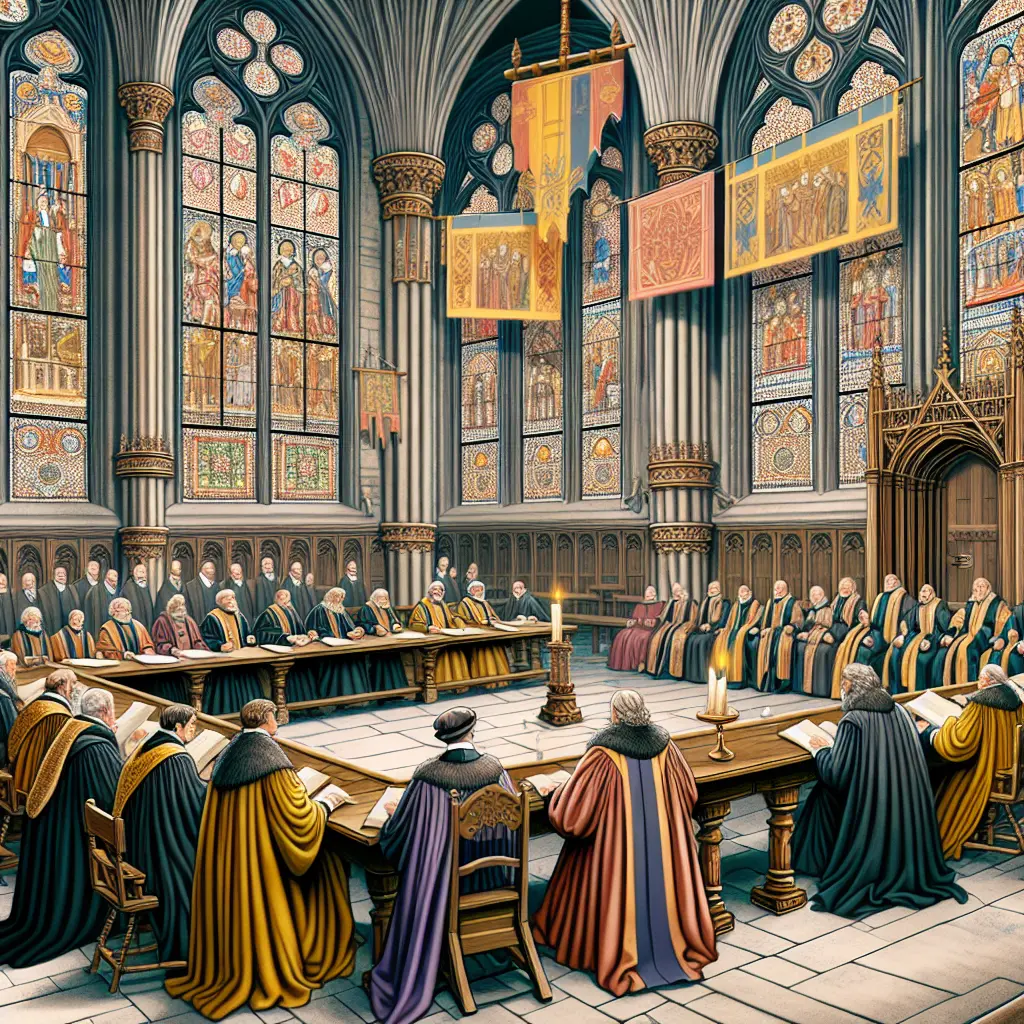
The Synod of Hertford was a significant church council held in 673 AD in Anglo-Saxon England, convened by Archbishop Theodore of Canterbury. Its primary purpose was to unify the practices of the English Church, establishing common rules on matters such as the date of Easter, clerical discipline, and church governance. The synod marked a key step in organizing the English Church along Roman lines, fostering greater unity and stability within early English Christianity.
The Synod of Hertford
The Synod of Hertford was a significant church council held in 673 AD in Anglo-Saxon England, convened by Archbishop Theodore of Canterbury. Its primary purpose was to unify the practices of the English Church, establishing common rules on matters such as the date of Easter, clerical discipline, and church governance. The synod marked a key step in organizing the English Church along Roman lines, fostering greater unity and stability within early English Christianity.
💡 Key Takeaways
- Understand why the Synod of Hertford (673 AD) was convened and who led it (Archbishop Theodore of Canterbury).
- Learn how the canons aimed to standardize English church practices, including the dating of Easter.
- Explore the measures on clerical discipline and church governance introduced at Hertford.
- Recognize the synod’s long-term impact on English church law and the unification of practice across England.
❓ Frequently Asked Questions
What is the Synod of Hertford and when did it take place?
A church council held in 673 AD in Hertford, Anglo-Saxon England, convened to unify English church practices.
Who convened the Synod of Hertford?
Archbishop Theodore of Canterbury.
What issues did the Synod of Hertford address?
Standardizing practices across the English Church, including the dating of Easter, clerical discipline, and other canons.
What was a key outcome of the Synod of Hertford?
It established common rules to unify church practice across England.
Why is the Synod of Hertford important in British history?
It marks a move toward a more unified Anglo-Saxon church and influenced later church discipline and liturgical rules.