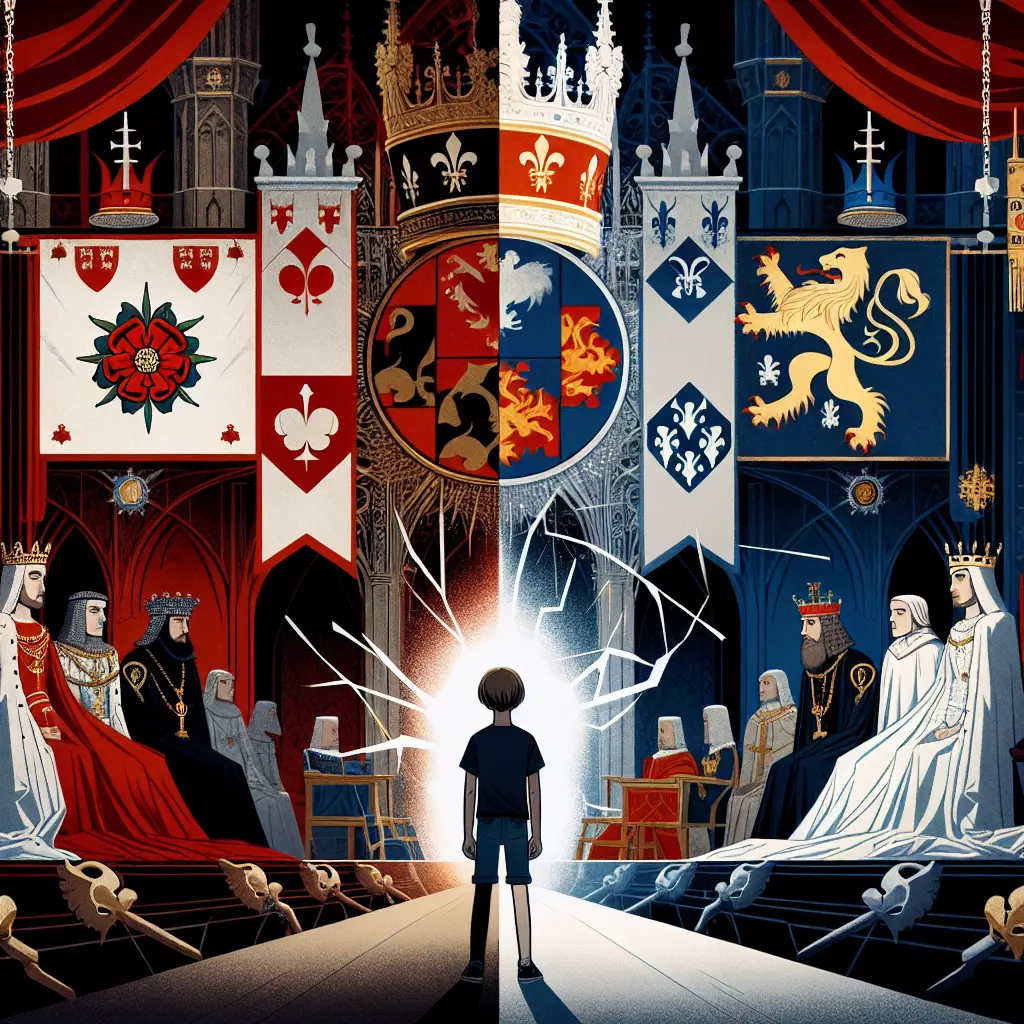
The Tudor-Stuart succession crises refer to the political and dynastic turmoil in England from the late 16th to early 18th centuries. Following the death of childless monarchs like Elizabeth I, disputes arose over rightful heirs, religious differences between Catholics and Protestants, and competing claims from various royal families. These crises led to instability, events like the English Civil War, and ultimately the union of the English and Scottish crowns under the Stuart dynasty.
The Tudor-Stuart succession crises
The Tudor-Stuart succession crises refer to the political and dynastic turmoil in England from the late 16th to early 18th centuries. Following the death of childless monarchs like Elizabeth I, disputes arose over rightful heirs, religious differences between Catholics and Protestants, and competing claims from various royal families. These crises led to instability, events like the English Civil War, and ultimately the union of the English and Scottish crowns under the Stuart dynasty.
💡 Key Takeaways
- Elizabeth I's death without an heir sparked dynastic crises that defined Tudor-Stuart succession debates.
- Religious conflict between Catholics and Protestants influenced claims to the throne and support for different heirs.
- Major crises: James I's accession, the Civil War and Interregnum, and the Glorious Revolution shifted power from the monarchy to Parliament.
- Key legal changes (Bill of Rights 1689, Act of Settlement 1701) secured a Protestant succession and a constitutional monarchy.
❓ Frequently Asked Questions
What triggered Elizabeth I's succession crisis?
Elizabeth I died childless in 1603, leaving no direct heir and raising the possibility of competing Catholic and Protestant claims to the throne; the question of succession prompted negotiations that eventually led to James VI of Scotland becoming James I of England.
Who succeeded Elizabeth I and why is it significant?
James VI of Scotland became James I of England in 1603, the first Stuart king of England. His accession ended the Tudor line's direct rule and began the Stuart era, shaping future dynastic and religious politics.
What was the Exclusion Crisis (late 1670s–1680s)?
Parliament attempted to exclude the Catholic James, Duke of York, from the succession, creating the Whig–Tory divide and laying the groundwork for constitutional limits on hereditary monarchy.
What were the Glorious Revolution and the Act of Settlement?
In 1688, James II was deposed and replaced by William III and Mary II; the 1701 Act of Settlement barred Catholics from the succession and established a Protestant line, shaping the future English (and later British) monarchy.