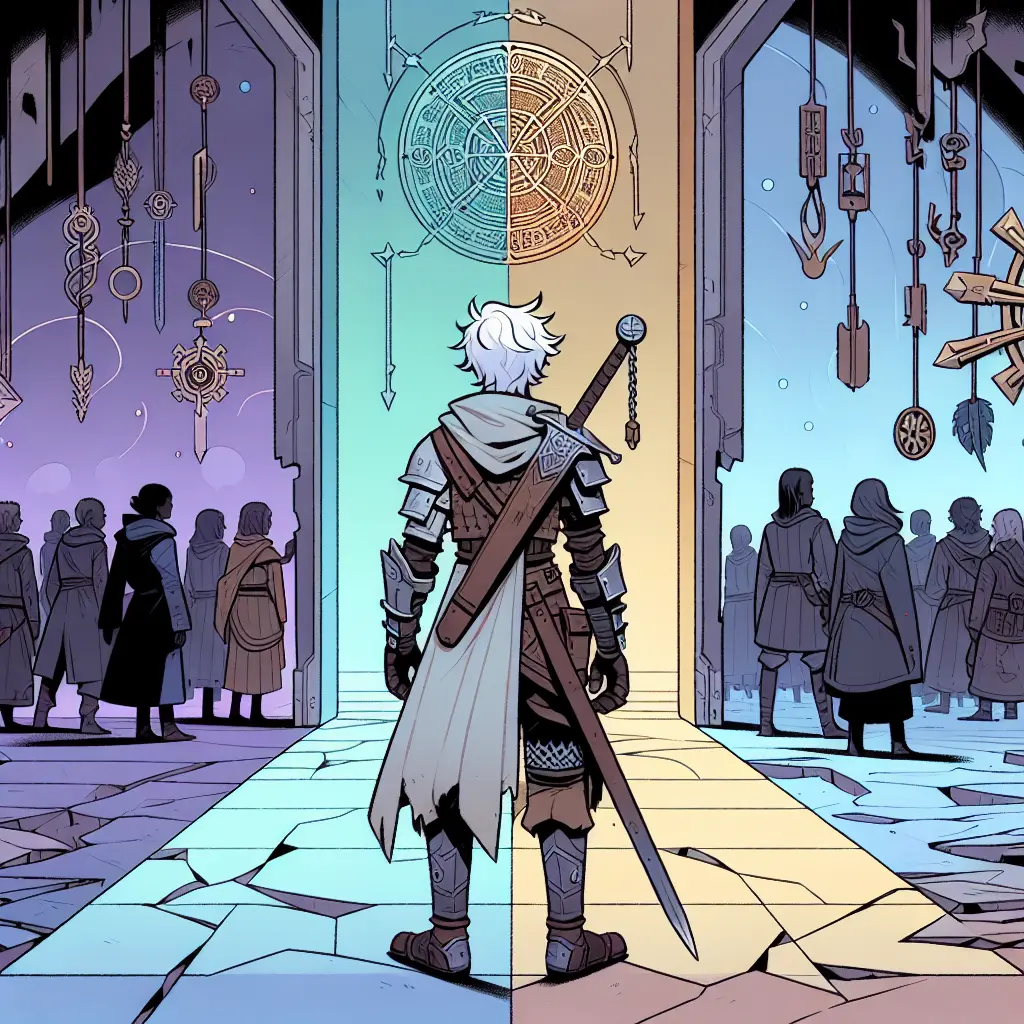
"The Witcher: Destiny, Choice & Prejudice" encapsulates the central themes of the Witcher universe, where characters grapple with the tension between fate and free will. Geralt, the protagonist, is often caught between fulfilling his destined path and making personal choices, all while facing societal prejudices against witchers and non-humans. These intertwined elements drive the narrative, exploring how destiny, personal agency, and societal biases shape individual lives and the world’s unfolding events.
The Witcher: Destiny, Choice & Prejudice
"The Witcher: Destiny, Choice & Prejudice" encapsulates the central themes of the Witcher universe, where characters grapple with the tension between fate and free will. Geralt, the protagonist, is often caught between fulfilling his destined path and making personal choices, all while facing societal prejudices against witchers and non-humans. These intertwined elements drive the narrative, exploring how destiny, personal agency, and societal biases shape individual lives and the world’s unfolding events.
💡 Key Takeaways
- Explore the tension between fate and free will in The Witcher and how characters grapple with prophecy versus personal choice.
- Analyze how Geralt's sense of duty intersects with his personal desires and the consequences of his decisions.
- Examine themes of prejudice and discrimination in the Witcher world and how bias shapes conflicts between humans, monsters, and magic users.
- Identify narrative devices—prophecies, quests, and moral dilemmas—that illuminate destiny, choice, and their consequences.
- Discuss how streaming platforms (Netflix, Disney+ & other services) influence access to and interpretation of The Witcher stories.
❓ Frequently Asked Questions
What is the central theme of Destiny, Choice & Prejudice in The Witcher?
It explores the struggle between fate and free will, showing how characters decide whether to follow prophecies or choose their own paths.
Who embodies the tension between fate and personal choice in the series?
Geralt of Rivia, a Witcher, often faces a clash between what destiny seems to require and the moral choices he makes.
How does prejudice influence characters in The Witcher world?
Prejudice appears in tensions between humans and nonhumans, as well as suspicion of magic users, shaping actions and outcomes.
Why are choices important in a world of prophecy and danger?
Because even small decisions can alter outcomes, showing that free will can challenge or redirect seemingly fixed destinies.
Where can you watch The Witcher?
The Witcher streams on Netflix; Disney+ does not host it.