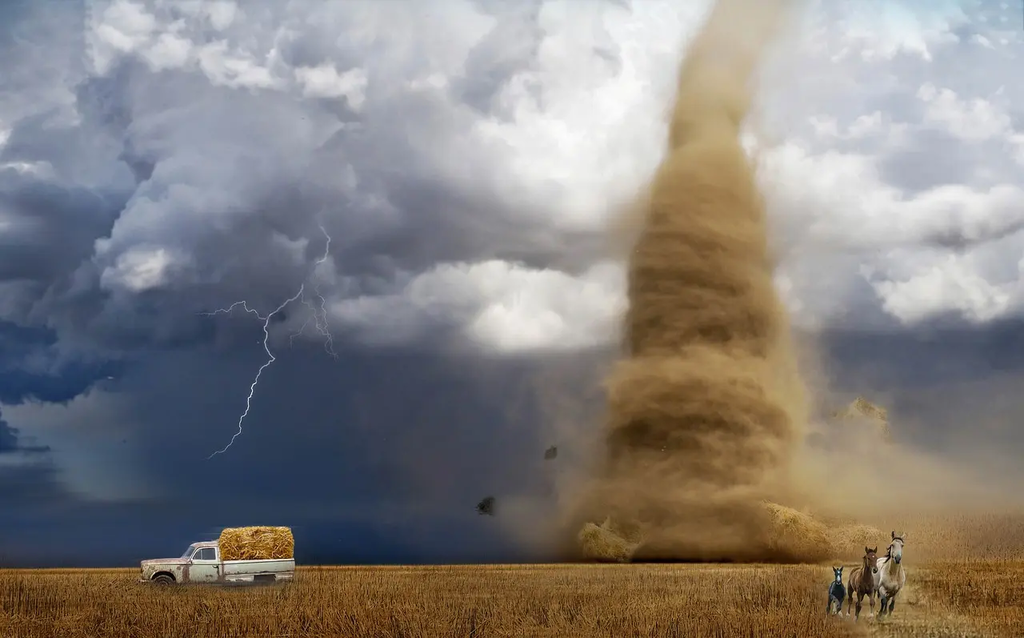
Tornado basics refer to the fundamental characteristics of tornadoes, which are rapidly rotating columns of air that extend from thunderstorms to the ground. They are typically funnel-shaped and can cause significant damage due to their intense winds. Tornadoes form when warm, moist air meets cold, dry air, creating instability in the atmosphere. Their strength is measured using the Enhanced Fujita (EF) scale, and they are most common in regions like the central United States, known as "Tornado Alley."
Tornado Basics
Tornado basics refer to the fundamental characteristics of tornadoes, which are rapidly rotating columns of air that extend from thunderstorms to the ground. They are typically funnel-shaped and can cause significant damage due to their intense winds. Tornadoes form when warm, moist air meets cold, dry air, creating instability in the atmosphere. Their strength is measured using the Enhanced Fujita (EF) scale, and they are most common in regions like the central United States, known as "Tornado Alley."
💡 Key Takeaways
- A tornado is a rapidly rotating column of air extending from a thunderstorm to the ground, usually funnel-shaped.
- They cause significant damage due to extremely strong winds and flying debris.
- They form when warm, moist air meets cold air within a thunderstorm.
❓ Frequently Asked Questions
What is a tornado?
A violently rotating column of air that extends from a thunderstorm to the ground, usually visible as a funnel and capable of very strong winds.
How do tornadoes form?
They form when warm, moist air rises in a thunderstorm and interacts with cooler, drier air, creating wind shear and strong updrafts that can spin a funnel touching the ground.
What’s the difference between a tornado watch and a tornado warning?
A watch means conditions are favorable for tornadoes; a warning means a tornado has been sighted or indicated and you should seek shelter immediately.
What should you do to stay safe during a tornado?
Indoors, go to a sturdy interior room on the lowest floor, away from windows, and protect your head. If outside or in a vehicle, seek a low, sheltered area and listen for official alerts.