Torts II: Intentional & Strict Liability focuses on advanced principles of civil liability arising from intentional acts and situations where liability is imposed regardless of fault. This course explores legal doctrines governing intentional torts such as assault, battery, and false imprisonment, as well as strict liability cases involving inherently dangerous activities or defective products. It is essential for understanding how the law protects individuals and society by assigning responsibility for harm in the public and private sectors.
Torts II: Intentional & Strict Liability
Torts II: Intentional & Strict Liability focuses on advanced principles of civil liability arising from intentional acts and situations where liability is imposed regardless of fault. This course explores legal doctrines governing intentional torts such as assault, battery, and false imprisonment, as well as strict liability cases involving inherently dangerous activities or defective products. It is essential for understanding how the law protects individuals and society by assigning responsibility for harm in the public and private sectors.
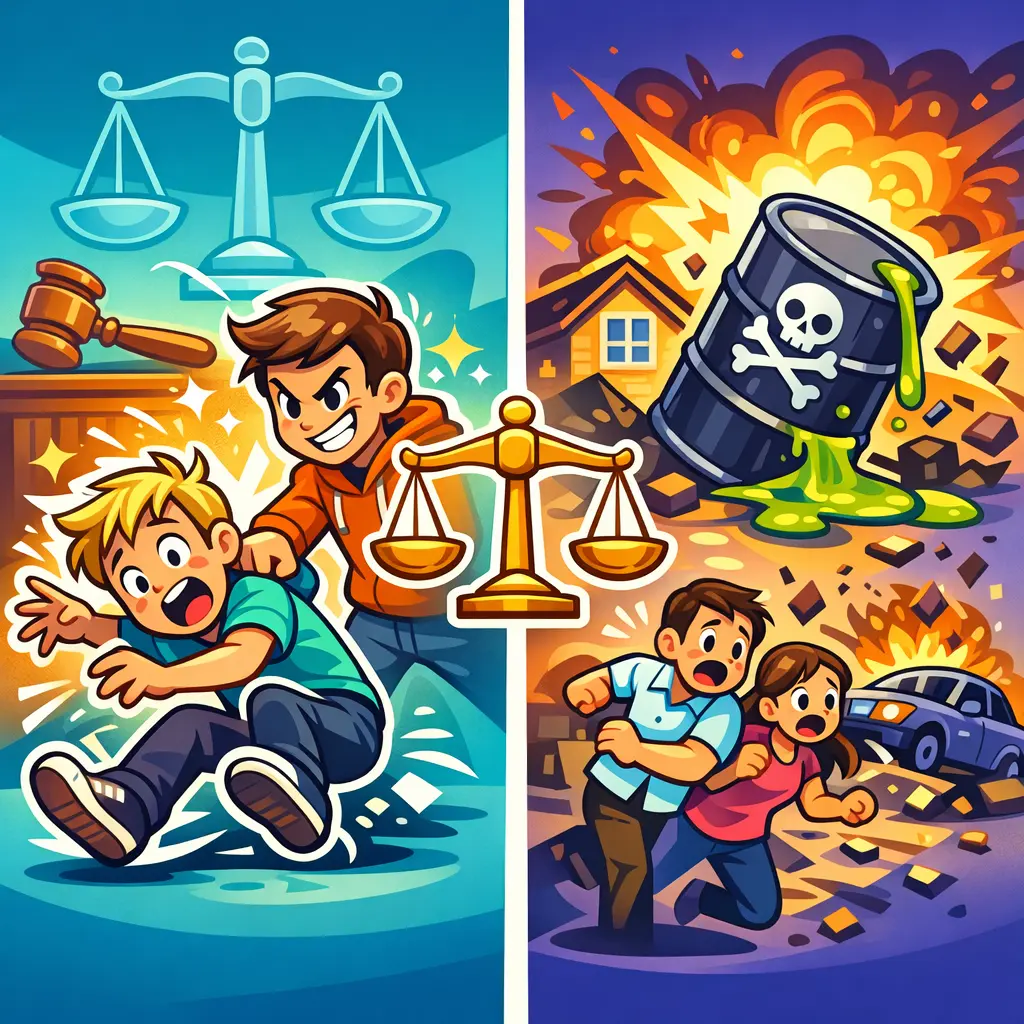
💡 Key Takeaways
- Identify the core elements of common intentional torts (battery, assault, false imprisonment, and intentional infliction of emotional distress) and how intent is established.
- Explain transferred intent and how intent can extend liability across multiple torts.
- Learn defenses to intentional torts (consent, self-defense, privilege) and the limits of those defenses.
- Understand strict liability: when fault is not required (abnormally dangerous activities and products liability) and how it differs from negligence.
❓ Frequently Asked Questions
What is the difference between intentional torts and strict liability?
Intentional torts require proof that the defendant intended the act causing harm; strict liability imposes responsibility without proving intent or negligence, usually for inherently dangerous activities or certain product injuries.
What elements must be proven for an intentional tort?
A voluntary act, intent to perform the act or cause its consequences, causation, and actual damages. Defenses like consent or privilege can shield liability.
How do assault and battery differ in tort law?
Assault is the intentional act that creates reasonable apprehension of imminent harmful contact; battery is the actual intentional harmful or offensive contact.
When does strict liability apply in torts?
Typically in abnormally dangerous activities and some product liability cases, where fault or intent is not required, only causation and damages.