The phrase refers to evaluating Tottenham Hotspur F.C.’s performance in the transfer market by analyzing how often their signings succeed (“hit rates”) and the extent to which these acquisitions contribute positively to the club’s sporting and financial value (“value creation”). It involves assessing past transfer decisions, measuring player impact, and determining if investments in new players translate into improved results, profitability, or long-term club growth.
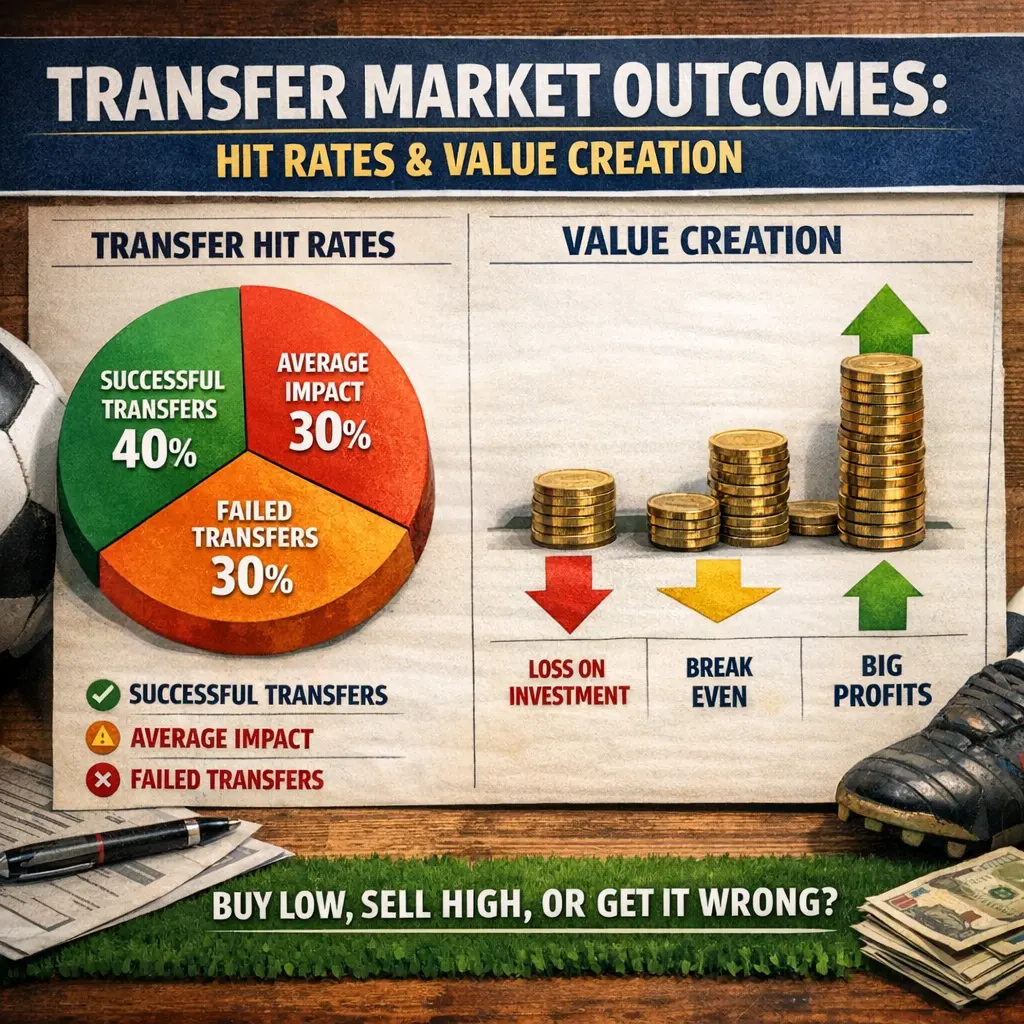
Transfer Market Outcomes: Hit Rates & Value Creation
The phrase refers to evaluating Tottenham Hotspur F.C.’s performance in the transfer market by analyzing how often their signings succeed (“hit rates”) and the extent to which these acquisitions contribute positively to the club’s sporting and financial value (“value creation”). It involves assessing past transfer decisions, measuring player impact, and determining if investments in new players translate into improved results, profitability, or long-term club growth.
💡 Key Takeaways
- Define what counts as a 'hit' in the transfer market and how hit rates are measured.
- Explain how to assess value creation from transfers, including immediate impact and long-term contribution.
- Identify key factors that influence transfer outcomes (age, contract length, adaptability, league fit, injuries).
- Learn to forecast transfer value using metrics like transfer fee, wages, performance metrics, and resale potential.
❓ Frequently Asked Questions
What does 'hit rate' mean in the transfer market?
Hit rate is the share of transfers that meet a predefined success criterion (for example, the player delivers expected performance or justifies the transfer fee) within a set period.
How can a club create value through transfers?
By buying players who perform above their cost, increasing resale value, and managing wages and amortized fees to improve long-term ROI.
What factors influence transfer market outcomes?
Player age and injury history, contract length, market timing, negotiation leverage, scouting quality, tactical fit, and loan strategies all affect results.
What does value creation look like in transfers?
Value creation means the combined team performance and financial returns from a transfer exceed its upfront and ongoing costs.
How are net spend and net profit used to assess market activity?
Net spend = fees paid minus fees earned; net profit considers amortization and resale gains, offering a fuller view of transfer market efficiency.