Transhumanism is a movement advocating the use of technology to enhance human physical and cognitive abilities, aiming to transcend current biological limitations. Posthuman futures envision a world where these enhancements lead to beings fundamentally different from present-day humans, potentially blending biology with artificial intelligence or robotics. Together, these concepts explore ethical, philosophical, and societal implications of evolving beyond traditional human forms, questioning what it means to be human in a technologically advanced future.
Transhumanism & Posthuman Futures
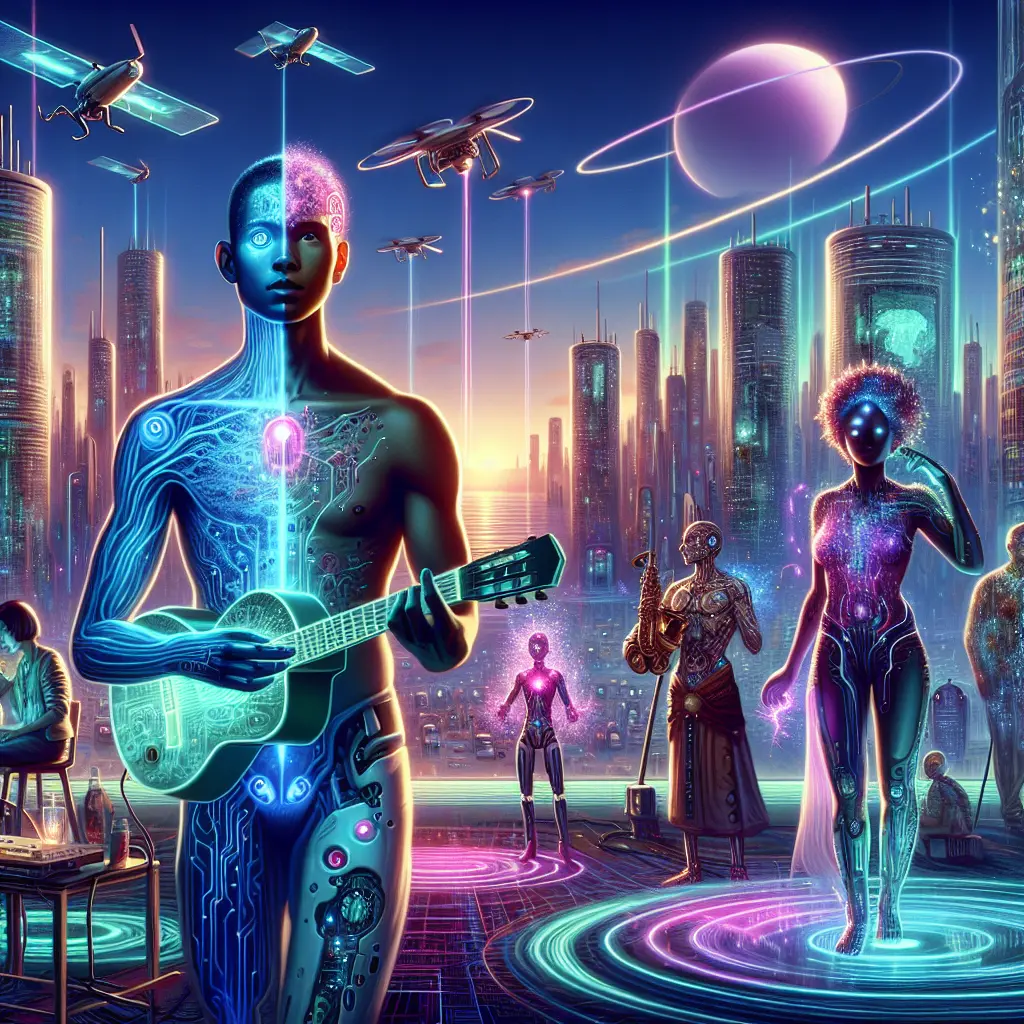
Transhumanism is a movement advocating the use of technology to enhance human physical and cognitive abilities, aiming to transcend current biological limitations. Posthuman futures envision a world where these enhancements lead to beings fundamentally different from present-day humans, potentially blending biology with artificial intelligence or robotics. Together, these concepts explore ethical, philosophical, and societal implications of evolving beyond traditional human forms, questioning what it means to be human in a technologically advanced future.
💡 Key Takeaways
- Understand the core idea of transhumanism: using technology to enhance human physical and cognitive abilities and transcend current limitations.
- Explain what posthuman futures are and how beings might differ from present-day humans.
- Identify key technologies often seen in transhumanist stories (bioengineering, AI, brain-computer interfaces, nanotech, robotics) and how they drive the plot.
- Consider ethical and societal questions these futures raise (inequality, access, identity, autonomy, risk) and how franchises explore them.
❓ Frequently Asked Questions
What is transhumanism?
A movement that advocates using technology to enhance human physical and cognitive abilities, aiming to transcend current biological limits and improve well-being.
What is a posthuman?
A being whose abilities (physical, mental, or existential) are radically transformed by technology or evolution, resulting in traits far beyond today’s typical humans.
How do franchises and universes depict transhumanism and posthuman futures?
They show characters using implants, AI, mind uploading, or genetic modification, and explore questions about identity, power, ethics, and social change in altered worlds.
What technologies are commonly associated with transhumanism?
Brain-computer interfaces, genetic engineering, cybernetic implants, AI integration, mind uploading, longevity technologies, and nanotechnology.