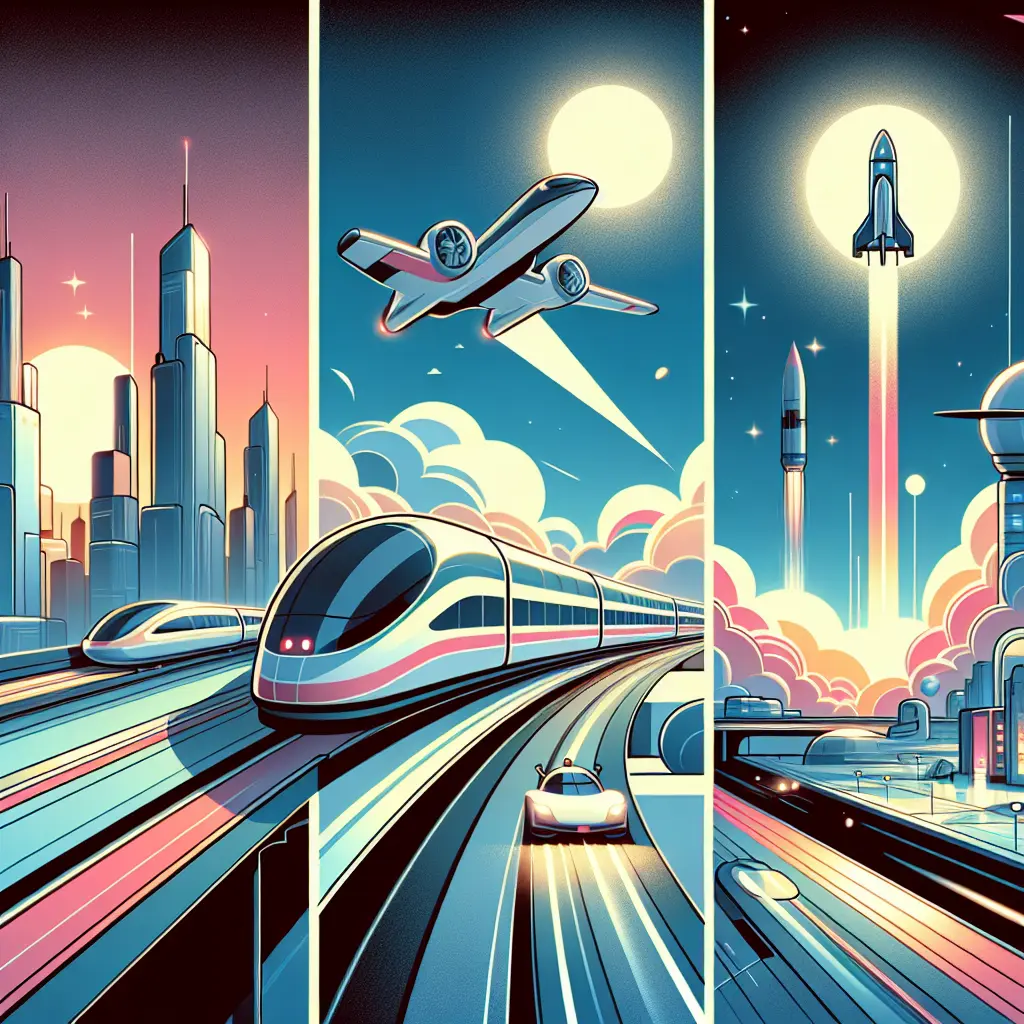
Transportation innovations in rail, air, and space have revolutionized how people and goods move across the globe and beyond. Railways enabled rapid, large-scale land travel and trade; air travel shrank continents, connecting distant cities within hours; and space transportation opened new frontiers for exploration and technology. Together, these advancements have driven economic growth, cultural exchange, and scientific discovery, continuously shaping the modern world’s connectivity and possibilities.
Transportation Innovations: Rail, Air, and Space
Transportation innovations in rail, air, and space have revolutionized how people and goods move across the globe and beyond. Railways enabled rapid, large-scale land travel and trade; air travel shrank continents, connecting distant cities within hours; and space transportation opened new frontiers for exploration and technology. Together, these advancements have driven economic growth, cultural exchange, and scientific discovery, continuously shaping the modern world’s connectivity and possibilities.
💡 Key Takeaways
- Railways enabled rapid land travel and large-scale trade through steam locomotives and standardized gauges.
- Air travel shortened global distances with jet propulsion, pressurized cabins, and the infrastructure of airports and air traffic control.
- Space transportation opened new frontiers with rockets delivering satellites, humans into orbit, and reusable launch systems.
- Pub-quiz-ready topics span rail, air, and space milestones and pioneers, from early locomotives to iconic space missions.
❓ Frequently Asked Questions
What impact did railways have on travel and trade?
Railways enabled rapid, large-scale land transport and trade, spurring industrial growth and linking distant markets.
What innovation made sustained long-distance air travel practical?
The airplane, especially jet-powered airliners, made long-distance flights fast, safe, and widely available.
What milestone marked the start of space transportation?
Sputnik 1, launched in 1957, marked the beginning of the space age and space transportation.
How have rail, air, and space innovations changed global connectivity?
They dramatically reduce travel times and expand access for people and goods, enabling globalization and exploration.
What is a major non-transport benefit of space technology?
Satellites enable global communications, weather forecasting, navigation, and Earth observation.