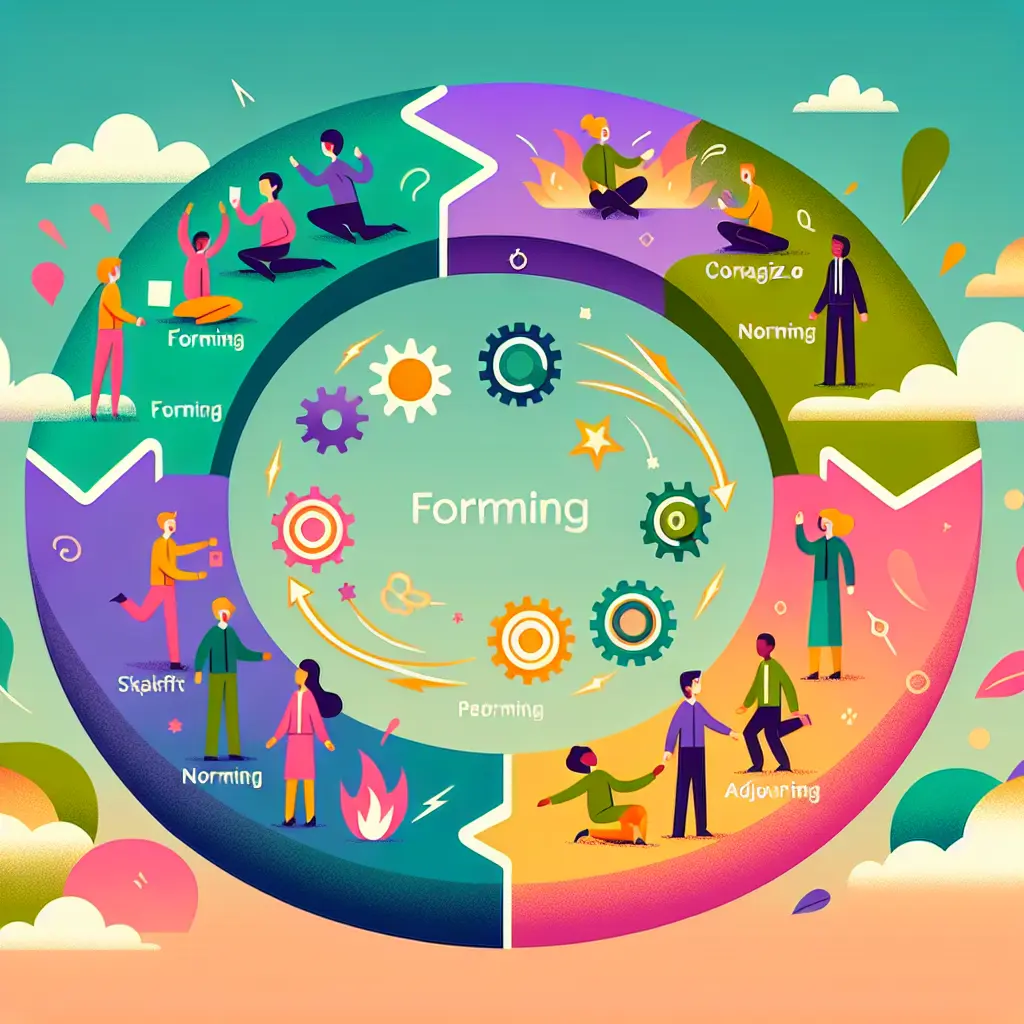
Tuckman Stages refer to the model of group development proposed by Bruce Tuckman, outlining the phases teams typically go through: Forming, Storming, Norming, Performing, and Adjourning. Role fit pertains to how well an individual's skills, personality, and experience align with their assigned role within the team. Effective role fit at each Tuckman stage enhances team cohesion, productivity, and overall group success, ensuring smoother progression through the stages.
Tuckman Stages & Role Fit
Tuckman Stages refer to the model of group development proposed by Bruce Tuckman, outlining the phases teams typically go through: Forming, Storming, Norming, Performing, and Adjourning. Role fit pertains to how well an individual's skills, personality, and experience align with their assigned role within the team. Effective role fit at each Tuckman stage enhances team cohesion, productivity, and overall group success, ensuring smoother progression through the stages.
💡 Key Takeaways
- Understand each of the five Tuckman stages (Forming, Storming, Norming, Performing, Adjourning) and the typical team dynamics in each.
- Learn how your personality, skills, and experiences influence your fit for different team roles.
- Identify practical signs a team is stuck or misaligned and actions to move it toward high performance.
- Use self-discovery techniques to map your strengths and ideal roles for better collaboration and impact.
❓ Frequently Asked Questions
What is the Tuckman model?
The Tuckman model describes five stages teams typically move through—Forming, Storming, Norming, Performing, and Adjourning—covering how groups develop and collaborate over time.
How can you tell which Tuckman stage a team is in?
Forming: polite, cautious, goal setup. Storming: conflicts and role questions. Norming: growing cohesion and shared norms. Performing: high collaboration and productivity. Adjourning: project wrap-up and reflection.
What is role fit and why does it matter?
Role fit is how well your skills, personality, and experience match a specific role. Good fit boosts motivation, engagement, and performance; poor fit can hinder growth and satisfaction.
How can you assess your own role fit?
Inventory your strengths and interests, seek feedback, compare tasks to what you enjoy and do well, and try small role clarifying experiments or shadowing to test alignment.
How can these concepts help with self-discovery and personal growth?
They help you choose roles that suit you, develop communication and adaptability, and plan steps to strengthen areas where you’re less aligned.