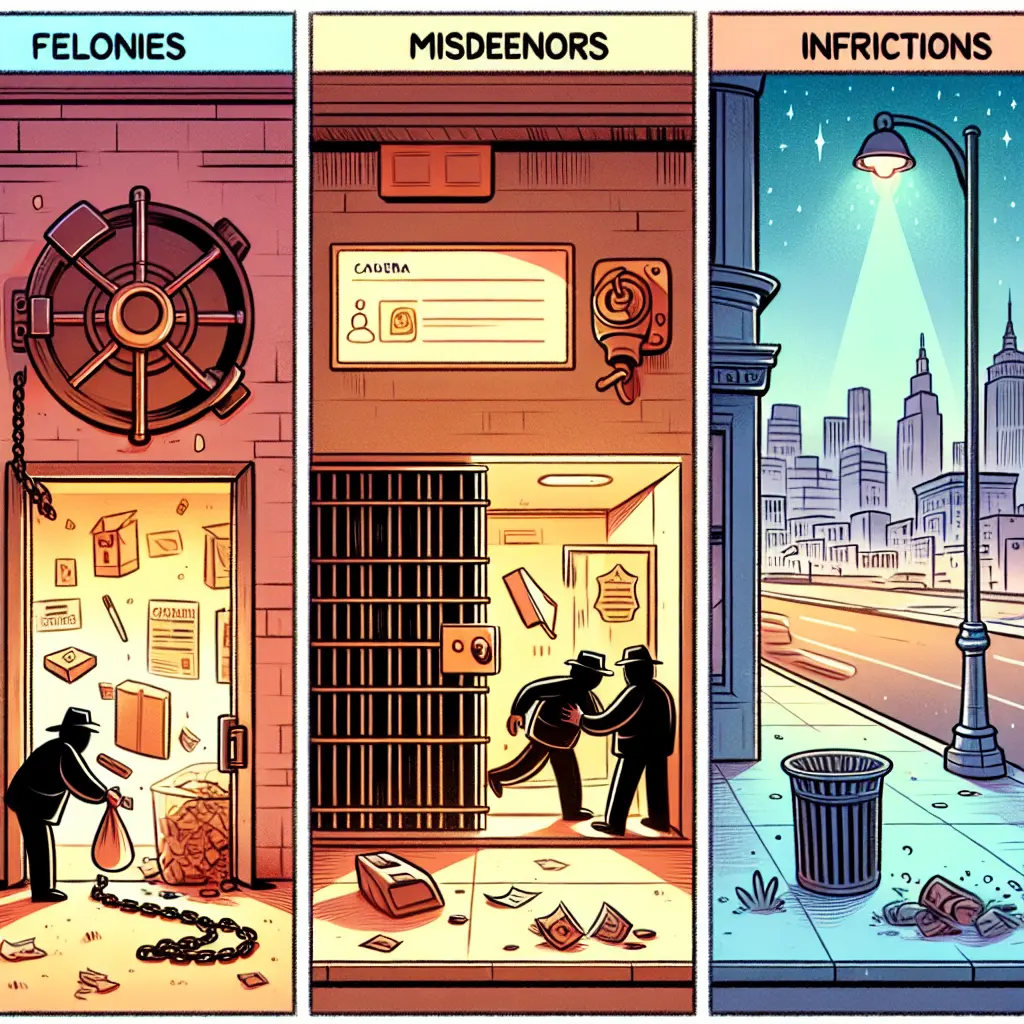
In the U.S., crimes are categorized into felonies, misdemeanors, and infractions based on severity. Felonies are the most serious, including offenses like murder or robbery, often resulting in over a year of imprisonment. Misdemeanors are less severe, such as petty theft or minor assault, typically punishable by less than a year in jail. Infractions are minor violations, like traffic tickets, usually resulting in fines rather than jail time.
Types of crime in the U.S.: felonies, misdemeanors, infractions+40
In the U.S., crimes are categorized into felonies, misdemeanors, and infractions based on severity. Felonies are the most serious, including offenses like murder or robbery, often resulting in over a year of imprisonment. Misdemeanors are less severe, such as petty theft or minor assault, typically punishable by less than a year in jail. Infractions are minor violations, like traffic tickets, usually resulting in fines rather than jail time.
💡 Key Takeaways
- Understand the three main crime categories in the U.S.—felonies, misdemeanors, and infractions—and how severity determines classification.
- Felonies are the most serious offenses (examples include murder or robbery) and often carry prison time longer than one year.
- Misdemeanors are less severe than felonies, with examples such as petty theft or minor assault and lighter penalties.
- Infractions form the least serious category within this scheme and represent offenses with the lowest penalties.
❓ Frequently Asked Questions
What is a felony?
The most serious category of crime, typically punished by more than one year in prison; examples include murder, robbery, and serious assault.
What is a misdemeanor?
A less serious crime, usually punishable by up to one year in jail (or probation) and smaller fines; examples include petty theft and simple assault.
What is an infraction?
A minor violation usually punished by a fine with no jail time; examples include traffic tickets and most regulatory offenses.
How do penalties differ among felonies, misdemeanors, and infractions?
Felonies carry the longest terms and most serious consequences, misdemeanors carry shorter jail terms and smaller fines, and infractions typically result in fines with no jail time.