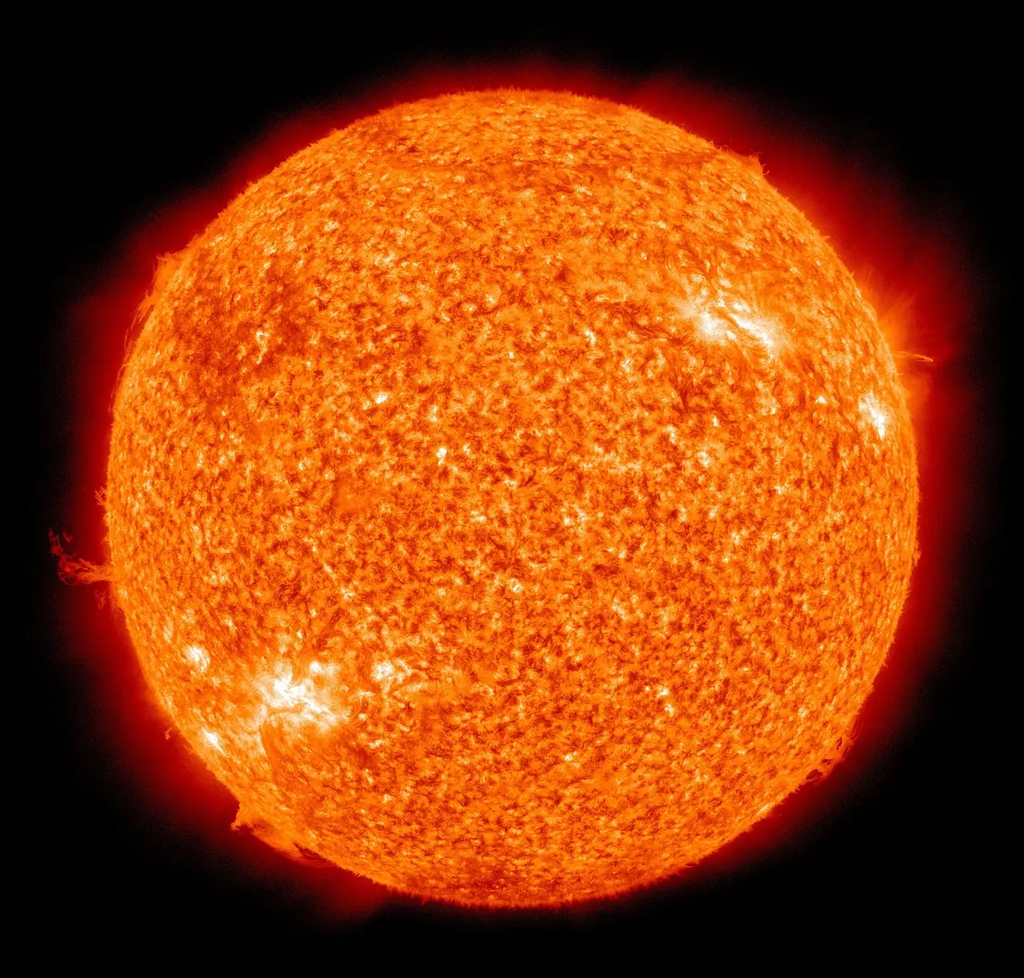
"Types of Stars" refers to the classification of stars based on their characteristics such as size, color, temperature, and brightness. In "Space Quest: Explore the Planets and Stars," this phrase highlights the diversity found among stars, including categories like red dwarfs, white dwarfs, giants, supergiants, and neutron stars. Each type plays a unique role in the universe, influencing planetary systems and the lifecycle of galaxies.
Types of Stars+50
"Types of Stars" refers to the classification of stars based on their characteristics such as size, color, temperature, and brightness. In "Space Quest: Explore the Planets and Stars," this phrase highlights the diversity found among stars, including categories like red dwarfs, white dwarfs, giants, supergiants, and neutron stars. Each type plays a unique role in the universe, influencing planetary systems and the lifecycle of galaxies.
💡 Key Takeaways
- Identify the main star types by life stage (main-sequence/dwarfs, giants, supergiants, white dwarfs) and what differentiates each in size and brightness.
- Explore spectral classes (O, B, A, F, G, K, M) and how temperature and color relate to these classes.
- Explain how a star's mass drives its evolution and endpoints (white dwarf, neutron star, or black hole).
- Use the Hertzsprung-Russell diagram to compare temperature, luminosity, and size across different star types.
❓ Frequently Asked Questions
What are the main star types you’ll encounter in astronomy?
Stars are broadly categorized by size and life stage: main-sequence (dwarfs), red giants, red supergiants, white dwarfs, neutron stars, and black holes.
What is a main-sequence star?
A star fusing hydrogen in its core in hydrostatic balance. It includes stars like the Sun and spans from hot blue to cool red in color.
What is a red dwarf?
A small, cool main-sequence star (spectral type M) with low mass and luminosity; it burns fuel slowly and lasts a very long time.
What are white dwarfs, neutron stars, and black holes?
White dwarfs are dense remnants of low‑to‑medium-mass stars; neutron stars are ultra-dense cores from massive stars; black holes are collapsed cores with gravity so strong that nothing, not even light, can escape.
How are stars classified by spectral type and luminosity class?
Spectral types O–M indicate temperature (O hottest to M coolest); subclasses 0–9 refine temperature. Luminosity classes I–V describe size/brightness (I=supergiant, III=giant, V=main-sequence). Example: Sun = G2V.