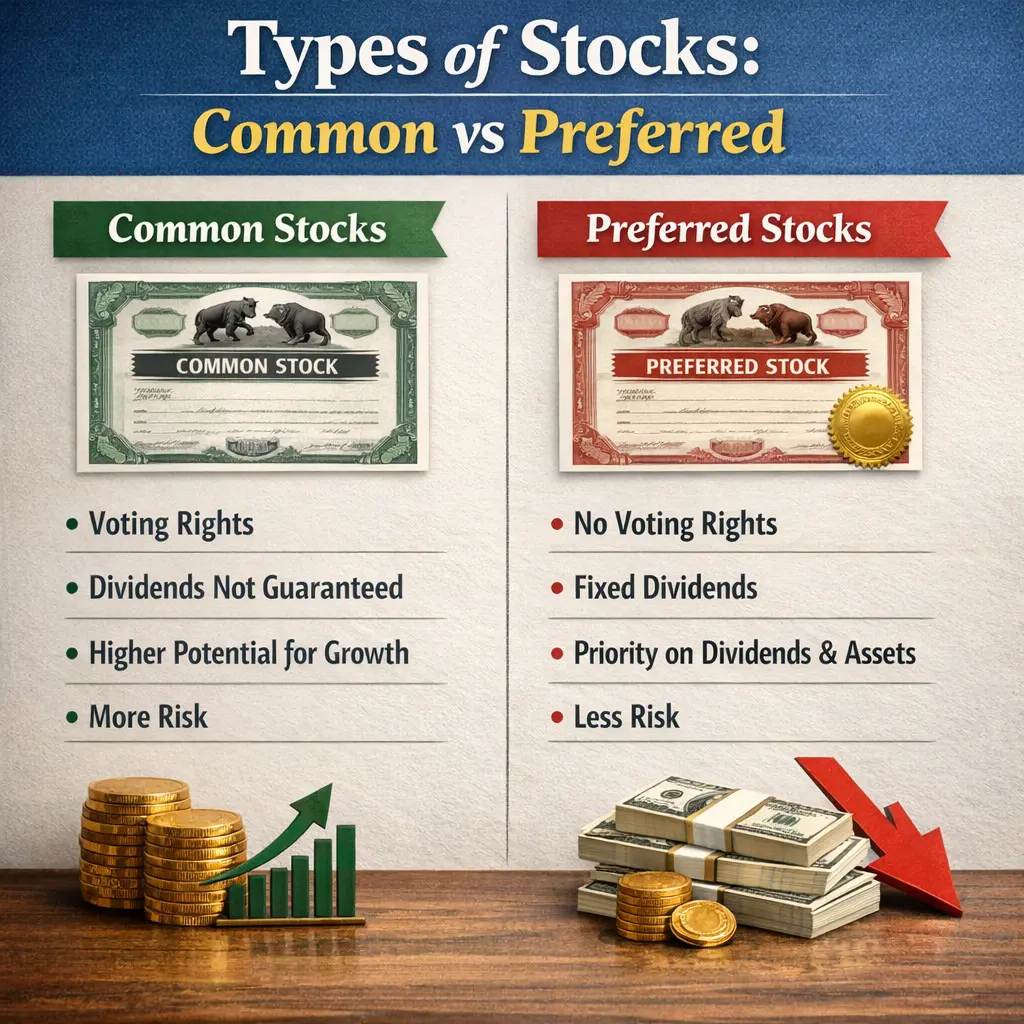
In US stock markets, common stocks represent ownership in a company and usually grant voting rights at shareholder meetings, along with potential dividends. Preferred stocks, on the other hand, typically do not offer voting rights but provide shareholders with fixed dividends and priority over common stockholders if the company distributes assets during liquidation. Investors choose between these based on their preference for potential growth (common) or steady income and greater security (preferred).
Types of Stocks: Common vs Preferred
In US stock markets, common stocks represent ownership in a company and usually grant voting rights at shareholder meetings, along with potential dividends. Preferred stocks, on the other hand, typically do not offer voting rights but provide shareholders with fixed dividends and priority over common stockholders if the company distributes assets during liquidation. Investors choose between these based on their preference for potential growth (common) or steady income and greater security (preferred).
💡 Key Takeaways
- Distinguish common stock from preferred stock, including ownership and claims.
- Compare voting rights: common stock typically comes with voting rights; preferred usually does not.
- Understand dividend structures: preferred stock generally pays fixed dividends and has priority over common dividends.
- Learn about liquidation priority and risk: preferred stock has higher claim on assets but less upside potential than common stock.
- Identify typical investor uses: when to choose one type based on income needs and growth potential.
❓ Frequently Asked Questions
What is common stock?
Common stock represents ownership in a company, usually with voting rights and potential for price appreciation and dividends that vary with company performance.
What is preferred stock?
Preferred stock is a class of ownership with fixed or higher dividends and a higher claim on assets than common stock in liquidation, but typically without (or limited) voting rights.
How do dividends differ between common and preferred stocks?
Preferred dividends are fixed and paid before any common dividends; common dividends are variable and depend on profits and board decisions.
Do common and preferred stocks have voting rights?
Common stock usually comes with voting rights; preferred stock generally does not, though some preferred shares may have limited or special voting rights in certain cases.
Can preferred stock be converted to common stock?
Yes. Some preferred shares are convertible into a set number of common shares, allowing participation in potential upside of the common stock.