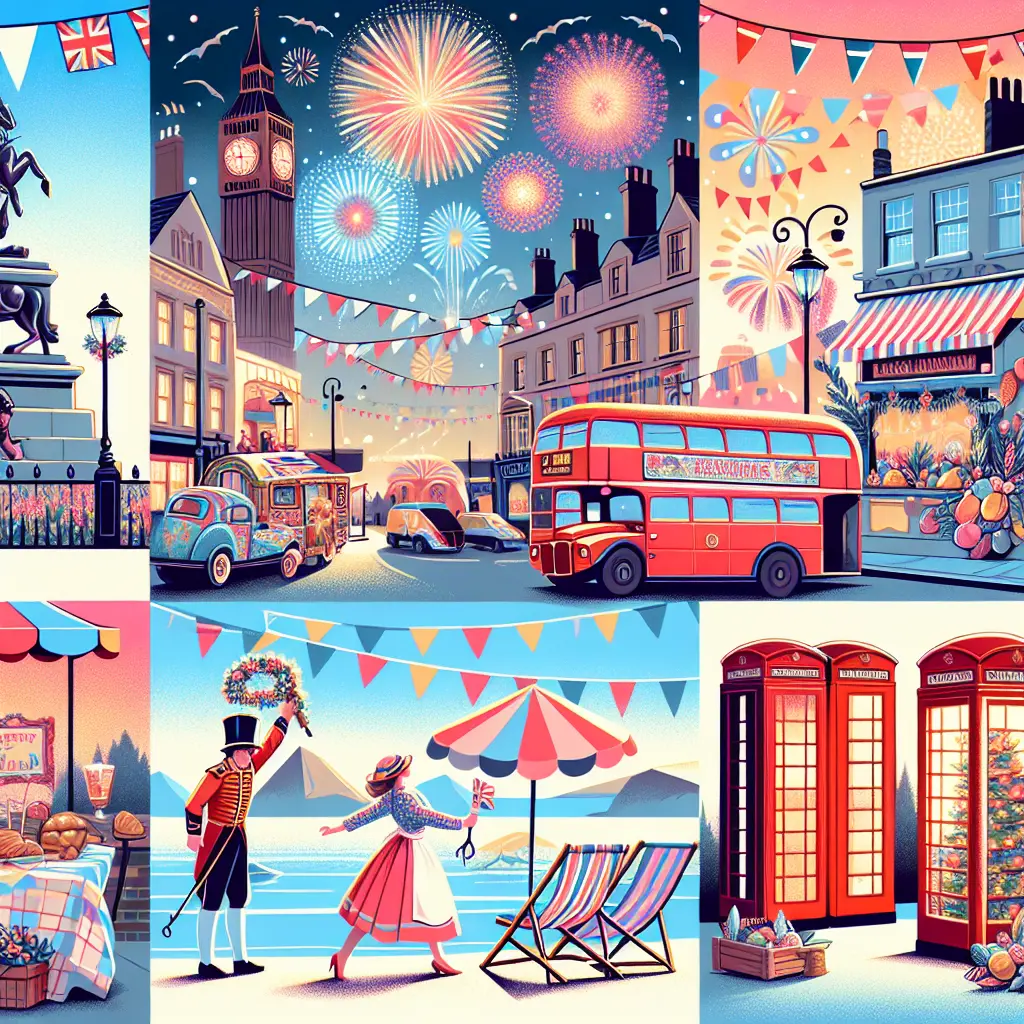
UK Bank Holidays are designated public holidays when most businesses and schools close, allowing people time off work to celebrate or relax. These holidays often align with traditional customs, such as Easter egg hunts or May Day festivities. Customs vary across regions, reflecting local history and culture. Bank Holidays provide opportunities for family gatherings, community events, and travel, playing a significant role in British social life and cultural identity throughout the year.
UK Bank Holidays & Customs+50
UK Bank Holidays are designated public holidays when most businesses and schools close, allowing people time off work to celebrate or relax. These holidays often align with traditional customs, such as Easter egg hunts or May Day festivities. Customs vary across regions, reflecting local history and culture. Bank Holidays provide opportunities for family gatherings, community events, and travel, playing a significant role in British social life and cultural identity throughout the year.
💡 Key Takeaways
- Understand what UK bank holidays are and how they affect work and school scheduling.
- Identify the major nationwide bank holidays and note regional variations across the UK.
- Explore how traditional customs (such as Easter egg hunts and May Day festivities) are linked to specific holidays and local history.
- Learn how schools, businesses, and public services observe bank holidays and how people typically spend the time off.
- Recognize how regional histories shape local holiday customs across the UK.
❓ Frequently Asked Questions
What is a UK bank holiday?
A designated public holiday when most businesses and schools close, giving people time off to rest, celebrate, or relax.
Do bank holidays differ across the UK?
Yes. England, Wales, Scotland, and Northern Ireland have different holiday dates and some region-specific customs.
What are some common UK bank holidays?
Popular ones include New Year’s Day, Good Friday, Easter Monday, Early May Bank Holiday, Spring Bank Holiday, Summer Bank Holiday, Christmas Day, and Boxing Day.
What kind of customs are linked to bank holidays?
Customs often reflect local history and can include activities like Easter egg hunts, May Day celebrations, fairs, or regional parades.
How can I check the exact bank holiday dates for my area?
Consult your local government or national calendars, as dates can vary by country and year.