Dark pools are private, non-public trading venues where institutional investors can buy or sell large blocks of stocks anonymously, away from traditional stock exchanges. Their purpose is to minimize market impact and prevent significant price movements that could occur if such trades were executed publicly. While dark pools offer privacy and potentially better prices for large trades, they also raise concerns about transparency and fairness in the US stock markets.
Understanding Dark Pools
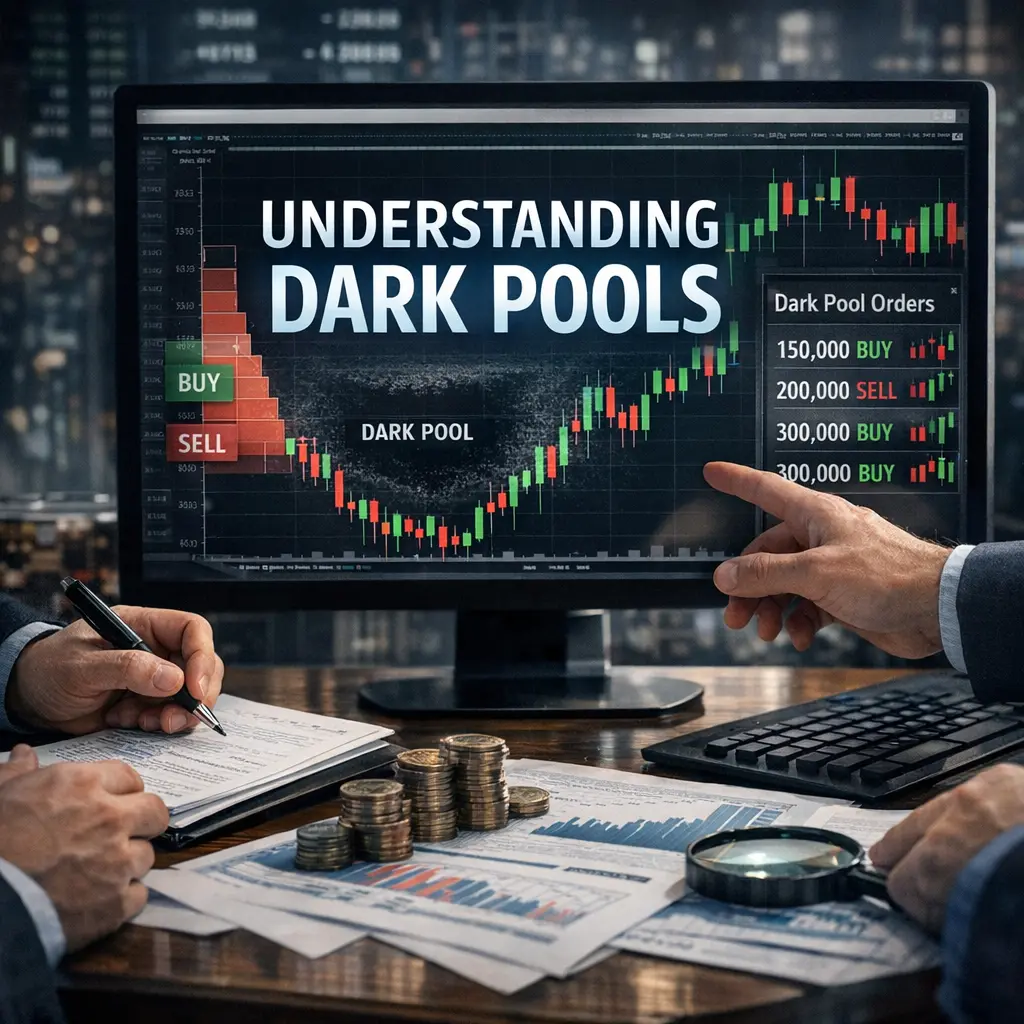
Dark pools are private, non-public trading venues where institutional investors can buy or sell large blocks of stocks anonymously, away from traditional stock exchanges. Their purpose is to minimize market impact and prevent significant price movements that could occur if such trades were executed publicly. While dark pools offer privacy and potentially better prices for large trades, they also raise concerns about transparency and fairness in the US stock markets.
💡 Key Takeaways
- Understand what a dark pool is and how it hides order details from public view compared with lit exchanges.
- Learn why institutions use dark pools (to reduce market impact and preserve anonymity) and common trade scenarios.
- Explore how dark pool trades are executed and disclosed (post-trade reporting, limited pre-trade visibility).
- Recognize the potential risks and regulatory considerations, including effects on price discovery and market transparency.
❓ Frequently Asked Questions
What is a dark pool?
A dark pool is a private trading venue where large orders can be matched with minimal pre-trade visibility, helping reduce market impact.
How do dark pools differ from traditional exchanges?
Public exchanges reveal order details and price quotes to the market; dark pools keep order information hidden until after trades are executed, reducing pre-trade signaling.
Why do traders use dark pools?
They aim to minimize price impact and avoid signaling large intentions to other traders, potentially getting better execution for big orders.
What are potential drawbacks or criticisms of dark pools?
They can lessen price transparency, fragment liquidity, and raise concerns about fair access and price discovery.