Using a multimeter involves measuring key electrical properties in circuits: voltage (the potential difference between two points), current (the flow of electric charge), and resistance (how much a component resists current). To measure voltage, the multimeter probes are placed across a component. For current, the circuit is opened and the meter is connected in series. Resistance is checked with the device powered off, placing probes across the component. Proper settings and safety precautions are essential.
Using a Multimeter: Voltage, Current, Resistance
Using a multimeter involves measuring key electrical properties in circuits: voltage (the potential difference between two points), current (the flow of electric charge), and resistance (how much a component resists current). To measure voltage, the multimeter probes are placed across a component. For current, the circuit is opened and the meter is connected in series. Resistance is checked with the device powered off, placing probes across the component. Proper settings and safety precautions are essential.
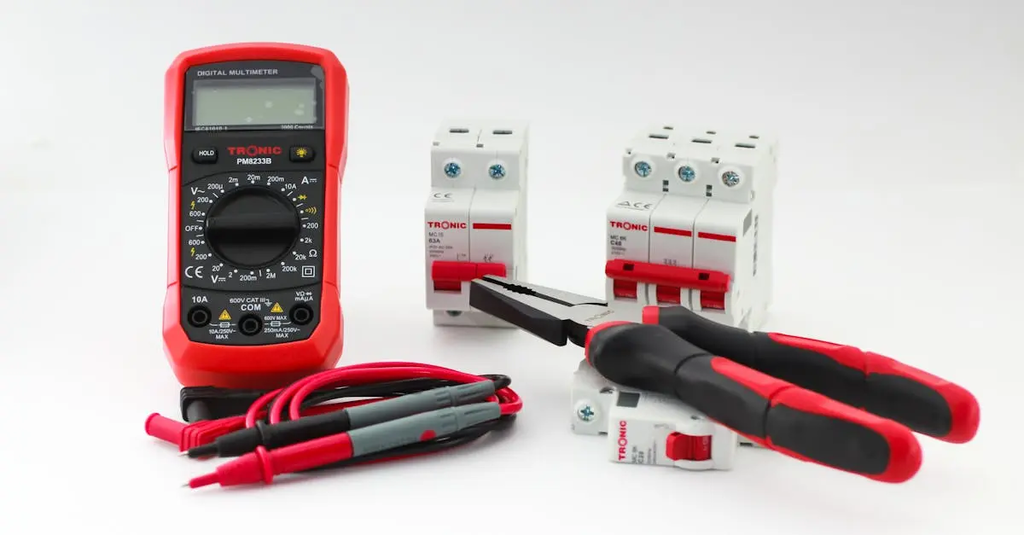
💡 Key Takeaways
- When to measure voltage, current, and resistance with a multimeter and what each reading means.
- How to set the meter for DC voltage, AC voltage, resistance, and current, including correct range and probe placement.
- How Ohm's Law links voltage, current, and resistance and how to use readings to troubleshoot simple circuits.
- Safe measurement practices, including de-energizing circuits before measuring resistance and careful handling of probes.
❓ Frequently Asked Questions
What is a multimeter and what does it measure?
A handheld tool that measures electrical properties such as voltage, current, and resistance. It can be digital or analog and can read AC or DC signals depending on the setting.
How do you measure voltage with a multimeter?
Set the dial to voltage (V) and choose DC or AC as needed. Place the red probe on the test point and the black probe on the return/ground, then read the value on the display.
How do you measure current with a multimeter?
Break the circuit and insert the meter in series. Set the dial to current (A or mA) and use the correct input jack. Read the current on the display.
How do you measure resistance with a multimeter?
Power off the circuit and isolate the component. Set the dial to ohms (Ω), place the probes across the component, and read the resistance. Very high readings suggest an open circuit; very low readings suggest a short.
What safety tips should you follow when using a multimeter?
Start with the highest range to avoid overload. Never measure resistance in a live circuit. Keep fingers behind the probes, use the correct jacks, and disconnect power before wiring changes.