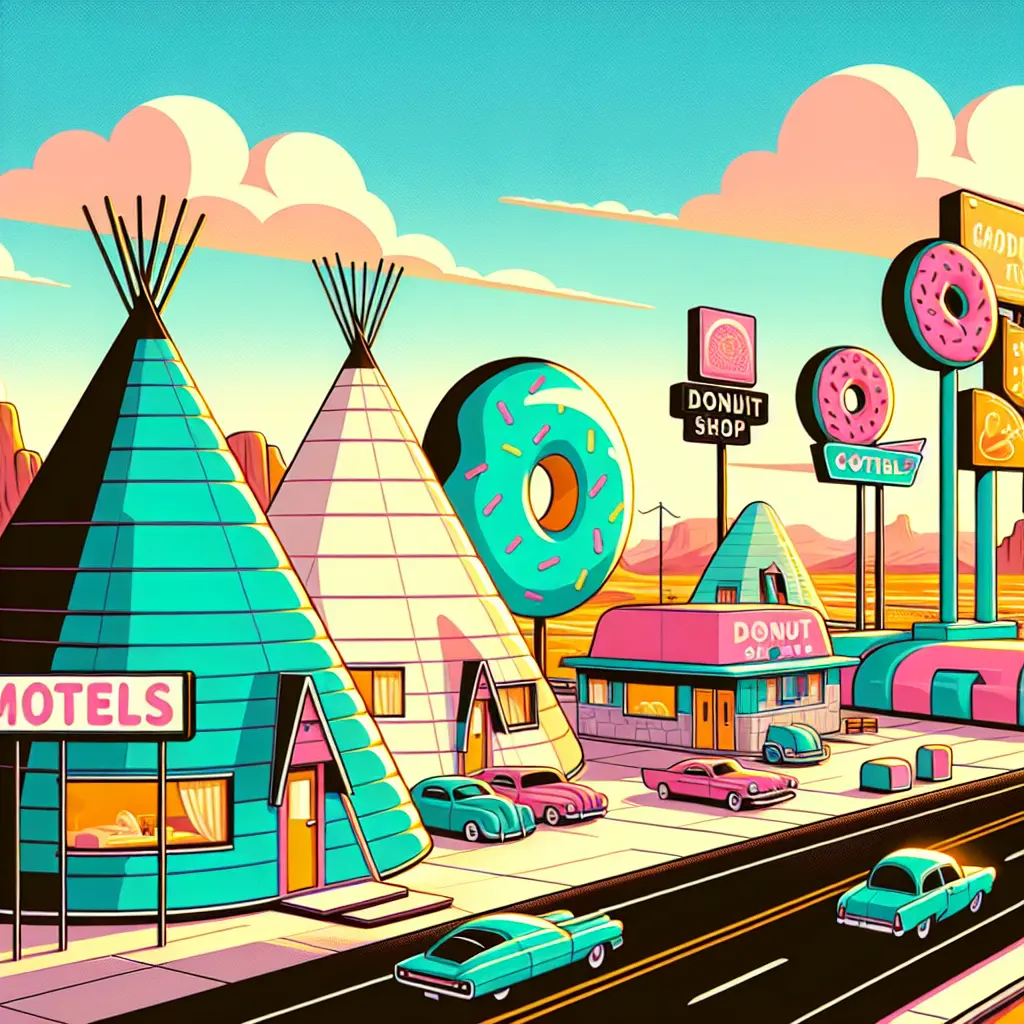
Vernacular roadside architecture refers to the unique, often whimsical buildings found along highways, designed to attract travelers’ attention. Examples include Wigwam Motels, where guests sleep in concrete teepees, and giant kitsch structures like enormous coffee pots or dinosaurs. These buildings reflect local culture, creativity, and the rise of car travel in mid-20th-century America, serving both as functional businesses and memorable landmarks that contribute to the roadside landscape’s character and nostalgia.
Vernacular Roadside Architecture: Wigwam Motels to Giant Kitsch
Vernacular roadside architecture refers to the unique, often whimsical buildings found along highways, designed to attract travelers’ attention. Examples include Wigwam Motels, where guests sleep in concrete teepees, and giant kitsch structures like enormous coffee pots or dinosaurs. These buildings reflect local culture, creativity, and the rise of car travel in mid-20th-century America, serving both as functional businesses and memorable landmarks that contribute to the roadside landscape’s character and nostalgia.
💡 Key Takeaways
- Define vernacular roadside architecture and its purpose in attracting travelers.
- Describe Wigwam Motels and other giant kitsch structures as iconic examples.
- Explain how these buildings reflect regional identities, marketing tactics, and mid-20th-century car culture along the American highway.
- Discuss preservation challenges and why these roadside landmarks matter for cultural heritage and local communities.
❓ Frequently Asked Questions
What is vernacular roadside architecture?
Vernacular roadside architecture refers to everyday, attention-catching buildings along highways that use local materials and simple designs to fit their place and purpose, often serving as memorable landmarks for travelers.
What are Wigwam Motels?
Wigwam Motels are a chain of motor inns where guest rooms are shaped like concrete teepees, created to attract motorists and evoke mid-20th-century road-travel charm.
What qualifies as 'giant kitsch' in this context?
Giant kitsch refers to oversized, whimsical structures along roads—like enormous coffee pots or dinosaurs—designed to catch the eye and add playful character to a travel route.
Why are these landmarks considered iconic or hidden gems?
They capture the spirit of historical American road travel, stand out on long drives, and offer a quirky glimpse into vernacular design and tourism, preserving memories of a bygone era.